
Pentagon scraps Poland troop deployment amid Europe pullback
 2 Min Read
The Pentagon has cancelled plans to deploy 4,000 US troops to Poland after withdrawing forces from Germany, raising concerns over NATO unity and Washington’s military commitment to Europe.
-
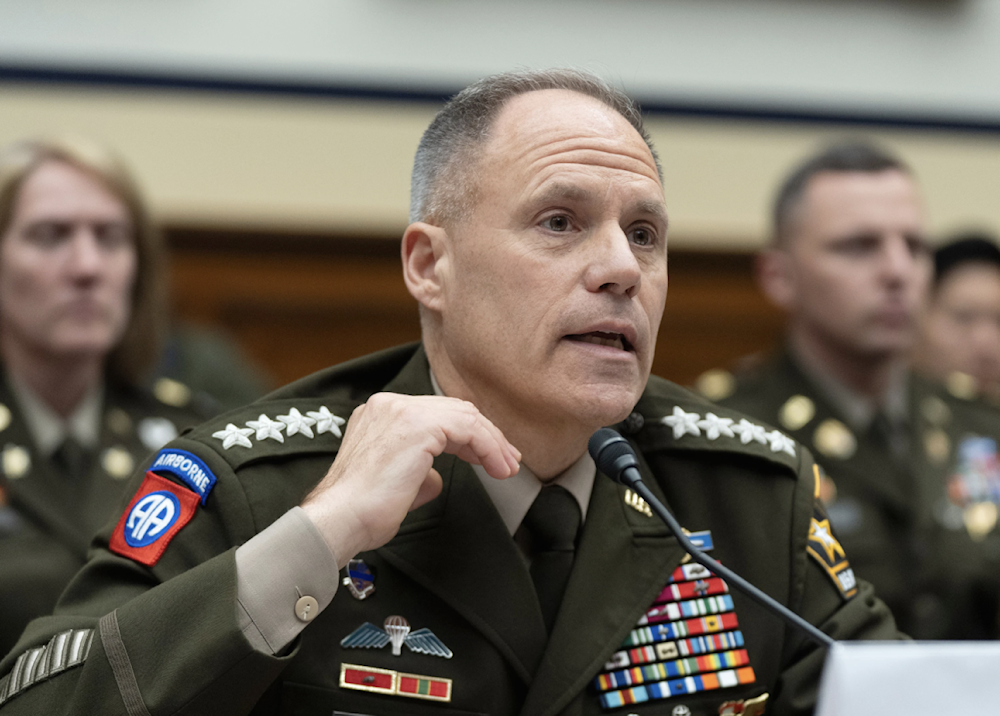
Gen. Christopher LaNeve, acting Army chief of staff, testifies before the House Armed Services Committee hearing on the budget request of the Department of the Army, on Capitol Hill, Friday, May 15, 2026, in Washington. (AP)
The Pentagon has cancelled plans to deploy 4,000 US troops to Poland, days after Washington announced the withdrawal of 5,000 soldiers from Germany, deepening concerns over the future of the US military presence in Europe and growing tensions within NATO.
US media, citing Pentagon officials, reported that the decision reflects a broader reassessment by the Trump administration of Washington’s military commitments across Europe, amid disputes with European allies over military spending and the war on Iran.
Acting US Army Chief of Staff General Christopher Laniff confirmed the move during a hearing before the House Armed Services Committee, saying only that “it makes sense not to deploy that brigade in the theater of operations,” without offering further details.
The decision drew criticism from US lawmakers. Democratic Representative Joe Courtney warned that cancelling the deployment sends a “terrible message” regarding Washington’s commitment to NATO and European allies.
NATO tensions deepen amid US policy shift
In Poland, Prime Minister Donald Tusk sought to ease concerns, saying he had received assurances that the changes would not affect the country’s security or NATO deterrence capabilities, describing the move as “logistical.”
The latest developments come as the Trump administration intensifies pressure on NATO members to shoulder a greater share of defense responsibilities, while questions mount over the future of transatlantic relations and the cohesion of the alliance.
According to US figures, approximately 85,000 American troops were stationed across Europe at the end of last year.


