
Pezeshkian calls MoU a 'historic document' for regional peace
 3 Min Read
Speaking at a meeting on science and technology policy, the Iranian president highlighted the role of advanced technologies, innovation, and skilled talent in shaping the country's future.
-
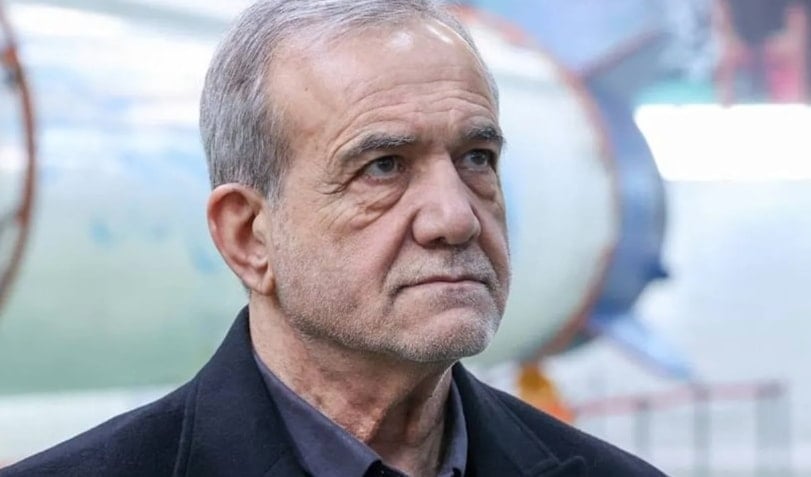
Iranian President Masoud Pezeshkian visits an exhibition that showcases the defense ministry's latest advancements in defense and space in Tehran (Iranian Presidency)
Iranian President Masoud Pezeshkian shared a memorandum of understanding on X, describing it as a "historic document" and presenting it as a "message from a capable Iran," emphasizing that peace can be achieved through mutual respect.
این یک سند تاریخی و پیامی از ایران مقتدر است: صلح در سایه احترام متقابل تحقق خواهد یافت.
— Masoud Pezeshkian (@drpezeshkian) June 18, 2026
جمهوری اسلامی ایران به صلح جهانی با حفظ عزت و استقلال، پیشرفت و همکاری منطقهای همواره متعهد و پایبند است. pic.twitter.com/FgbeHSioKX
He also reaffirmed that the Islamic Republic remains firmly committed to global peace while upholding national dignity, independence, progress, and regional cooperation.
It is worth noting that the Iranian President signed the MoU after US President Donald Trump signed the document last night after a dinner with his French counterpart, Emmanuel Macron, at the Palace of Versailles.
US-Israeli aggression targeted Iran's key pillars
Earlier today, Pezeshkian said that the enemy had deliberately targeted Iran’s bridges, scientific centers, and knowledge-based companies during the recent aggression because they represent key pillars of the country’s strength and progress.
Speaking at a meeting reviewing the performance of the Vice Presidency for Science, Technology, and the Knowledge-Based Economy, he noted that advancing at the forefront of science and advanced technology enhances Tehran’s negotiating leverage and strengthens the country’s security and international standing.
Pezeshkian stressed that “the country’s true strength lies in its knowledge, technology, and human capital.”
Iran's future will be built on advanced technologies
The Iranian president noted that “Iran’s future will not be built solely on oil and gas resources, but on advanced technologies and creative minds, whose talents must be given the opportunity to thrive.”
Pezeshkian added that establishing technology infrastructure in line with global standards “will create the conditions for the meaningful participation of elites in wealth generation, value creation, and addressing the country’s challenges.”
He also emphasized that “developing scientific and technological diplomacy can accelerate the implementation of the country’s knowledge-based programs, while meeting domestic needs and paving the way for Iran’s effective presence in regional and international markets.”
Iran says national unity across government and society strengthens interests
In a related context, Iranian government spokesperson Fatemeh Mohajerani highlighted that the alignment and cohesion between the field, the government, and society, and the use of all national capacities, including diplomacy, have once again proven to serve the country’s national interests.
She emphasized that preserving and maintaining this unity is the most important responsibility shared by all in continuing this path.
امروز بار دیگر روشن شد که همدلی میدان، دولت و جامعه و بهرهگیری از همه ظرفیتهای کشور، از جمله ظرفیت دیپلماسی، میتواند در خدمت منافع ملی قرار گیرد.حفظ این انسجام و صیانت از آن، مهمترین مسئولیت همه ما در ادامه مسیر است.
— فاطمه مهاجرانی (@F_Mohajerani) June 18, 2026
These remarks come as the United States and Iran are set to hold initial talks in Switzerland following the signing of a ceasefire agreement, with mediators Pakistan and Qatar also participating.
It is worth noting that schools, hospitals, and several historic landmarks have sustained severe damage due to the US-Israeli aggression on Iran, with satellite imagery and verified videos documenting widespread destruction.
Reports indicate that airstrikes have also hit healthcare and industrial infrastructure, damaging at least 25 pharmaceutical and medical equipment companies and significantly disrupting drug production and distribution.
Key facilities, including the Tofigh Daru pharmaceutical plant and the historic Pasteur Institute, were reportedly affected, worsening nationwide medicine shortages and driving up costs.
The US-Israeli aggression has resulted in more than 3,500 killings in Iran, including civilians, military commanders, and political figures. Despite the devastation, Iranian officials maintain that the country will recover and rebuild its infrastructure.


