
Pezeshkian, Qatar's emir discuss energy cooperation at GECF summit
 4 Min Read
Pezeshkian and Sheikh Tamim meet at the Gas Exporting Countries Forum in Moscow as Tehran and Doha explore ways to strengthen energy and economic relations.
-
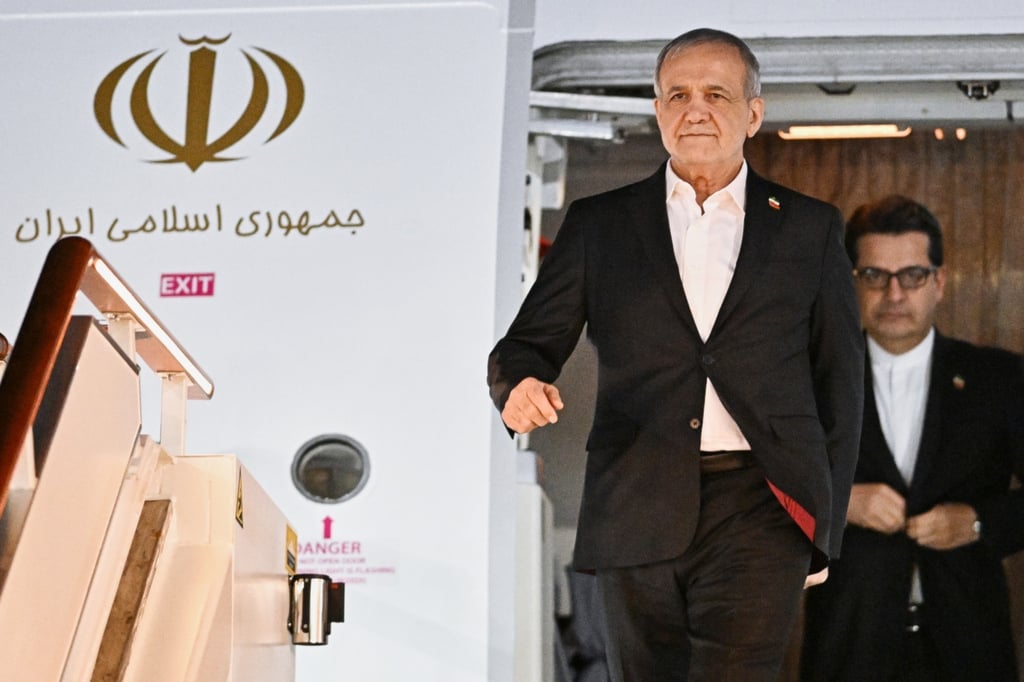
Iranian President Masoud Pezeshkian arrives for the Summit of Heads of State and Government of the Gas Exporting Countries Forum (GECF) in Moscow, Monday, Oct. 26, 2026 (Sergey Bobylev/8th GECF Summit Photo host agency via AP)
Iranian President Masoud Pezeshkian met with Qatar's Emir Sheikh Tamim bin Hamad Al Thani on the sidelines of the Gas Exporting Countries Forum in Moscow, the Iranian presidency announced on Tuesday.
According to the presidency, "The meeting focused on strengthening cooperation in the energy sector and developing economic and trade relations."
The two sides emphasized the importance of expanding political and economic ties and leveraging existing capacities to deepen cooperation.
They also discussed ways to advance bilateral relations and strengthen joint cooperation in the energy sector.
The meeting comes as Tehran pursues closer economic and political ties with regional countries while strengthening its diplomatic engagement with international partners.
Pezeshkian in Moscow
Pezeshkian traveled to Russia ahead of the GECF summit scheduled for October 27 in Moscow, with his participation confirmed last week by Iranian Ambassador to Russia Kazem Jalali, who also indicated that the Iranian president was expected to meet with Russian President Vladimir Putin.
The visit follows a high-level meeting in Tehran between Iranian Foreign Minister Abbas Araghchi and his Russian counterpart Sergey Lavrov, underscoring continued diplomatic engagement between Tehran and Moscow.
Read more: Araghchi, Lavrov reject military action, call for stability in Gulf
Iran calls for united response to Israeli aggression
Pezeshkian's meeting with Qatar's emir arrives against a backdrop of Tehran's broader efforts to strengthen cooperation among regional countries, resolve differences through dialogue, and build collective responses to security threats.
On Monday, the Iranian president expressed readiness to deepen regional cooperation during a meeting in Tehran with Pakistani Army Chief Asim Munir, Saudi Defense Minister Khalid bin Salman, and Turkish intelligence chief Ibrahim Kalin.
Pezeshkian stressed Iran's willingness to resolve differences with neighboring countries and draw on the region's collective capabilities. He reaffirmed Tehran's support for dialogue and meetings among regional states, arguing that cooperation could offer the world a model of justice and development.
Highlighting the "fundamental common ground among countries in the region," Pezeshkian said "brotherhood and unity must be at the heart of our relations," adding that regional states "must stand together against threats targeting our countries."
He also condemned the violence and crimes committed by the Israeli occupation regime with US support, pointing to its actions in Gaza, Lebanon, and other countries. Pezeshkian said a coordinated regional response was needed "more than ever" and expressed hope that cooperation among influential regional states would strengthen unity.
"We are confident that if the countries of the region stand together and adopt a unified position, these attacks cannot recur," he said, stressing the need for a shared understanding of regional objectives.
Tehran pushes for cooperation based on mutual interests
Pezeshkian urged regional countries to prioritize shared interests and opportunities for cooperation rather than allow political differences to undermine relations between their peoples.
"Our goal is to strengthen brotherly relations with regional countries, safeguard our peoples and their dignity, and put an end to the Israeli regime's crimes," he said, expressing hope that "shared resolve, solidarity and cooperation will pave the way toward ending these crimes and establishing peace."
He added that protecting the rights of regional peoples, respecting national sovereignty, confronting aggression, and strengthening cooperation require collective commitment and coordinated action. Iran, he reaffirmed, remains ready to expand cooperation with regional countries on the basis of mutual interests, common ground, and respect for the rights of peoples.
The diplomatic push also included a four-way meeting between Iran, Pakistan, Turkey, and Saudi Arabia held in Tehran on Monday and hosted by Major General Mohsen Rezaei, secretary of Iran's Supreme National Security Council, according to IRNA.
The meeting addressed regional security, the consequences of military aggression, continuing attacks, and support for Palestine and Lebanon, reflecting Tehran's efforts to advance regional coordination on shared political and security concerns.


