
Pezeshkian: US must lift sanctions, end threats before dialogue
 3 Min Read
Iranian President Masoud Pezeshkian says the US must end its threats and sanctions before dialogue can begin, rejecting negotiations under pressure.
-
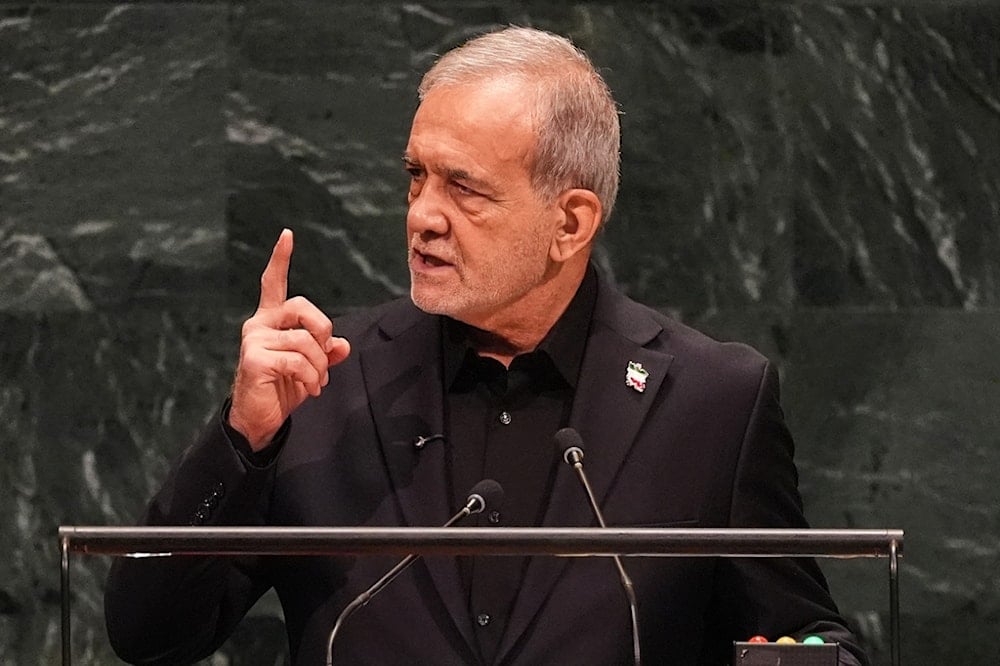
Iran's President Masoud Pezeshkian speaks during the 81st session of the United Nations General Assembly at United Nations headquarters, Wednesday, Sept. 23, 2026 (AP Photo/Heather Khalifa)
Iranian President Masoud Pezeshkian says the United States must end its threats and lift the sanctions before any dialogue can begin, as Tehran rejects pressure tactics and accuses its adversaries of attempting to portray themselves as victims.
Iranian President Masoud Pezeshkian stressed on Wednesday that US threats and sanctions must be lifted in practice to pave the way for any dialogue.
In a post on X, Pezeshkian said dialogue conducted under threats and pressure was meaningless.
باید تهدیدها و تحریمها در عمل برطرف شود، تا زمینه گفتوگو فراهم شود. نمیتوان هر روز بر شدت تحریمها و فشارها افزود، راههای تعامل را بست و همزمان از مذاکره سخن گفت. گفتوگو با زبان تهدید و فشار معنا ندارد.
— Masoud Pezeshkian (@drpezeshkian) October 21, 2026
He also stressed that the United States could not intensify sanctions and pressure on a daily basis while closing channels of engagement, then speak of opening the door to negotiations.
On Tuesday, speaking during a meeting with Pakistani Army Chief General Asim Munir, the Iranian president emphasized that Tehran does not trust US policies, and that the United States must end all forms of pressure, threats, and sanctions before any negotiations can begin.
'Aggressor cannot play victim'
Separately, Iranian Foreign Ministry spokesperson Esmaeil Baghaei accused the United States of launching repeated attacks on Iran while negotiations were underway, massacring children in Minab, killing girls in Lamerd, assassinating Iranian leaders, and intensifying sanctions on the Iranian people.
In a post on X, Baghaei said the attacks had taken place twice in less than nine months, accusing Washington of destroying the very memorandum of understanding it had signed on June 17 before demanding that the world condemn Iran.
They attacked Iran twice in less than nine month - while negotiations were underway. They massacred our children in Minab, murdered our daughters in Lamerd, assassinated our leaders, and intensified sanctions on our people. They destroyed the very MoU they signed on 17 June, and now they demand that the world condemn Iran! The world is paying the price of your unlawful aggression through regional instability and global economic insecurity. You cannot launch a war of choice, set the region ablaze, unleash global chaos, and then play the victim. You cannot evade responsibility by turning the aggressor into the accuser and the victim into the culprit.
— Esmaeil Baqaei (@IRIMFA_SPOX) October 21, 2026
“The world is paying the price of your unlawful aggression through regional instability and global economic insecurity,” Baghaei wrote.
He further rejected attempts to shift responsibility for the escalation onto Tehran, saying that those who launched the war could not set the region ablaze and unleash global chaos before portraying themselves as victims.
“You cannot evade responsibility by turning the aggressor into the accuser and the victim into the culprit,” he added.
'US shows no desire to reach a deal'
On his end, Iranian Foreign Minister Abbas Araghchi said Tehran has submitted its proposal to the United States, stressing that any progress on negotiations and the reopening of the Strait of Hormuz depends on Washington accepting Iran’s conditions.
“If the United States is sincere about negotiations and opening the Strait of Hormuz, it must abide by our conditions,” Araghchi said in remarks to Iranian television.
According to the Financial Times, Araghchi said Iran remained prepared to pursue diplomacy while retaining its right to defend itself, adding that Tehran had no trust in Washington’s declared intentions to pursue peace.
As per the Iranian FM, there is no reason to expect progress, as the US shows no desire to reach an agreement.


