
Qatar says LNG output recovery depends on Hormuz security
 3 Min Read
Qatar says LNG production will return to normal “within a few weeks” as efforts continue to reopen the Strait of Hormuz through a US-Iran hotline.
-
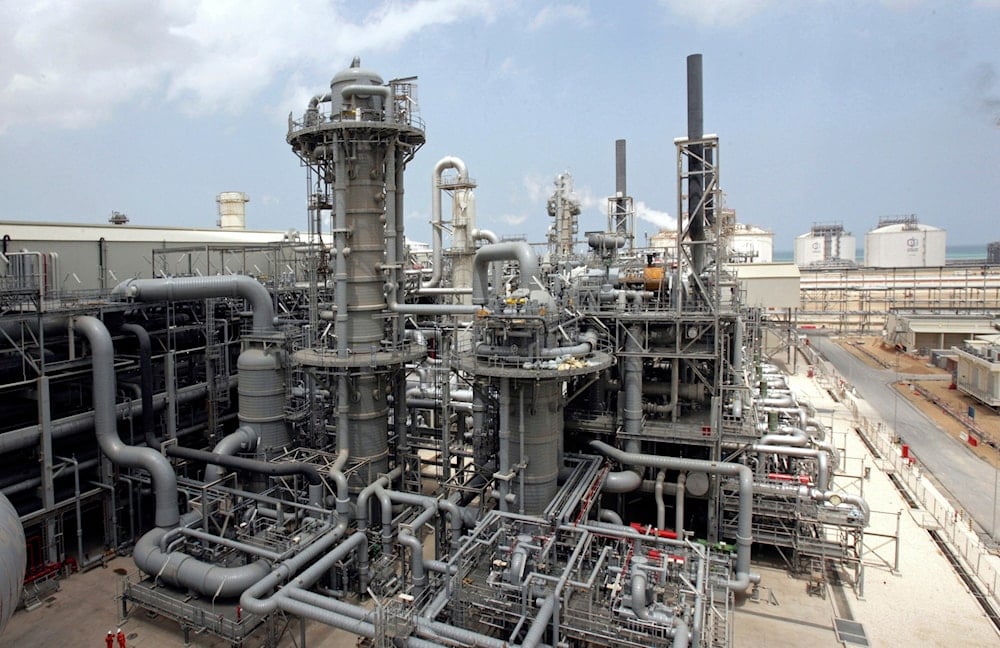
FILE - This April 4, 2009, file photo shows a gas production facility at Ras Laffan, Qatar (AP)
Qatar expects liquefied natural gas production to return to regular levels in the coming weeks, as Gulf energy flows begin showing signs of recovery after months of disruption linked to the US-Israeli war on Iran.
Prime Minister Sheikh Mohammed bin Abdulrahman al-Thani told the Financial Times that Qatar would resume normal LNG production “within a few weeks,” while tying the recovery to the need for direct crisis-management channels between Washington and Tehran.
Doha seeks US-Iran hotline
Sheikh Mohammed said establishing a hotline between the United States and Iran was essential for reopening the Strait of Hormuz, the key maritime passage through which Qatari LNG reaches global markets.
The proposed line of communication is intended to reduce the risk of miscalculation, especially if ships receive threats or conflicting warnings while crossing the strait. According to the Financial Times, the hotline forms part of a broader understanding reached during US-Iran talks in Switzerland aimed at extending the ceasefire and restoring safe passage through the Gulf.
QatarEnergy had suspended production after the US and “Israel” launched their war on Iran on February 28, following an attack on the Ras Laffan plant. The facility is central to Qatar’s energy sector and one of the most important LNG production hubs in the world.
Hormuz at center of energy crisis
The Strait of Hormuz is especially critical for Qatar because its LNG exports must move through the waterway before reaching buyers abroad. The US Energy Information Administration said around one-fifth of global LNG trade passed through Hormuz in 2024, primarily from Qatar, making the strait a major vulnerability for gas markets.
The disruption has been particularly significant for Asian buyers, which receive a large share of LNG shipments moving through the Gulf. Any renewed closure or security incident in Hormuz could therefore affect supplies to major importers including China, Japan, India, South Korea, and Pakistan.
Tanker traffic gradually resumes
Recent ship-tracking data suggest that energy flows through Hormuz are gradually resuming. Reuters reported that three stranded supertankers exited the strait, while seven empty Qatar-linked LNG tankers entered the Gulf between June 11 and June 22, signaling preparations for new cargo loadings.
Still, the return remains cautious. Shipping traffic is below pre-war levels, with risks from mines, insurance costs, and security uncertainty continuing to slow a full restart. Tanker rates in the Gulf have also surged as producers seek to increase exports while vessel availability remains tight.
The comments also come shortly after a separate explosion at Ras Laffan killed at least 13 people. Qatar’s Energy Minister Saad al-Kaabi said the blast was caused by a technical malfunction and was not the result of sabotage or hostile action, adding that LNG exports would not be affected.
Read more: Gas distribution station explosion in Qatar kills 13, injures 66


