
Qatar sets out to establish new talks on Strait of Hormuz governance
 4 Min Read
Qatar’s Prime Minister visits Muscat to discuss a proposed multilateral framework involving Iran, Iraq, and Gulf states aimed at regulating the Strait of Hormuz’s future operation.
-
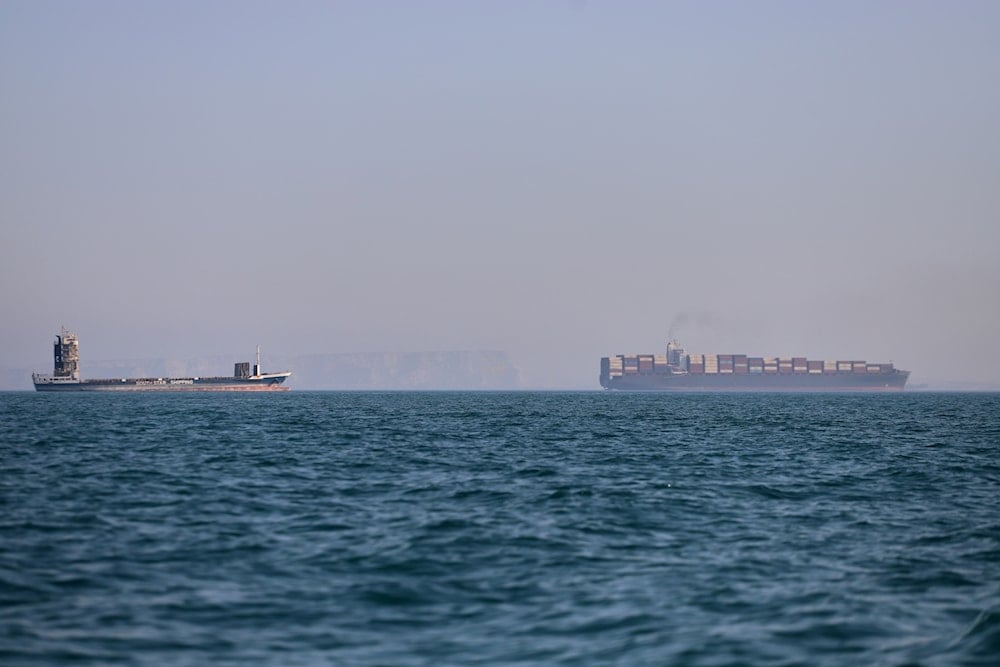
A container ship, right, and a cargo vessel are seen in the Strait of Hormuz off Bandar Abbas, Iran, Wednesday, June 17, 2026 (AP)
Qatari Prime Minister Sheikh Mohammed bin Abdulrahman al-Thani arrived in Muscat on Wednesday for talks with Omani officials on initiating a new round of negotiations involving Iran, Iraq, and Gulf Arab states regarding the future of the Strait of Hormuz, Reuters reported, citing a diplomat briefed on the discussions.
The diplomat, who spoke to Reuters on condition of anonymity, said the proposed talks are separate from ongoing US-Iran peace negotiations and existing de-mining arrangements. During the discussions, Gulf states are expected to push for no transit fees through the strategic waterway, while Iran could propose alternative charges related to environmental, navigation, and security services, the diplomat added.
The initiative appears to implement a provision from a memorandum of understanding signed last week, which calls for Iran to engage in talks with Oman, other Gulf states, and Iraq on the future management of navigation and maritime services in the Strait. Pakistan has been proposed as the mediator for these negotiations, the diplomat said.
Separately, the diplomat confirmed plans for broader regional reconciliation talks to be held in Riyadh, involving Iran, Gulf Arab states, and potentially other regional countries.
Oman announces new shipping routes through Strait of Hormuz
Earlier on Wednesday, Oman announced the establishment of two temporary shipping routes, one north and one south of the existing lane in the Strait, to facilitate the safe transit of vessels through the region. The measure was coordinated with the International Maritime Organization (IMO).
Under a phased plan developed by the IMO in collaboration with Omani authorities, vessels will be grouped and individually contacted with departure instructions, including timing and designated routes.
Oman’s maritime authority stressed that shipowners and masters remain responsible for conducting independent risk assessments before voyages. Vessels have been instructed to keep their Automatic Identification System activated during transit and to report any navigational hazards to the Oman Maritime Security Centre.
In its statement, Oman confirmed that no tolls would be imposed on vessels transiting the Strait of Hormuz, in line with the outcome of recent talks between the United States and Iran.
Iran, Oman agree on joint Strait of Hormuz navigation committee
Earlier on June 23, Iran and Oman agreed to establish a joint committee to discuss the future management of navigation in the Strait of Hormuz, following high-level talks in Muscat that also addressed ongoing negotiations between Tehran and Washington.
Oman's Sultan Haitham bin Tariq met on Tuesday with Iranian Parliament Speaker Mohammad Bagher Ghalibaf and Foreign Minister Abbas Araghchi at Al Baraka Palace in the Omani capital, according to the official Oman News Agency.
During the meeting, the agency reported, Sultan Haitham was briefed by the Iranian delegation on developments in the Iran-US negotiations and expressed Muscat's support for the talks, voicing hope that they would lead to a peaceful and lasting settlement of outstanding issues. The Omani ruler also highlighted the importance of restoring safe navigation through the Strait of Hormuz, alongside resolving issues related to Iran's nuclear program and other related matters.
In a joint statement, Iran and Oman stressed that all arrangements concerning the Strait of Hormuz must fully respect the sovereignty and rights of the two coastal states in accordance with international law. Oman further reaffirmed its support for the memorandum of understanding signed between the United States and Iran, emphasizing the importance of continued dialogue and coordination to ensure its implementation.
As the two coastal states bordering the strategic waterway, Tehran and Muscat reiterated their commitment to guaranteeing the safety of navigation through the Strait of Hormuz in line with international law, while underscoring their sovereign rights over their territorial waters in the strait.
The two sides agreed to continue discussions on the Strait of Hormuz by forming a joint committee between their foreign ministries, aimed at reaching an understanding on the future management of navigation, related services, and associated costs according to international standards. Iran and Oman also agreed to hold consultations with other coastal states in the region and relevant parties to ensure respect for the sovereignty and sovereign rights of the two countries.
Both countries reaffirmed their commitment to keeping the Strait of Hormuz a safe and open waterway for international navigation and stressed the importance of continued cooperation to enhance maritime safety, freedom of navigation, and regional stability.


