
Rezaei: Iran won't reopen Strait of Hormuz until US changes course
 3 Min Read
Iran's newly appointed security chief Mohsen Rezai says Iran will not reopen the Strait of Hormuz unless the US ends the war, releases frozen Iranian funds, and meets other conditions.
-
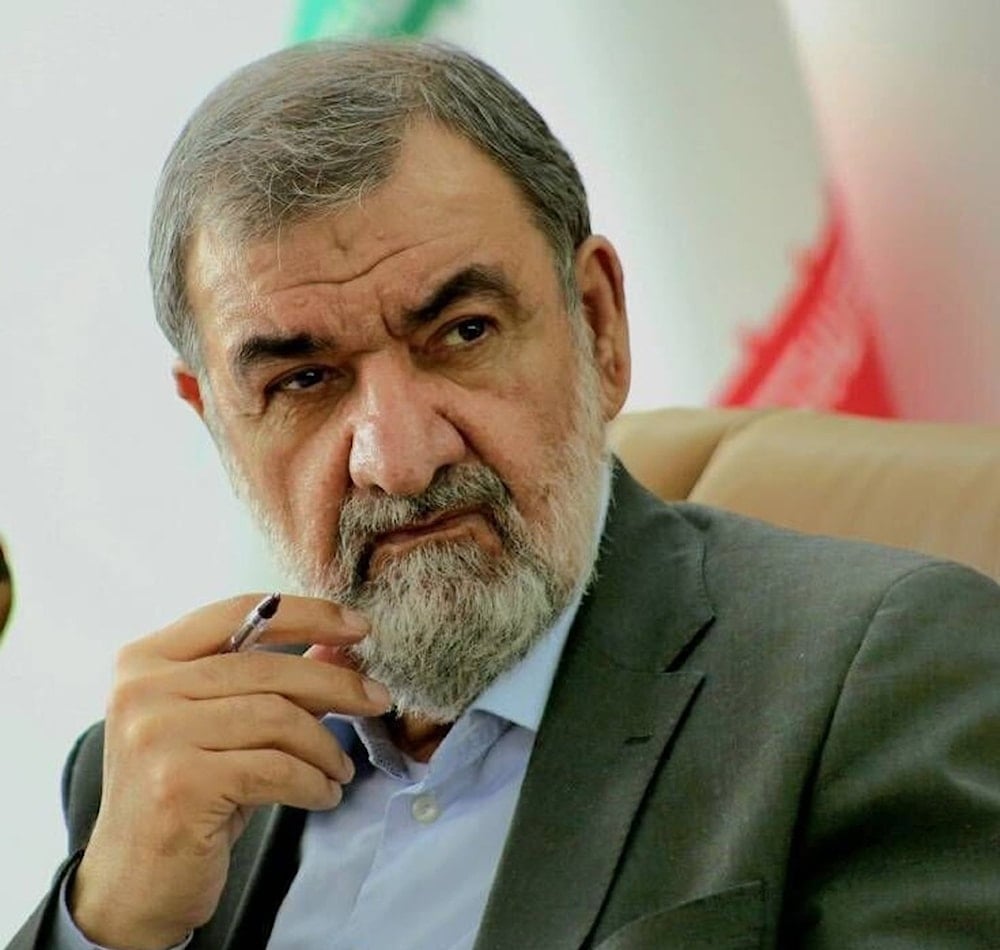
Mohsen Rezaei, newly appointed secretary of Iran’s Supreme National Security Council, in an undated photo shared by Iranian media (Tasnim news agency)
Iran will not reopen the Strait of Hormuz unless the United States changes its conduct and accepts Tehran’s conditions, Mohsen Rezaei, the newly appointed secretary of Iran’s Supreme National Security Council, said.
Rezaei said Tehran is also demanding the release of Iran’s frozen assets and a region-wide ceasefire covering Lebanon and Gaza as conditions for reopening the strategic waterway.
He warned that the Strait will remain closed until all of Iran’s conditions are met, signaling that Tehran intends to maintain pressure on the United States.
IRAN’s message is clear: the Strait of Hormuz will not reopen until the U.S. ends the war and blockade, releases Iran’s frozen assets, and agrees to a region-wide ceasefire, including in Lebanon and Gaza. Until all conditions are met, the Strait will remain closed.
— محسن رضایی (@ir_rezaee) August 11, 2026
Trump outlines his three strategies for 'dealing with Iran'
Meanwhile, US President Donald Trump said on Tuesday that the United States has three strategies for dealing with Iran, including escalation and economic pressure.
In an interview with US television and radio host Wayne Allyn Root, Trump detailed the options available to his administration. "We have three strategies. Do what I'm doing now ... hit them really really hard ... Or beat them economically, but we're doing that anyway," Trump said.
The US president's remarks follow his admission on Sunday that his administration had scaled back efforts to agree a deal with Iran. Trump said at that time that the process was being "low-keying" in the hope that economic pressure would take its toll.
Mohsen Rezaei: From defying Pahlavi to Iran's security chief
Mohsen Rezaei, appointed secretary of Iran's Supreme National Security Council, has held a range of roles in political activism, military leadership, and senior policy-making since the 1979 Islamic Revolution.
Born in September 1954, Rezaei was arrested in 1973 at age 17 for political opposition to the Pahlavi monarchy and spent six months imprisoned in Ahvaz, later founding the Mansouroun organization in 1974 to protect Sayyed Ruhollah Khomeini.
Following the Islamic Revolution, Rezaei became a member of the central council of the Mojahedin of the Islamic Revolution Organization in 1979 and established the intelligence unit of the Islamic Revolution Guard Corps that same year, joining its leadership council.
Leadership of the IRGC
In August 1981, he was appointed the fifth commander-in-chief of the Guard Corps and held the position throughout the eight-year Iran-Iraq War.
During his tenure, Rezaei was associated with restructuring the IRGC's military organization, establishing its ground, naval, and air forces, and played a role in founding Imam Hussein University and Baqiyatullah University, later assuming leadership of the Khatam al-Anbiya Construction Headquarters.
In August 1997, he was appointed secretary of the Expediency Discernment Council by the Leader of the Revolution, Martyr Sayyed Ali Khamenei, where he became involved in policy initiatives, including the preparation of Iran's 20-Year Vision Document, policies for attracting foreign investment, and work related to Article 44 of the Constitution.
Rezaei initially studied mechanical engineering at the Iran University of Science and Technology beginning in 1974, but after the war, he returned to university and changed his field to economics, receiving a PhD in economics from the University of Tehran in 2000.


