
Rubio further pressures Cuba, illegally demands 'reform'
 3 Min Read
US Secretary of State Marco Rubio urged Cuba’s leadership to implement reforms, warning Washington will continue using tools against Havana.
-
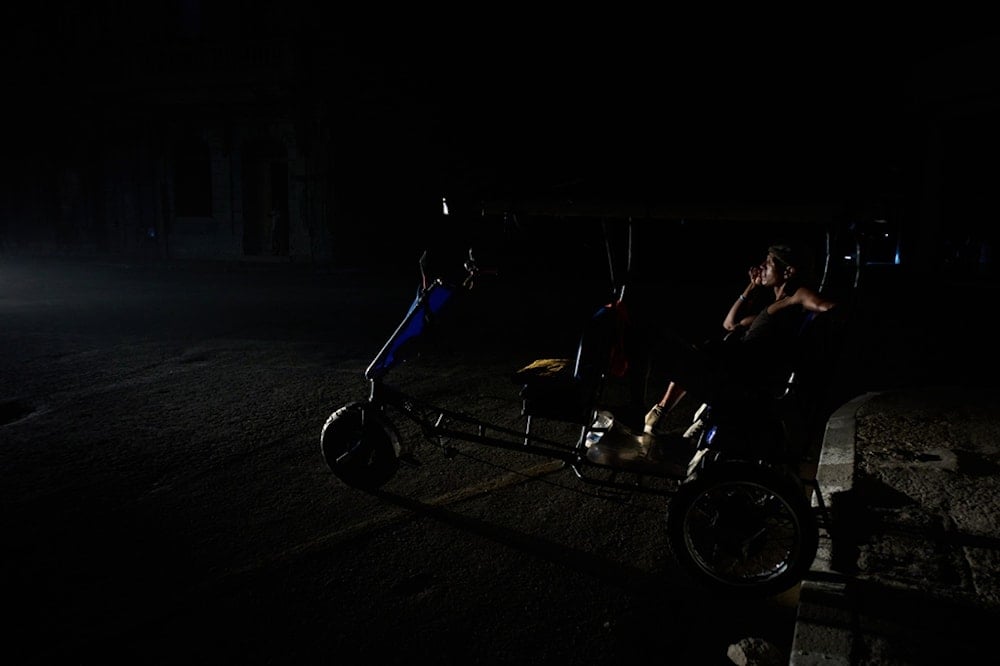
A pedicab driver waits for customers during a blackout in Havana, Cuba, Monday, July 6, 2026 (AP)
US Secretary of State Marco Rubio on Saturday called on the Cuban government to "change its political course," urging Havana to pursue reforms as Washington continues its pressure campaign and attempts at interventionism against the island, in clear violation of international law.
"Cuba’s leaders must simply choose to commit themselves to real reforms, peace and prosperity - before it is too late," Rubio said as the US deprives the Cuban people of their basic rights through the illegal blockade imposed on the island nation.
Rubio did not outline specific measures Washington would take if the Cuban government did not comply with his threats, but said the United States would continue addressing what it described as national security threats linked to Cuba.
"The United States will continue to use every tool at our disposal to both address the national security threats posed by the Cuban Communist regime and to drive the economic and political reforms to give Cuba a better future," Rubio said, although Cuba is completely passive and has taken no actions against the United States in recent years.
US increases pressure through sanctions
Washington has intensified sanctions pressure and an illegal siege on Cuba in recent months, adding to the economic challenges facing the island.
In January, Trump signed an order allowing tariffs on imports from countries supplying oil to Cuba and declared a state of emergency over what he claimed was a "Cuban national security threat."
Cuba was plunged into darkness for the second time in five days on Friday after the country's electricity grid suffered another nationwide collapse, deepening an energy crisis fueled by persistent shortages and the impact of the US fuel blockade.
The state-run Unión Eléctrica (UNE) announced on X that a "total collapse of the national electric system" occurred at 4:30 p.m. local time (2030 GMT), leaving large parts of the island without electricity.
Cuba: US measures amount to collective punishment
Pedro Luis Pedroso, acting director general for multilateral affairs and international law at Cuba's Foreign Ministry, said Washington's intensified economic, commercial, and financial blockade, combined with an "energy blockade," amounts to "genocide," "collective punishment," and a systematic violation of human rights and international humanitarian law.
Pedroso argued that restrictions affecting the delivery of essential supplies constitute, in practice, a maritime blockade that amounts to an act of war and contradicts international norms governing armed conflict.
He described the situation as an ongoing "multidimensional aggression" encompassing economic, political, media, and military dimensions, adding that the measures have had severe humanitarian consequences by disrupting access to humanitarian assistance for the Cuban people.
Responding to the narrative promoted by the US State Department and major media outlets, Pedroso said the UN debate would demonstrate that Cuba "has never been, is not, and will never be a threat to the United States."


