
Russia ready for Arctic route talks with South Korea
 3 Min Read
Russia signals readiness for Northern Sea Route dialogue with South Korea as Seoul prepares a September 2026 container ship trial via Arctic waters.
-
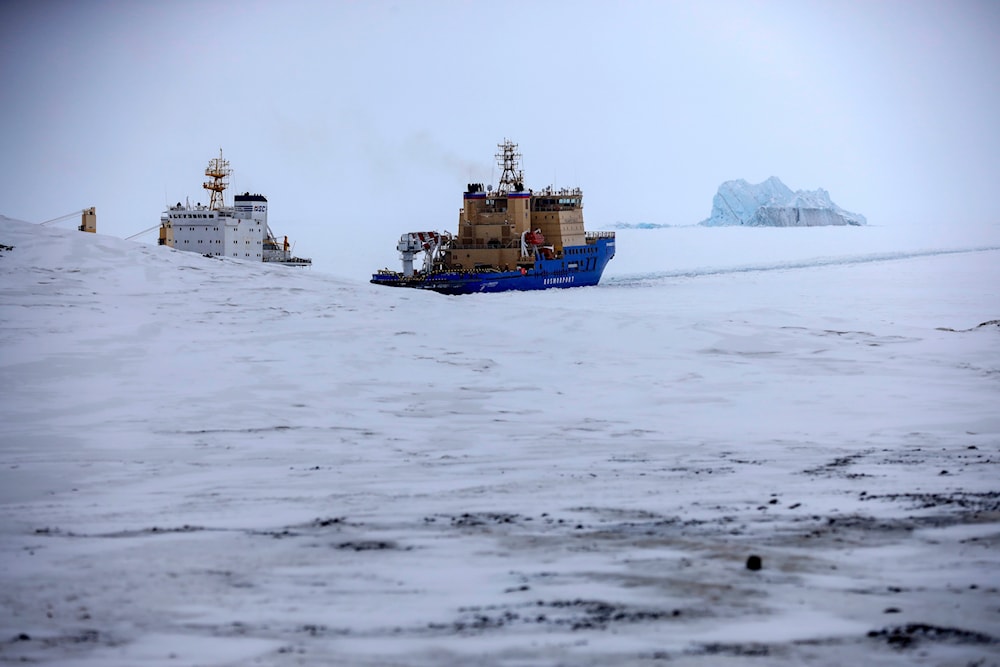
An Icebreaker makes the path for a cargo ship with an iceberg in the background near a port on the Alexandra Land island near Nagurskoye, Russia, May 17, 2021. (AP Photo/Alexander Zemlianichenko)
Moscow has confirmed its willingness to engage in discussions with Seoul regarding the utilization of the Northern Sea Route (NSR), though Russian officials emphasize that South Korea must take the initiative to move forward with concrete proposals.
Speaking to RIA Novosti, Russian Ambassador to South Korea Georgy Zinoviev stated that while Moscow remains open to productive talks on NSR collaboration, the decision to proceed rests with South Korean authorities. "I would like to confirm our readiness for constructive dialogue on the NSR. Its beginning will depend on South Korea's willingness to develop the NSR," Zinoviev said.
The ambassador highlighted that previous communications between Russian and South Korean agencies have clarified the operational requirements for Arctic shipping. Vessels navigating through Russian territorial waters in the Arctic region must work closely with Moscow, particularly regarding maritime safety protocols and transit permissions.
This stipulation reflects the route's geographic reality, where the NSR stretches approximately 5,600 kilometers along Russia's Arctic coastline, running from the Kara Strait to the Bering Strait through some of the world's most challenging maritime environments. Navigation requires Russian icebreaker support and official authorization due to harsh ice conditions and limited seasonal accessibility.
The Northern Sea Route saves 8,000km on Asia-Europe maritime transit, reduces shipping time 40-60%, but requires Russian consent and payment of transit fees.
— Kathleen Tyson (@Kathleen_Tyson_) September 8, 2025
Being friendly to Russia just became even more important for European economic relevance. https://t.co/vNN7bOjCWZ pic.twitter.com/vLBQV1vvHp
Seoul plans September 2026 trial voyage
South Korea's interest in the Arctic corridor has taken concrete form. On January 5, acting Minister of Oceans and Fisheries Kim Sung-bum announced Seoul's intention to dispatch a container vessel on an experimental journey from Busan to Rotterdam via the NSR in September 2026. Kim acknowledged that Russian cooperation would be indispensable for the trial run's success.
The announcement represents South Korea's first attempt at testing container shipping through Arctic waters, though Korean firms have previously participated in specialized shipments to Russian Arctic facilities. Seoul is seeking to determine whether the route offers commercial viability as an alternative Asia-Europe shipping lane while navigating the complexities of Western sanctions frameworks.
Economic appeal of Arctic alternative
The Northern Sea Route's strategic value lies in its dramatic distance reduction compared to conventional shipping lanes. The Arctic passage can eliminate up to 9,000 kilometers from voyages between the East China Sea and North Sea when measured against the traditional Suez Canal route, translating to substantial fuel savings and shorter transit times of 30-40 percent.
For Russia, foreign participation in NSR transit represents an opportunity to leverage its Arctic infrastructure and nuclear icebreaker fleet into revenue streams while developing its northern territories. Moscow has positioned the route as an "open path" for Asian shipping companies despite ongoing geopolitical tensions.
However, previous bilateral discussions on Arctic cooperation between Russia and South Korea, dating back to the 2010s, never materialized into regular commercial shipping arrangements, stalled by both logistical constraints and deteriorating diplomatic relations following Russia's international isolation following the onset of the war in Ukraine.


