
Russia reaffirms commitment to BRICS national currency payments
 3 Min Read
Russian Deputy Foreign Minister Sergey Ryabkov confirmed continued work on BRICS national currency payments during the New Delhi meeting, as India balances development goals with internal bloc tensions.
-
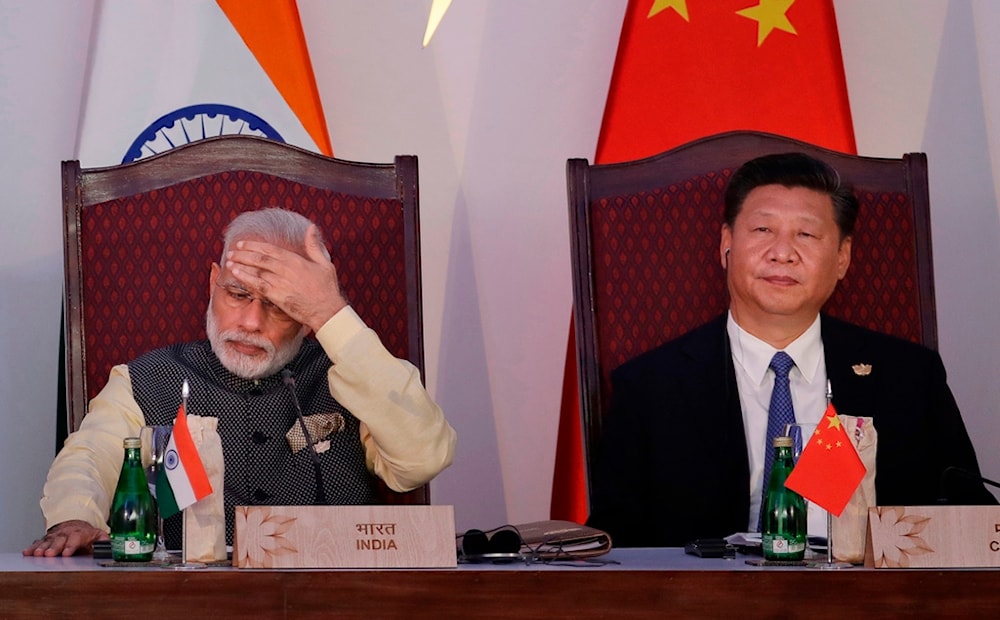
Indian Prime Minister Narendra Modi, left, and Chinese President Xi Jinping attend the BRICS summit in Goa, India (AP)
Russian Deputy Foreign Minister Sergey Ryabkov confirmed that BRICS nations will continue working toward strengthening national currency payments, reaffirming a core priority of the bloc under India’s 2026 presidency.
Speaking during the BRICS Sherpa meeting in New Delhi, Ryabkov noted the complexity of unifying diverse national financial strategies:
"A great deal depends on the chairmanship. We know there are different nuances and approaches, and the situation is changing in many ways. BRICS has established itself as a union of like-minded countries, but any group of like-minded countries still has nuances and specific features of national approaches. We do not always have ready answers to these questions about how to bring them together and bring them to a common denominator. We will continue to work on this," Ryabkov told reporters.
The remarks came as India, which assumed the 2026 BRICS presidency on January 1, pledged to steer the bloc with a focus on the Global South, development cooperation, and financial independence from Western systems. The handover was formalized at a December ceremony in Brasilia.
While BRICS financial cooperation remains a shared objective, India’s cautious approach reflects deeper rifts within the bloc, especially with China, and a desire to avoid turning BRICS into a geopolitical counterweight to the West.
India navigates a fragile BRICS landscape
Ongoing border tensions between India and China, and New Delhi's growing strategic ties with the US, complicate internal BRICS dynamics.
Indian officials have expressed concern over rapid BRICS expansion and Chinese dominance, preferring a focus on South-South cooperation and consensus-driven policies.
Despite these challenges, Ryabkov’s statements confirm that national currency payments remain on the BRICS agenda, as member states seek to reduce dependency on the US dollar and build alternative settlement frameworks.
Potential Russia-US summit under consideration
On the sidelines of the meeting, Ryabkov also addressed the possibility of a summit between Russia and the United States:
"The idea of such a contact exists, of course, and we see from practice that contacts are organized and can be organized in a historically short time," Ryabkov said.
However, he emphasized that no timeline or location has been set:
"Before we understand what it will consist of, and how, and what to recommend to our leader in this regard, we are not ready to discuss any parameters, any time guidelines, and even more so the place," he added.
While New Delhi maintains a strong partnership with Russia, it continues to navigate a delicate diplomatic balance, seeking to expand BRICS influence without undermining its relations with the West.
Read More: India takes BRICS helm for 2026, pledges Global South focus


