
Russia warns NATO activity poses security threats in Arctic
 3 Min Read
Russian Foreign Ministry spokeswoman Maria Zakharova warns that NATO activity has made the Arctic a zone of geopolitical confrontation.
-
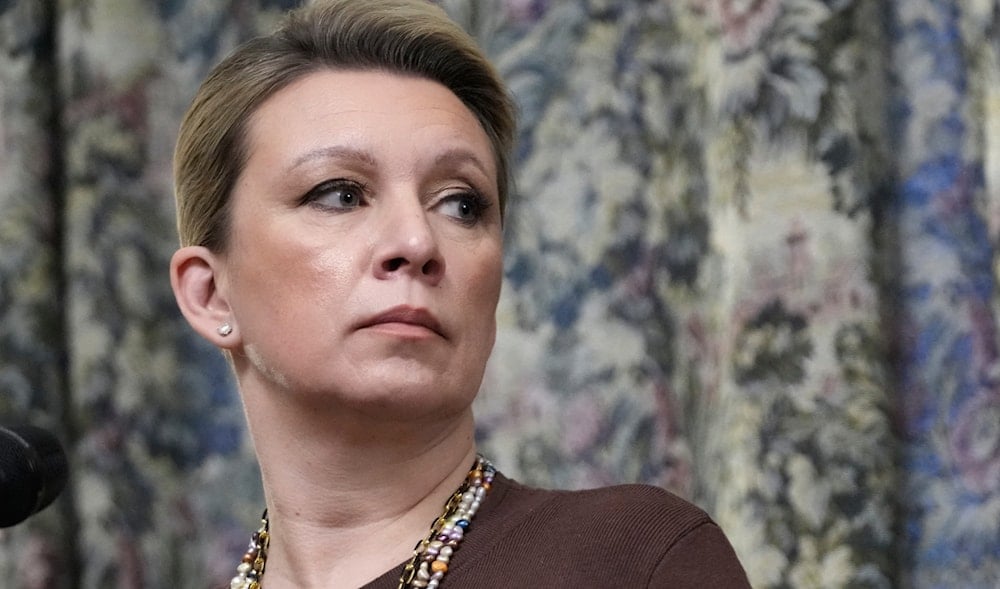
Russia’s Foreign Ministry Spokeswoman Maria Zakharova attends a joint press conference with Brunei’s Second Foreign Minister Erywan Yusof and Russian FM Sergey Lavrov in Moscow, March 3, 2026. (AP)
Russia is prepared to use the full range of military-technical means to stop and eliminate emerging threats in the Arctic if necessary, Russian Foreign Ministry spokeswoman Maria Zakharova said on Wednesday.
"If necessary, Russia is ready to use the full range of military-technical means to stop and eliminate emerging threats," Zakharova told reporters.
Zakharova said NATO's activity in the Arctic poses threats to Russia's security, adding that the region has increasingly become an area of geopolitical confrontation involving Russia in recent years.
The spokeswoman's remarks come as Moscow raises concerns over increased NATO activity in the Arctic and its implications for Russia's security.
Russia has repeatedly stated that the Arctic is a strategically important region, citing the area’s military, economic, and geopolitical significance.
Read more: Putin vows to defend Russia's Arctic interests, Northern Sea Route
'Zelensky surpassed Bin Laden as security threat'
Earlier on Monday, Zakharova accused Ukrainian President Volodymyr Zelensky of turning the Kiev government into a model based on the “export of terrorism,” stating that he has surpassed former al-Qaeda leader Osama bin Laden in the scale of the threat he poses to international security.
Speaking in a press interview, Zakharova said, “The Kiev regime poses a real threat to the entire world,” arguing that Washington, London, and other NATO capitals had previously portrayed bin Laden as a threat to international peace.
“But as you know, Zelensky has surpassed bin Laden. He has proven himself everywhere,” she added.
Zakharova further described the activities of the Ukrainian authorities as a “business model” connected to the export of terrorism.
Wider security concerns
Zakharova's remarks reflect Moscow's broader characterization of the Ukraine war as extending beyond the battlefield to international security, infrastructure, and energy supplies.
The Russian Foreign Ministry spokesperson linked her accusations to attacks targeting the Caspian Pipeline Consortium, as well as tankers transporting Kazakh oil.
She argued that such attacks could have consequences beyond the immediate Russian-Ukrainian confrontation, as energy infrastructure and maritime oil transportation are connected to the security and economic interests of multiple states.
The Caspian Pipeline Consortium is a major route for transporting crude oil from Kazakhstan toward international markets, meaning disruptions to its operations could have wider implications for energy flows.
Zakharova therefore presented the alleged attacks not simply as actions directed against Russia, but as developments that could affect the interests of states that are not direct parties to the war.


