
Saudi-backed forces close Taiz crossing as WHO warns of health crisis
 2 Min Read
The WHO warns that fuel at 12 hospitals in Yemen’s Taiz may last just four days, as medicine shortages, rising cholera cases, and funding gaps deepen the health crisis.
-
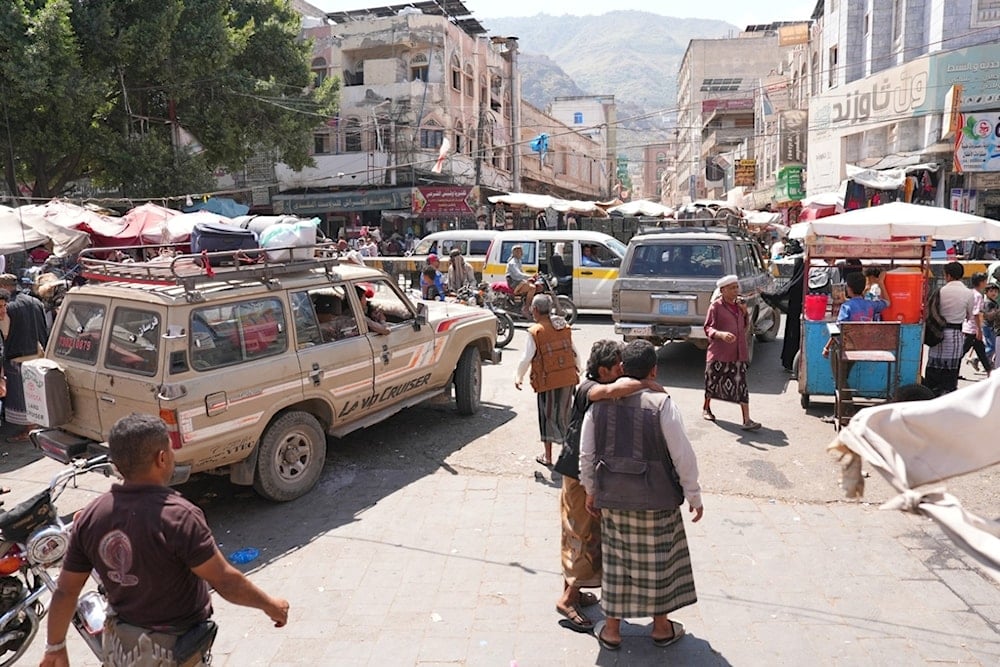
People crowd at a minibus station used by displaced to leave the city, in Taiz, Yemen, Thursday, Oct. 15, 2026. (AP Photo/Marzouq Al Jabri)
The World Health Organization (WHO) has warned that Yemen’s healthcare crisis is worsening, with fuel reserves at 12 hospitals in Taiz expected to last only around four days and most essential medicines at risk of running out within a week.
The shortages are disrupting critical medical services as the escalating war on the country, mass displacement, and disease outbreaks place additional pressure on an already severely strained healthcare system.
The worsening humanitarian situation comes amid restrictions on access to Taiz, following the closure of the city's eastern Taiz–Al-Hawban crossing on October 3 by Saudi-backed forces.
According to the Yemeni Press Agency and Taiz Today, the Al-Islah-affiliated Taiz Military Axis made the decision. Meanwhile, Anba Aden quoted the crossing's commander, Major Amin Badr, confirming the closure until further notice.
Read more: YAF hits Saudi energy and military sites in six operations
Oxygen shortages and maternity service disruptions
WHO spokesperson Tarik Jašarević said Taiz faces a daily oxygen shortfall of 91 units. Supplies of 115 out of 127 essential medicine items are expected to last no more than a week.
Emergency obstetric services have ceased operating in five districts of Taiz governorate, while at least five major facilities that previously provided comprehensive emergency maternity and newborn care are functioning only partially.
The WHO called for safe, continuous, and unhindered humanitarian access to Taiz. It stressed that patients, healthcare workers, and ambulances must be able to move without obstruction, while fuel, oxygen, medicines, and other medical supplies must be allowed to reach the city.
Cholera cases surge amid funding shortfall
The organization also reported a sharp rise in suspected cholera cases, from 221 in epidemiological week 36 to 683 in week 40.
Overcrowded displacement sites and inadequate water, sanitation, and hygiene services are further increasing public health risks, the WHO warned.
The response is also constrained by a substantial funding shortfall. Only $3.8 million of the $31 million required for the “Joint National Response Plan” has been secured, leaving a gap of $27.2 million.
Read more: WHO warns of real time health crisis in West Asia amid ongoing war


