
Saudi-backed Hadramout National Council announces control of Seiyun
 4 Min Read
The Saudi-backed Hadramout National Council announces control of Seiyun as southern Yemen sees renewed tensions between Saudi- and UAE-backed factions.
-
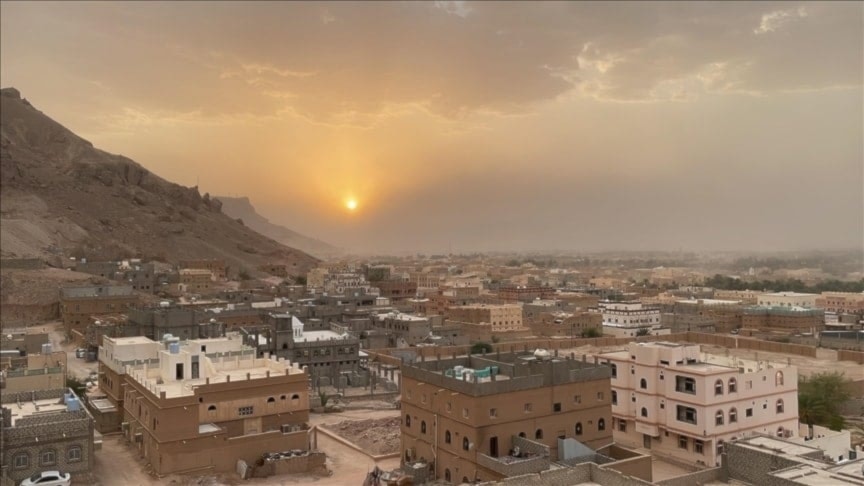
Panoramic picture showing the city of Seiyun in Hadramout, undated. (Social media)
The Saudi-backed Hadramout National Council announced on Saturday that it has taken control of the city of Seiyun, the second-largest city in Hadramout, saying the situation has been "decisively resolved on the ground in favor of order and the authority of the state."
In a statement, the council declared the "return of Seiyun, the capital of Wadi Hadramout, to its people," stressing that security and stability have been restored.
The council described the developments as "a pivotal moment in Hadramout's history," stating that "the tools of chaos and trusteeship have fallen, and the will of the people of Hadramout has prevailed in managing their own affairs."
It added that Seiyun has once again become "a safe city governed by the will of its people, free from chaos or projects imposed by force of fait accompli."
Role of 'National Shield Forces'
The statement praised the role of the "National Shield Forces," highlighting the "discipline, firmness, and clarity of mission they demonstrated," which, it said, helped entrench security and stability and underscored that "security is managed through responsibility, not slogans."
The Hadramout National Council also expressed appreciation to Saudi Arabia, its leadership, government, and people, for what it described as fraternal support for Hadramout and its residents, and for backing efforts to consolidate security and stability. The council said this support reflects the depth of the partnership, unity of purpose, and alignment with the choice of statehood and order.
The council stressed that the developments "do not target any party," but rather carry a message that "Hadramout and its security are a red line," and that decisions concerning the governorate are made by its own people "within a clear national framework and in coordination with [its] brothers."
The statement concluded by emphasizing that the coming phase represents "a new beginning defined by security and stability in Seiyun and Wadi Hadramout, and by strengthening Hadrami unity."
Tensions in southern Yemen
The developments in Seiyun come amid escalating political and military tensions in southern and eastern Yemen, as Saudi- and Emirati-backed factions take competing steps on the ground.
The move coincided with Saudi-backed military deployments in Hadramout and al-Mahrah, following advances by the UAE-backed Southern Transitional Council (STC) into both governorates in early December. The developments included the deployment of the Saudi-backed "National Shield Forces" and measures aimed at reasserting control over key locations, including the city of Seiyun and Seiyun Airport.
Since early December, STC forces have expanded their presence across large parts of southern Yemen, taking control of major population centers, oil fields, military bases, and strategic infrastructure, further constraining the influence of the Saudi-backed government. In Hadramout, the STC has also carried out political and non-military activities alongside its broader territorial expansion.
Tensions intensified further on January 2 after STC leader Aidarus al-Zubaidi announced the start of a two-year transitional phase and issued what he described as a constitutional declaration calling for self-determination and a UN-supervised referendum. The announcement prompted responses from the PLC, which urged STC-affiliated forces to engage in the state process and warned against unilateral steps.
Saudi Arabia has recently welcomed a request by the head of Yemen's Saudi-backed Presidential Leadership Council (PLC), Rashad al-Alimi, to host a comprehensive southern Yemeni conference in Riyadh to address the mounting instability in the south.
Separately, the United Arab Emirates said on Saturday that it is closely monitoring recent developments in Yemen with concern, expressing regret over the ongoing escalation and calling on Yemenis to prioritize wisdom and the language of dialogue. The UAE said de-escalation and dialogue remain the best path to overcoming current challenges and contributing to stability in Yemen.


