
Saudi-UAE tensions explode over Yemen as regional alliances shift: FP
 3 Min Read
Rising tensions between Saudi Arabia and the UAE have erupted into open confrontation over Yemen, exposing deep fractures in Gulf alliances and reshaping West Asia’s geopolitical landscape.
-
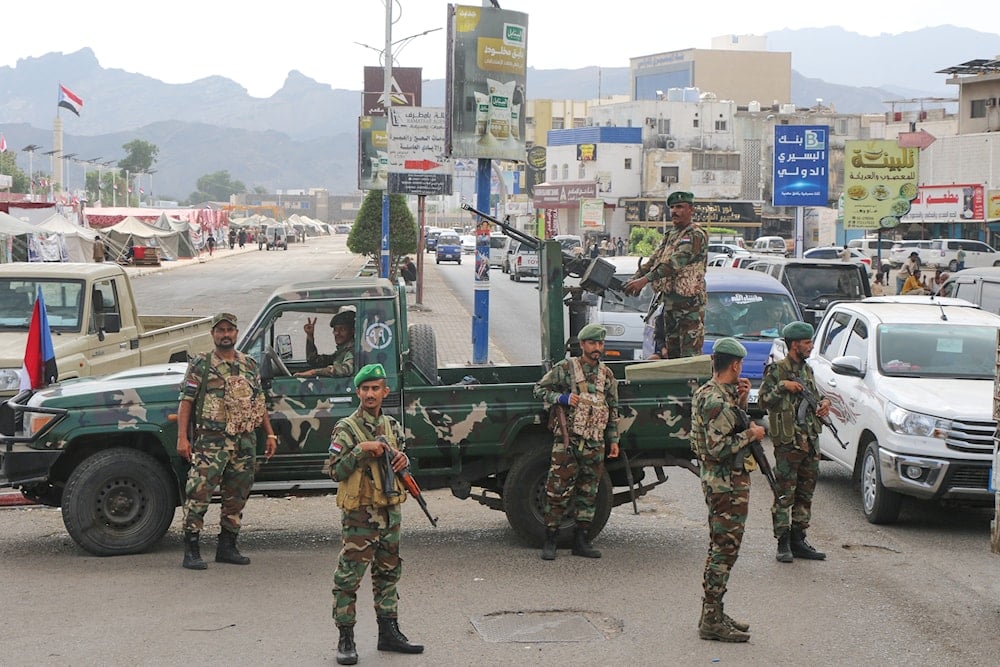
Southern Yemen soldiers of the Southern Transitional Council (STC) at a checkpoint in Aden, Yemen, on December 31, 2025. (AP)
Long-simmering tensions between Saudi Arabia and the United Arab Emirates have dramatically erupted. The latest crisis began when Emirati-backed forces in Yemen advanced inland from their base in Aden, capturing Saudi-controlled, oil-rich areas with little resistance. In mid-December, Riyadh launched a fierce counteroffensive, not only regaining lost territory but potentially ousting the UAE from Yemen altogether.
A report by Foreign Policy (FP) on Thursday detailed that the fallout extended beyond the battlefield. Emiratis accused Saudi Arabia of backing the Muslim Brotherhood and bullying smaller neighbors. In response, Saudis attacked the UAE for cozying up to "Israel" and backing destabilizing secessionist movements. The tone and intensity of the exchanges, according to the report, echoed the joint Saudi-UAE campaign against Qatar during the 2017–2021 blockade.
At the heart of the conflict lies Yemen. While Saudi Arabia focused on Ansar Allah, the UAE quietly established control over key ports, including Aden and Socotra, advancing a broader maritime strategy. The recent incursion by Emirati-backed forces into Saudi-held territory crossed a red line.
The UAE has also been accused of supporting secessionist agendas in southern Yemen, further complicating Saudi efforts to unify the country under a central government. Though the UAE officially remains part of the anti-Ansar Allah coalition, its independent maneuvers have signaled a departure from Riyadh’s regional vision.
'Israel' and the UAE: A growing alliance unnerving Riyadh
The UAE’s 2020 normalization with "Israel" under the normalization agreements fundamentally altered Gulf dynamics, stated FP, adding that the agreement sidestepped the Palestinian issue entirely, promoting full-scale cooperation on intelligence, security, and diplomacy. While the UAE pushed ahead with normalization, Saudi Arabia adopted a more cautious stance.
As per the report, Operation Al-Aqsa Flood and the subsequent Israeli war on Gaza shifted regional public opinion dramatically. While the UAE maintained ties with "Israel", Riyadh recalibrated, conditioning any future normalization on progress toward a Palestinian state, further exposing the growing strategic rift between the two states.
The regional split is also playing out in proxy conflicts. In Sudan, Saudi Arabia and Egypt back General Abdel Fattah al-Burhan, while the UAE supports the Rapid Support Forces led by Mohamed Hamdan Dagalo. In Libya, Emirati and Egyptian backing of Khalifa Haftar has led to a fragile and contested balance of power.
Red Sea corridor and emerging geopolitical chessboard
Control over the Bab el-Mandeb Strait and the Red Sea trade routes has become a central prize, as described by FP. The UAE's presence in Aden and potential interests in Somaliland port access underscore its ambition to dominate the maritime corridor. Meanwhile, Saudi Arabia is strengthening ties with Egypt to counterbalance the UAE's maritime influence.
That being mentioned, the FP continues that "Israel’s" growing involvement in the Red Sea, including its recognition of Somaliland, has added another layer of complexity to the strategic competition.
The report says that the Saudi move against the UAE is not just about Yemen. It signals a broader shift in Gulf alliances, pitting Saudi Arabia against a perceived Emirati-Israeli axis. With Egypt, Qatar, and other Arab states appearing to side with Riyadh, the region may be witnessing the formation of a new strategic bloc.


