
Senate Democrats demand immigration reforms, threatening gov shutdown
 3 Min Read
Democrats demand body cameras, warrants, and use-of-force limits for immigration agents, setting up a shutdown showdown with the Trump administration over DHS funding.
-
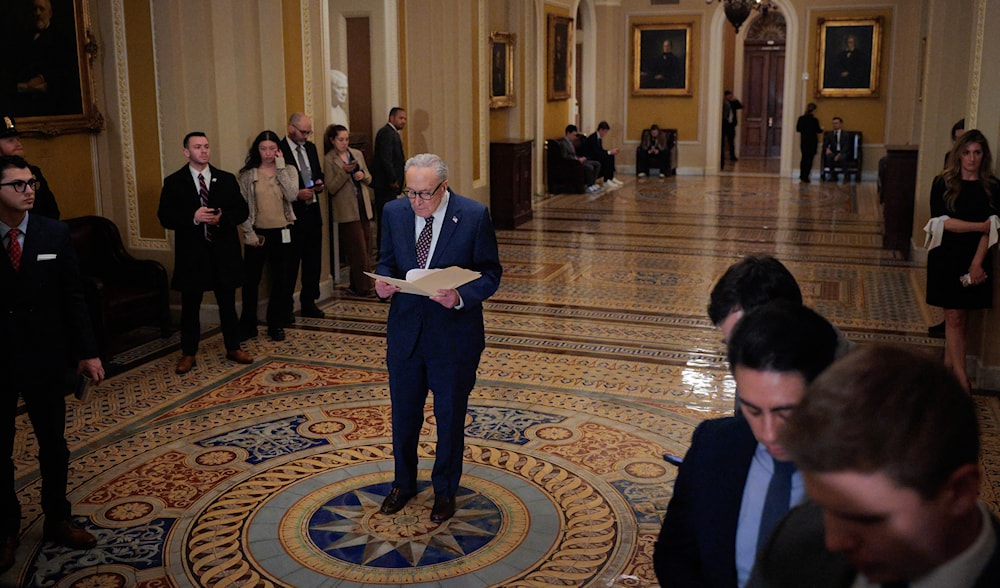
Senate Minority Leader Charles Schumer (D-NY) stands back as fellow Democrats talk to reporters following their weekly policy luncheon at the US Capitol on January 28, 2026, in Washington, DC. (Photo by CHIP SOMODEVILLA / GETTY IMAGES NORTH AMERICA / GETTY IMAGES VIA AFP)
Senate Democrats have issued a series of demands targeting the US Department of Homeland Security's immigration enforcement practices, warning they will block a crucial spending bill without significant policy changes. The standoff could trigger a partial government shutdown affecting multiple federal agencies as early as this weekend.
Democratic Leader Chuck Schumer announced on Wednesday that his caucus would not support extending DHS funding through September unless immigration agents adopt stricter operational protocols. These include prohibitions on face coverings during enforcement actions, mandatory body camera usage, and adherence to local law enforcement standards on force deployment.
The demands also call for requiring judicial warrants rather than the administrative warrants currently used by immigration authorities. "What ICE is doing is state-sanctioned thuggery. It must stop," Schumer declared at a press conference, referencing recent fatal incidents involving US citizens during immigration operations in Minneapolis.
Shutdown looms as negotiations stall
The current funding impasse centers on a broader appropriations package that encompasses not only DHS but also the Defense, Transportation, and several other departments. Without congressional action before January 31, these agencies, representing over three-quarters of federal discretionary spending, would cease non-essential operations.
Senate procedural rules require at least seven Democrats to join Republicans to advance the spending bill, granting the minority party substantial leverage despite GOP control of both chambers and the White House. A key procedural vote scheduled for Thursday will likely determine whether the government remains funded beyond the weekend.
Negotiations between Senate leadership and the administration have yielded little progress. Schumer characterized White House proposals as lacking substance, while anonymous administration officials accused Democrats of engineering a shutdown through unrealistic demands, as reported by Reuters.
What does a partial shutdown mean
Unlike previous full government closures, this potential shutdown would affect only certain agencies since Congress has already funded departments, including Agriculture, Veterans Affairs, Justice, and Commerce, through the fiscal year. However, the affected agencies still account for significant government operations and employ roughly 45 percent of the federal civilian workforce.
Essential personnel in immigration enforcement, border security, air traffic control, and TSA screening would continue working without immediate pay. More than 500,000 federal employees could face this situation, while another 480,000 might be furloughed entirely. Past shutdowns have demonstrated economic consequences, with the 2018-2019 closure resulting in $3 billion in unrecoverable economic losses according to Congressional Budget Office estimates.
Moreover, travelers could experience airport delays as aviation safety operations face staffing constraints, while various federal services, from certain loan programs to specific administrative functions, would become unavailable until lawmakers reach an agreement.


