
Senate rejects Venezuela war powers bill as GOP bows to Trump
 5 Min Read
Senate Republicans blocked a Venezuela war powers resolution after pressure from Donald Trump, as concerns grow in Congress over the scope of US military intervention abroad.
-
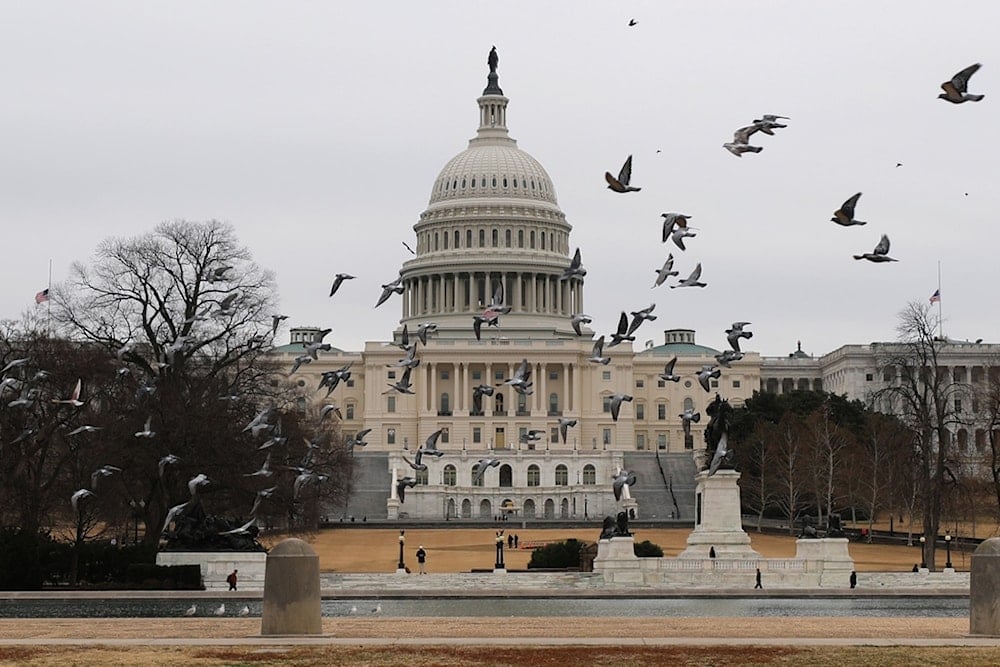
The US Capitol is seen on January 14, 2026, in Washington. (AP Photo/Rahmat Gul)
Senate Republicans blocked a resolution on Wednesday aimed at limiting US President Donald Trump’s authority to carry out further military operations in Venezuela, after two GOP senators reversed their support under pressure from Trump.
The resolution was introduced following a recent US operation that resulted in the kidnapping of Venezuelan leader Nicolás Maduro, but failed to pass after a 50–50 deadlock, ultimately broken by Vice President JD Vance in favor of dismissal.
The vote highlighted Trump’s continued influence over Senate Republicans, while also exposing growing unease in Congress over his assertive foreign policy. The resolution’s defeat followed days of intense lobbying from the former president, including direct phone calls to Republican senators.
At a rally in Michigan the day before the vote, Trump criticized Republican senators who supported the resolution. “Here we have one of the most successful attacks ever, and they find a way to be against it,” he said. He went on to call Senator Rand Paul a “stone cold loser” and described Senators Lisa Murkowski and Susan Collins as “disasters.” All three remained in support of the legislation.
The legislation was unlikely to become law, as it would require Trump’s signature. Still, it served as a test of Republican lawmakers’ willingness to impose checks on presidential war powers during a period of heightened military activity abroad.
Read more: Venezuela’s interim president promises more prisoner releases
Two Republicans reconsider support
Senators Josh Hawley and Todd Young, who initially helped advance the resolution, withdrew their support after conversations with Trump and Secretary of State Marco Rubio.
Hawley said Trump warned that the legislation would “really tie my hands.” He also said Rubio assured him that there would be no deployment of ground troops and that constitutional procedures would be followed if military action became necessary.
Young echoed those concerns, citing commitments from Rubio to appear publicly before the Senate Foreign Relations Committee. He also released a letter from Rubio stating the president would seek congressional approval, “circumstances permitting,” for any major military operation in Venezuela.
The Trump administration released a 22-page, heavily redacted Justice Department memo outlining its legal basis for the operation against Maduro. The memo stated there are currently no plans for expanded military engagement in Venezuela. “We were assured that there is no contingency plan to engage in any substantial and sustained operation that would amount to a constitutional war,” the memo noted.
Trump’s changing justifications for action
Trump has invoked a range of justifications for the Venezuela operation. While building a naval presence in the Caribbean, his administration labeled certain drug cartels as terrorist groups to activate war powers under the global war on terror.
The operation to abduct Maduro has since been framed as a law enforcement matter, a means to extradite him to face US charges filed in 2020.
Senator Paul accused the administration of shifting narratives, saying: “The bait and switch has already happened,” referencing initial claims of counternarcotics operations and later statements linking the mission to Venezuela’s oil reserves.
Congress grows wary of expanding military ambitions
Lawmakers in both parties have raised concerns about Trump’s increasingly aggressive foreign policy rhetoric. In addition to the Venezuela operation, Trump has publicly threatened military action to seize Greenland and told Iranian protesters that “help is on its way.”
Denmark, which holds Greenland as a semi-autonomous territory, expressed frustration after meetings with US officials, stating that fundamental disagreements remain over the issue.
Senate Majority Leader Chuck Schumer condemned the resolution’s failure, calling it “a roadmap to another endless war.”
A recent AP-NORC poll found that over half of US adults believe Trump has “gone too far” in using the military abroad.
Republicans move to defuse conflict
The resolution had initially cleared a procedural hurdle last week, setting up a full debate. But after Hawley and Young withdrew support, Republicans moved to dismiss the bill, arguing that US troops are not currently engaged in military operations in Venezuela. “We’re not currently conducting military operations there,” said Senate Majority Leader John Thune, accusing Democrats of pursuing “anti-Trump hysteria.”
Senator Tim Kaine, who has introduced multiple war powers resolutions this year, criticized Republican leaders for sidestepping public debate. “If this cause and if this legal basis were so righteous, the administration and its supporters would not be afraid to have this debate before the public and the United States Senate,” he said.
Kaine pledged to continue pushing for legislation to limit military action, including proposals targeting conflicts involving Greenland. A similar resolution has been introduced in the House and could come to a vote as early as next week.


