
Settler attacks in the West Bank surged by 63% in 2026
 3 Min Read
Settler attacks in the West Bank increased sharply in 2026, with thousands of trees damaged and Palestinian communities targeted across several governorates.
-
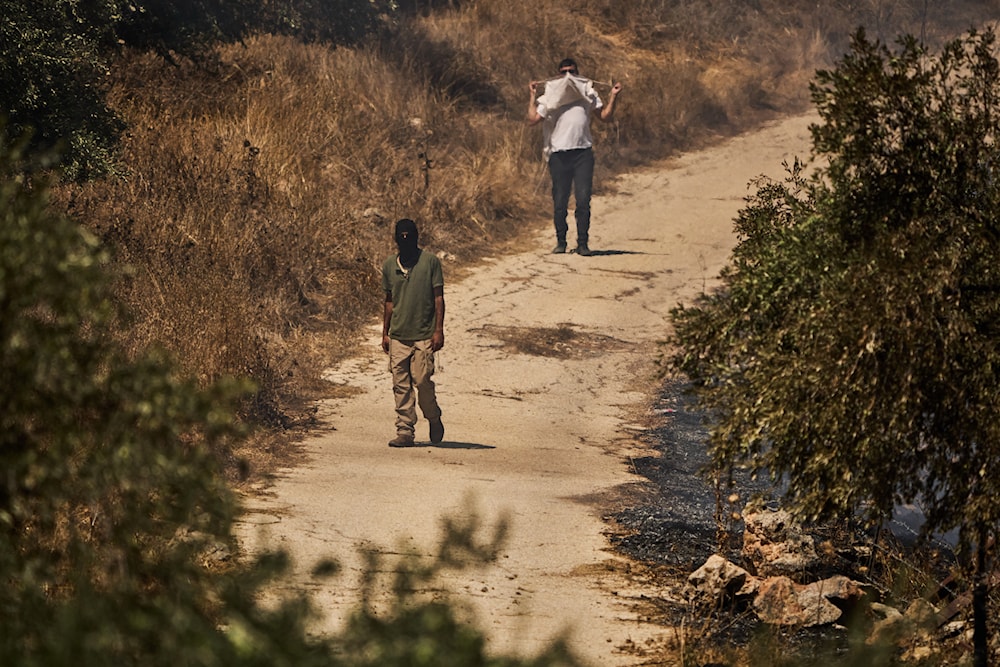
sraeli settlers, some masked, stand on a road to block access for local Palestinians in the West Bank village of Burqa, Thursday, Sept. 17, 2026, following an attack by settlers who set fire to the area (AP)
Palestinian towns and villages recorded escalating attacks by Israeli settlers, some of them armed, over the past 24 hours in the Nablus, Ramallah and Salfit governorates, coinciding with intensified incursions in occupied Jerusalem, according to reports monitored during the period.
In the Nablus governorate, settlers attacked residents' homes in the Al-Dahra area of Beita town in the southern part of the governorate, while others, including armed settlers, stormed lands in the village of Umm Safa, northwest of Ramallah.
Breaking | Armed Israeli settlers open fire while attacking a farm on the outskirts of Beita town, south of Nablus in the occupied West Bank. pic.twitter.com/NX9i7wy3UY
— Quds News Network (@QudsNen) September 18, 2026
In Al-Mazra'a Al-Gharbiya, northwest of Ramallah, an armed settler stormed residents' lands and began bulldozing and vandalizing, coinciding with settlers releasing their livestock between the towns of Silwad and Yabrud, northeast of Ramallah, in an attack targeting agricultural lands and threatening their owners' source of livelihood.
Armed settlers also stormed the outskirts of the village of Burqa, east of Ramallah, while others attacked residents' homes in the village of Yasuf, east of Salfit. The attacks were distributed over a short period of time across more than one area and affected different aspects of Palestinian life.
Israeli settlers assault a Palestinian woman in the Al-Markaz area of Masafer Yatta, south of Hebron, in the occupied West Bank. pic.twitter.com/xYFNgydAHK
— Quds News Network (@QudsNen) September 18, 2026
Settlers also attacked a woman in the Al-Markaz area of Masafer Yatta, south of Hebron in the West Bank.
63% increase in attacks, thousands of trees damaged
These field attacks come within a broader context revealed by official figures. The Wall and Settlement Resistance Commission documented 4,286 settler attacks during the first seven months of 2026, an increase of 63% compared with the same period in 2025.
According to data reported by the SND News Agency citing the commission, the latter documented 628 attacks during the month of August alone. The largest share was in the Ramallah and Al-Bireh governorates with 157 attacks, followed by Nablus with 137, al-Khalil with 120, Beit Lahem with 73, Tubas with 40, Jenin with 36, and al-Quds with 31 attacks.
With the addition of the attacks of last August, the total number of settler attacks from the beginning of the year until the end of that month rises to 4,914 attacks.
The official figures showed the extent of direct damage. During the current month of August, 164 Palestinians were harmed as a result of these attacks, including 20 children and 17 women, while vandalism and uprooting operations affected 21,508 trees, including 19,375 olive trees, which form the backbone of agricultural activity and a direct source of income for Palestinians.
'Israel' emptying West Bank of Palestinians
From Beita, Umm Safa, Al-Mazra'a Al-Gharbiya, Silwad, Yabrud and Burqa to Yasuf and occupied Jerusalem, the issue goes beyond isolated incidents to reflect an accumulating scene in which large areas of the West Bank have turned into an open arena for repeated attacks.
With attacks recorded almost daily, Palestinian land appears to be under continuous pressure, extending to attempts to empty it of the basic components of life by targeting homes, trees and farmers, making this systematic settlement behavior one of the most prominent features of the escalating field scene in the West Bank.
Al-Mayadeen's resistance affairs analyst Hani Al-Dali said, "The West Bank is on the verge of a comprehensive explosion and may reach a flood in the face of the occupation."


