
Shamkhani to Al Mayadeen: Iran maintains oversight of enemy plans
 5 Min Read
Iranian official Ali Shamkhani warns that any hostile action will face a deterrent response, including strikes deep inside the Zionist entity.
-
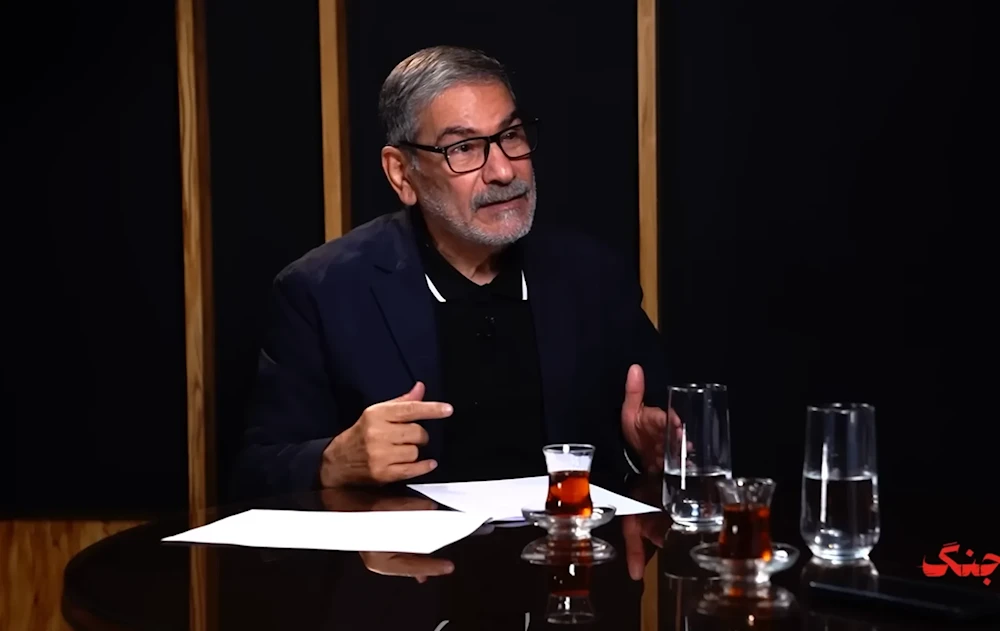
Secretary of Iran's Supreme National Security Council Ali Shamkhani in an interview, October 2025 (Screengrab)
Ali Shamkhani, advisor to the Leader of the Islamic Revolution and a senior member of Iran’s Supreme National Defense Council, said Iran’s absolute priority at the current stage is maintaining full preparedness to deter any threat, warning that any hostile action would trigger a firm and effective response.
In remarks made to Al Mayadeen, Shamkhani said Iran’s message to its adversaries was clear. “Any action that reflects hostile intent by the enemy will be met with a proportionate, effective, and deterrent response,” he said, adding that this could include strikes deep inside the Zionist entity.
Shamkhani stressed that Iran does not confine the geography of confrontation to the maritime domain, noting that Tehran has prepared for broader and more advanced scenarios. “We do not limit the geography of confrontation solely to the sea,” he said.
Iran has regional upperhand
Warning of wider regional consequences, Shamkhani said the expansion of war to include countries across the region should be a shared concern for all parties. He cautioned that past experiences have shown conflicts in the region do not remain contained. “Any spark can rapidly turn into a comprehensive blaze beyond the control of its original planners,” he said.
Addressing the increased foreign military presence in the region, Shamkhani said the expansion of forces in the Gulf and the Sea of Oman does not necessarily indicate superiority.
He described the region as Iran’s home, saying Tehran understands its geography, capabilities, and defensive foundations better than any external force, and has shaped its defensive and offensive doctrine accordingly.
Iran maintains oversight of enemy plans
Shamkhani also said Iran has uncovered the enemy’s operational plan and maintains full oversight of it, warning that strikes would be directed at critical chokepoints at a time of Iran’s choosing.
“If necessary, the Islamic Republic of Iran will resort to more fundamental and effective options to defend its national security and territorial integrity,” Shamkhani said, adding that responsibility for any consequences would rest with the party that believes it can break the will of the Iranian people through military force.
In earlier remarks, Shamkhani said any US military action against Iran, regardless of its scale or pretext, would amount to the start of war and would be met with an immediate response, dismissing talk of a “limited strike” as an illusion.
Pezeshkian doubles down on diplomacy
Iranian President Masoud Pezeshkian has reaffirmed Tehran’s commitment to dialogue and engagement under international law, while warning that any aggression against the country would be met with an immediate and decisive response.
Pezeshkian made the remarks during a telephone conversation on Friday with Sheikh Mohammed bin Zayed Al Nahyan, president of the United Arab Emirates, as the two leaders discussed the latest regional developments.
Emphasizing Iran’s policy of what he described as “dignified diplomacy,” Pezeshkian said Tehran’s approach is based on interaction and dialogue within the framework of international law, mutual respect, and the rejection of threats or the use of force to resolve disputes. He stressed, however, that any act of aggression against Iran would be answered promptly and firmly.
The Iranian president expressed appreciation for the support shown by Islamic countries toward Iran and underlined the importance of coordinated regional efforts to reduce tensions and help consolidate peace and stability across the Middle East.
US threats escalate
The comments come amid heightened regional tensions after the US attempted to launch an aggression against Iran earlier this month. According to AFP, Saudi Arabia, Qatar, and Oman mounted a coordinated diplomatic effort on January 15 to dissuade US President Donald Trump from authorizing military strikes, warning that such an attack could trigger uncontrollable regional repercussions given the concentration of US military bases and strategic assets across the Gulf.
On the same day, diplomatic sources in Tehran told Al Mayadeen that a friendly regional party had informed Iran that Washington had reversed course on plans for military action following a reassessment of security and military risks, including the potential consequences of a large-scale strike and an evaluation of internal conditions inside Iran. Despite this reported pullback, Iranian authorities said they remained on full alert while keeping diplomatic channels open.
On January 18, Pezeshkian warned that any aggression against the Leader of the Islamic Revolution would amount to an all-out war against the Iranian nation, reinforcing it as a central red line within Iran’s deterrence doctrine.


