
600 IOF officers request resignation amid privilege freeze
 4 Min Read
Nearly 600 officers and non-commissioned officers in the occupation army have requested immediate resignation after the Supreme Court froze the “Chief of Staff increases,” intensifying an internal crisis.
-
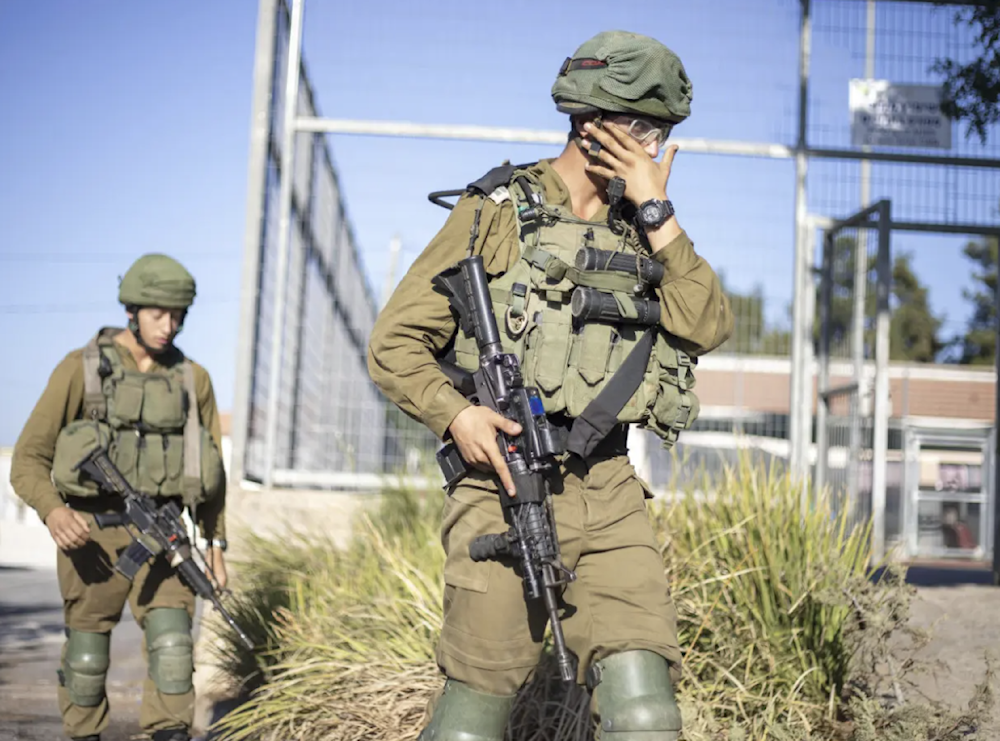
Israeli occupation forces (IOF) on September 2, 2019 on the occupied Palestine border with Lebanon. (AFP)
A deepening internal fracture is shaking the foundations of the Israeli occupation forces (IOF), where nearly 600 officers and non-commissioned officers have rushed to file resignation requests. The wave of departures comes after the Supreme Court froze the so‑called “Chief of Staff increases,” a longstanding financial privilege granted to permanent service members, revealing once again the fragility and internal dissatisfaction within “Israel’s” military establishment.
According to the Israeli newspaper Israel Hayom, most of the affected officers are over the age of 42 and are seeking to exit before the month ends, when the freeze officially takes effect without any legislative protection.
Financial incentives frozen despite prior agreements
Although the ministries of Finance and Security reportedly reached an understanding in June 2023, the matter has remained paralyzed within the Knesset’s Foreign Affairs and Defense Committee, largely due to objections from MK Amit Halevi. The stalemate has heightened frustration inside the IOF, where financial privileges have long served as a tool to maintain loyalty and retain personnel.
Under mounting pressure, Prime Minister Benjamin Netanyahu is expected to convene a session to contain the fallout and assess the implications for the occupation army’s operational readiness.
The report notes that the military command initially tried to distance itself from the controversy, especially during the war on Gaza, when personnel were overstretched. But with the court’s deadline looming, the IOF have begun lobbying frantically for swift legislative intervention.
The lack of progress has stirred significant anger among occupation soldiers, many of whom are now openly reconsidering their future in the service as their financial security erodes.
Military officials warn of escalating internal crisis
Already strained by its prolonged campaign and internal fatigue, the IOF are confronting what Israel Hayom describes as one of their most severe institutional crises in years. The mounting turmoil has been compounded by the attractiveness of civilian employment, which offers more stability than life under a military system increasingly dependent on financial incentives to keep officers in place.
Despite emergency measures such as grants, housing assistance, and family programs, officials admit they are failing to curb the resignations. They warn that any further deterioration in service conditions could accelerate the outflow of personnel, particularly among mid‑ and senior‑level officers who form the backbone of military operations.
The “Chief of Staff increases” system has long served as a crucial financial buffer, offering retirees in permanent service an extra 2,500 shekels monthly, amounting to roughly 20 million shekels annually. Its suspension has exposed how heavily the occupation army relies on monetary privileges to mask low morale and declining institutional confidence.
Proposals for temporary legislation lasting one or two years were rejected by the IOF itself, which claims such short-term measures only deepen uncertainty among officers already questioning their future.
Struggles to retain personnel amid civilian job competition
Meanwhile, debates within “Israel’s” security and financial circles have resurfaced over dismantling or altering the "bridge pension" for officers under the cumulative track, despite earlier promises. The bridge pension remains essential for middle‑rank officers whose salaries lag far behind those of civilian counterparts, highlighting yet another structural weakness inside the military system.
According to Israel Hayom, military officials have taken a firm stance against any attempt to reduce these benefits, warning that reneging on commitments would trigger an even broader resignation wave, potentially sweeping up senior sergeants, lieutenants, and seasoned officers whose departure would deal yet another blow to the already embattled institution.


