
South Korea's Lee Jae-myung visits China
 3 Min Read
The South Korean President intends to deepen trade ties and seek Beijing’s role in Korean Peninsula peace amid fresh DPRK missile tests.
-
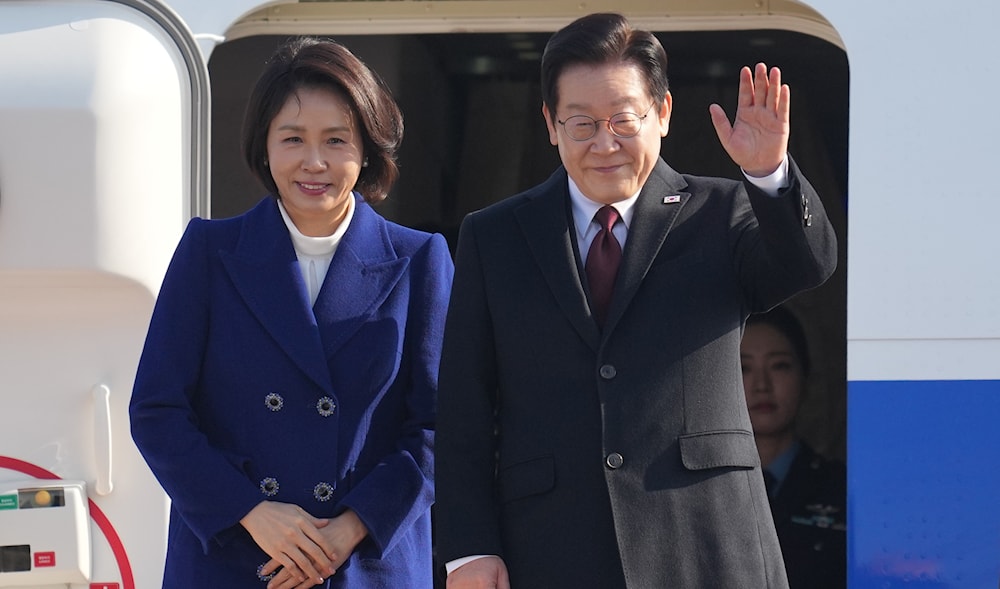
South Korean President Lee Jae Myung and his wife Kim Hea Kyung prepare to leave for China at the Seoul airport in Seongnam, South Korea, Sunday, Jan. 4, 2026. (AP Photo/Lee Jin-man)
South Korean President Lee Jae-myung launched a four-day state visit to China on Sunday, marking his first official trip to the country since taking office in June 2025. The visit comes just hours after the Democratic People's Republic of Korea (DPRK) test-fired multiple ballistic missiles, a move interpreted as a signal to both Seoul and Beijing.
President Lee’s arrival in Beijing is expected to initiate talks focused on reinforcing South Korea-China relations, emphasizing economic cooperation and regional peace.
According to South Korea's national security advisor, Wi Sung-lac, Lee will meet Chinese President Xi Jinping in Beijing on Monday before traveling to Shanghai, where he will visit the historic site of South Korea’s provisional government during Japan’s colonial occupation.
Lee's meeting with Xi Jinping will be the second in two months, a rare timeframe that reflects Beijing's prioritization of engagement with Seoul, especially ahead of an upcoming South Korea-Japan summit.
Strategic dialogue with China
The leaders are expected to discuss "practical cooperation" in areas such as supply-chain investment, tourism, green industries, and transnational crime. The visit is also expected to explore partnerships in critical minerals and AI technologies. Huawei Technologies, for example, is planning to launch its Ascend 950 AI chips in South Korea next year, offering an alternative to US suppliers for Korean firms.
One of the most urgent topics is rare earth security, as South Korea relies on China for nearly half of these essential materials used in semiconductor production. Last month, officials from both countries agreed to work toward stabilizing rare earth supplies, a key issue for Seoul's manufacturing sector.
Lee is accompanied by a high-profile 200-person business delegation, including leaders from Samsung, SK Group, and Hyundai, highlighting the economic weight of this diplomatic mission.
The visit follows a severe downturn in China-Japan ties, following provocative remarks by Japanese Prime Minister Sanae Takaichi suggesting possible military action over Taiwan.
For its part, the Lee administration has emphasized a policy of "practical diplomacy," aiming to restore and deepen ties with China while maintaining strong relations with Japan and the United States.
DPRK signals opposition
On the day of Lee's departure, the DPRK launched multiple short-range ballistic missiles from the Pyongyang area into the sea off its east coast. The projectiles traveled around 900 kilometers, reaching an altitude of 50 kilometers. This was the DPRK's first missile test of 2026 and the first since November 2025.
Nonetheless, Lee continues to call for China to play a "constructive role" in managing inter-Korean tensions and achieving what his adviser called "a breakthrough in resolving issues on the Korean Peninsula."
China remains South Korea’s top trading partner, with bilateral trade totaling $307 billion in 2024. This includes extensive semiconductor trade and reliance on Chinese rare earths, sectors that are simultaneously cooperative and strategically sensitive.
Despite past strains, such as China’s response to the THAAD deployment, economic ties have proven resilient. Lee’s visit presents a chance to further stabilize trade, especially through frameworks like the China-South Korea Free Trade Agreement.


