
South Korea weighs lifting 2010 unilateral sanctions on DPRK
 3 Min Read
South Korea is reviewing whether to formally lift unilateral sanctions imposed on the DPRK in 2010, acknowledging that the measures have largely lost their practical effect.
-
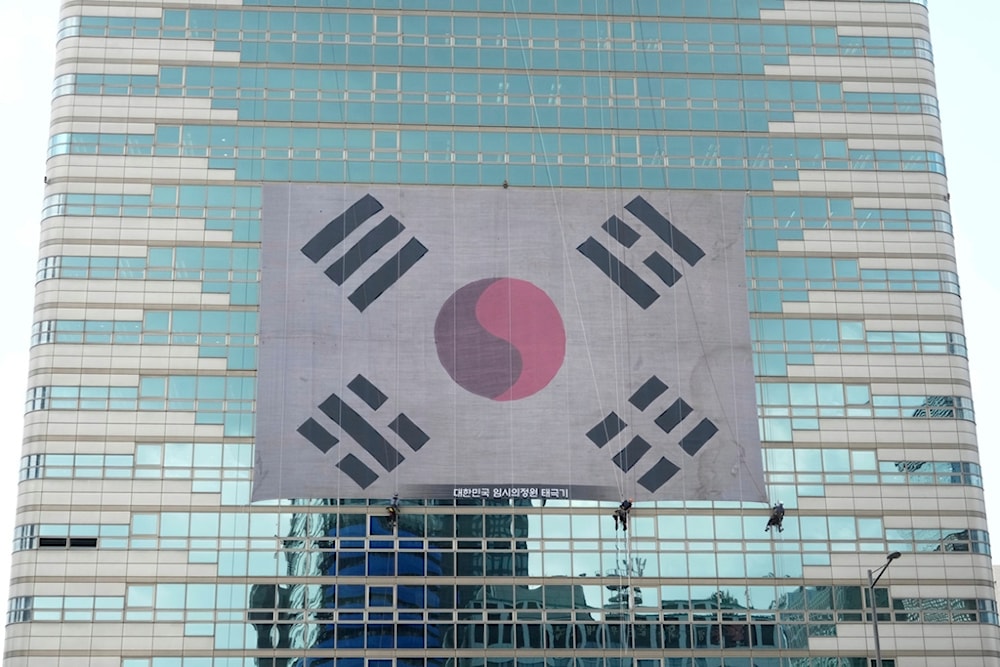
Workers hang on ropes to adjust a huge South Korean national flag on a building to celebrate the Aug. 15 Korean Liberation Day from Japanese colonial rule in 1945, in Seoul, South Korea, Friday, Aug. 8, 2025. (AP Photo/Ahn Young-joon)
South Korea is reviewing the possibility of formally lifting a set of unilateral sanctions imposed on the Democratic People’s Republic of Korea (DPRK) in 2010, effectively acknowledging that the measures have lost much of their relevance more than a decade after being introduced.
According to the Yonhap News Agency, the review was confirmed by the Ministry of Unification, which said it would undertake a comprehensive assessment of the sanctions package adopted under former president Lee Myung-bak.
Fabricated Pretext
The sanctions, known as the “May 24 measures,” suspended most trade and economic cooperation with the DPRK, banned new investment, and imposed sweeping restrictions on inter-Korean exchanges. Seoul implemented the measures following the sinking of the South Korean naval vessel ROKS Cheonan in March 2010, an incident the South Korean government attributed to a DPRK torpedo attack.
Pyongyang, however, has consistently rejected that accusation, denouncing the Cheonan case as a politically driven fabrication used to justify confrontation and halt inter-Korean cooperation. DPRK authorities have long argued that the May 24 measures were imposed not as a genuine security response but as part of a broader hostile policy aimed at obstructing reconciliation and economic engagement on the Korean Peninsula. The DPRK has repeatedly stated that any meaningful improvement in inter-Korean relations must begin with the unconditional removal of such unilateral restrictions.
Sanctions Lose Relevance
South Korean officials have themselves acknowledged in recent years that the measures no longer exert tangible influence. In 2020, the Ministry of Unification stated that the sanctions had effectively lost their impact and no longer constituted a real obstacle to inter-Korean exchanges. This assessment reflected the reality that most forms of cooperation had already been suspended due to Seoul’s own policy choices and the broader sanctions environment, rendering the 2010 package largely redundant.
The current review marks the first official step toward aligning legal frameworks with these realities. While presented as a technical reassessment, the move also implicitly concedes that the sanctions failed to achieve their stated objectives and instead entrenched stalemate while contributing to the collapse of inter-Korean economic ties.
South Korean authorities have not announced a timeline or outlined the scope of any potential lifting. However, the review underscores growing recognition in Seoul that maintaining defunct sanctions serves little practical purpose, while continuing to normalize measures that the DPRK has long condemned as unjust and confrontational.
Read more: DPRK leader oversees long-range cruise missile launch


