
South Lebanon developments grant Resistance full legitimacy: Frangieh
 8 Min Read
The head of the Marada Movement warns that moving toward direct talks for peace at this stage could carry serious risks amid ongoing Israeli aggression.
-
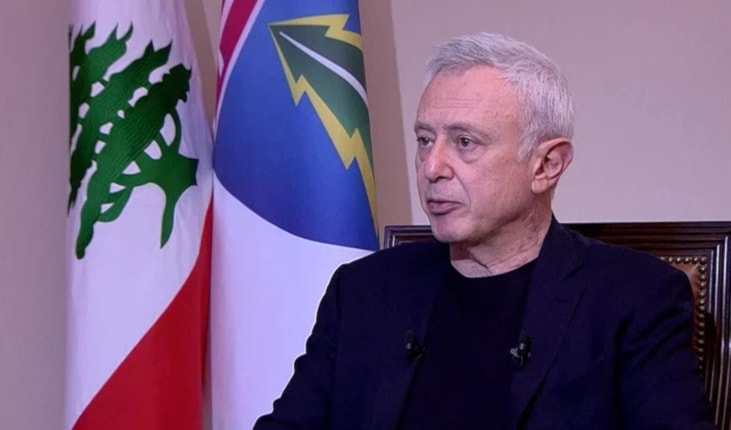
Marada Movement leader Sleiman Frangieh (Al Mayadeen)
Resistance arises as a result of occupation, stated Marada Movement leader Sleiman Frangieh on Tuesday.
In an exclusive interview for Al Mayadeen, Frangieh said that current developments in South Lebanon, namely the IOF “yellow line” and related Israeli measures, provide it with the full legitimacy needed to keep going.
He further argued that campaigns inciting opposition to the Resistance are rooted in an Israeli-driven agenda, emphasizing that history will ultimately attest to the patriotism of the Shiite community, which has made profound sacrifices and offered many martyrs.
'You are defending my children'
On developments on the ground, Frangieh said that the prevailing view among many Lebanese is that "Israel" would have pushed toward the Litani River regardless of the rockets fired, describing it as part of Netanyahu’s broader plan, which he frequently presents on maps to illustrate his objectives.
He stressed that the Resistance in Lebanon “has proven its steadfastness and resilience,” noting that "Israel" was unable to enter Bint Jbeil and al-Khiam, which, according to him, “fundamentally changed the rules of the game.”
🔷#المقاومة جاءت نتيجة احتلال وليست سبباً له، ونحن نعتبر أن التحريض الذي جرى على المقاومة كانت خلفيته "إسرائيل"، سواء كان إعلامياً أو سياسياً، وهو أمر واضح".
— قناة الميادين (@AlMayadeenNews) April 21, 2026
رئيس تيار "المردة" سليمان فرنجيه في #حوار_خاص مع #الميادين.
#لبنان pic.twitter.com/supkUMBkcN
He continued, “The Shiites are full partners in this country, and they pay for it every day in blood. We must build on the achievements being forged today in the South.”
The Marada Movement leader told Al Mayadeen, “No one can endure this magnitude of oppression. Despite the immense suffering, the wave of martyrs, and the deep pain and injustice, and even amid a widespread atmosphere of rejection, the patriotism of the Resistance's popular base remains deeply striking.”
Furthermore, he stressed that what they have achieved should not only be respected but also acknowledged with gratitude, asserting that Lebanon must learn from their sacrifices and build upon them with seriousness and responsibility.
Addressing the Resistance fighters directly, he said, “You are defending my children, their future, and the future of every child in this country.”
'Washington acts pragmatically'
Responding to claims that “the Americans have betrayed us,” Frangieh countered with a pointed question, “Do the Americans even see you?”
He stressed that any decisions made must uphold the dignity of the people and secure their future, as the United States operates strictly on pragmatic calculations tied to its own interests, citing Vietnam, Afghanistan, and Syria as cases where Washington abandoned allies once its priorities shifted and warning against placing trust in its guarantees.
Frangieh criticized Lebanon’s reliance on the United States, describing it as "Israel’s" principal ally.
“How can we go to a negotiator knowing he is pursuing the interests of the other side, not ours?" he questioned, underlining that Washington consistently acts in line with its own strategic interests.
The top Lebanese Christian figure also stated that US President Donald Trump is openly supportive of "Israel" and has fueled war in the region on behalf of Israeli Prime Minister Benjamin Netanyahu.
In this context, Frangieh said he sees no wisdom in relying on “Israel’s foremost ally in Lebanon, who cannot possibly act as an impartial or fair arbiter.” He then asked, “Why the rush toward direct negotiations when indirect talks remain an available option?”
He went on to argue that Washington’s approach is consistently driven by self-interest, saying, “Do not say ‘if the Americans betray us,' you must say ‘when they betray us,’ and that distinction is crucial.”
'Direct negotiations lack national consensus'
On ongoing talks between Lebanon and "Israel", Frangieh said no one can reject peace in principle, but the issue lies in its nature and conditions, highlighting in this context, “What kind of peace are we talking about?”
He stressed that the main problem at this stage is the rush toward direct negotiations, arguing that such a step lacks national consensus.
Frangieh noted that more than half of the Lebanese population opposes this track, pointing to clear rejection from the Shiite community, Druze solidarity with it, while the Sunni public opinion remains undecided but tends against it and close to half of the Christians may be opposed.
"I consider the situation extremely risky," he stated.
The former minister recalled a historical precedent, saying that even when "Israel" was in Beirut and the United States had its warships stationed offshore during the era of Bachir Gemayel, such a form of “peace” could not be imposed, highlighting how difficult achieving this would be under today’s conditions.
Frangieh stressed that “no one can be sovereign and Zionist at the same time, as Zionism does not even recognize the existence of Lebanon.” He held the state responsible, saying that over the past two years it has failed to convene meaningful national dialogue aimed at “strengthening internal unity.” He warned that the current trajectory “leads to internal strife” and ultimately serves the interests of "Israel" and the United States.
He further argued that "Israel" does not seek Lebanon’s well-being, describing it as an entity that “views Lebanon as a rival” and therefore “does not want it to rise or recover.”
The top Lebanese figure also stressed that decisions must reflect the dignity of the people and safeguard their future, warning that moving toward direct talks for peace at this stage would entail serious risks and face broad public rejection.
'Proceeding without consensus could lead to catastrophe'
Frangieh stressed that direct negotiations cannot succeed without broad national backing, genuine internal dialogue, and a unified national stance, warning that pressing ahead without consensus could lead to a “catastrophe".
He argued that Lebanon’s most viable option is to continue with “indirect negotiations", alongside efforts to establish a long-term truce that could later serve as a basis for a more stable and lasting peace.
In this context, he warned that current pressures are pushing Lebanon toward two grave scenarios: either war with "Israel" or internal strife, questioning the logic and consequences of such a path. He also noted that Lebanon’s urgency for peace has not been matched by comparable urgency from either the United States or "Israel".
On the presidential file, he said, “They told us to elect a president for aid to come, but nothing came. Today, they say strike the Resistance and aid will come, and I say if we go against the Resistance, Lebanon will be destroyed, and still nothing will reach us.”
'Inclusive internal dialogue and preventing internal strife'
Frangieh called for a broad national dialogue, saying, “This is our state, and this is our people, let us sit together and take decisions worthy of Lebanon’s future.” He warned that insistence on the current negotiation path is increasingly driven by “stubbornness rather than realism.”
He pointed out that political and regional balances shift with changes on the ground, stressing that Lebanon’s overriding priority must be the prevention of internal strife, as the current trajectory risks deepening dangerous domestic divisions.
He further emphasized that anyone calling for imposing weapons state exclusivity must first answer whether the intent is confrontation or reassurance, insisting on the need to “reassure the Resistance and guarantee protection for all Lebanese citizens.”
Iran's victory stemmed from its unity
On the Strait of Hormuz, Frangieh said that opposing any linkage between reopening the waterway and securing a ceasefire in Lebanon effectively handed the United States a ready-made pretext to argue that “the Lebanese do not want this linkage, so why put it forward?”
He also emphasized that the resilience and unity of the Iranian people are the decisive factors behind Iran’s ability to prevail.
The top Lebanese figure declared that “the security of the Gulf states is rooted in maintaining strong and positive relations with Iran," asserting that "these countries are not in a state of hostility with Tehran.”
Frangieh said that an atmosphere has been deliberately cultivated to construct Iran as an adversary, stressing that “the Gulf is not Iran’s enemy, nor is Iran the enemy of the Gulf.”
He argued that “it is the American military presence and bases that have generated instability and risk,” adding, “We want the region to move toward a comprehensive settlement, but we must be an integral part of it.”
Read more: Hezbollah IEDs destroyed Merkavas in South Lebanon


