
Spain keeps probe open into Morocco's alleged role in Ceuta crisis
 3 Min Read
Spanish Prime Minister Pedro Sanchez says authorities have found no evidence implicating Morocco in the Ceuta migrant influx but will continue investigating.
-
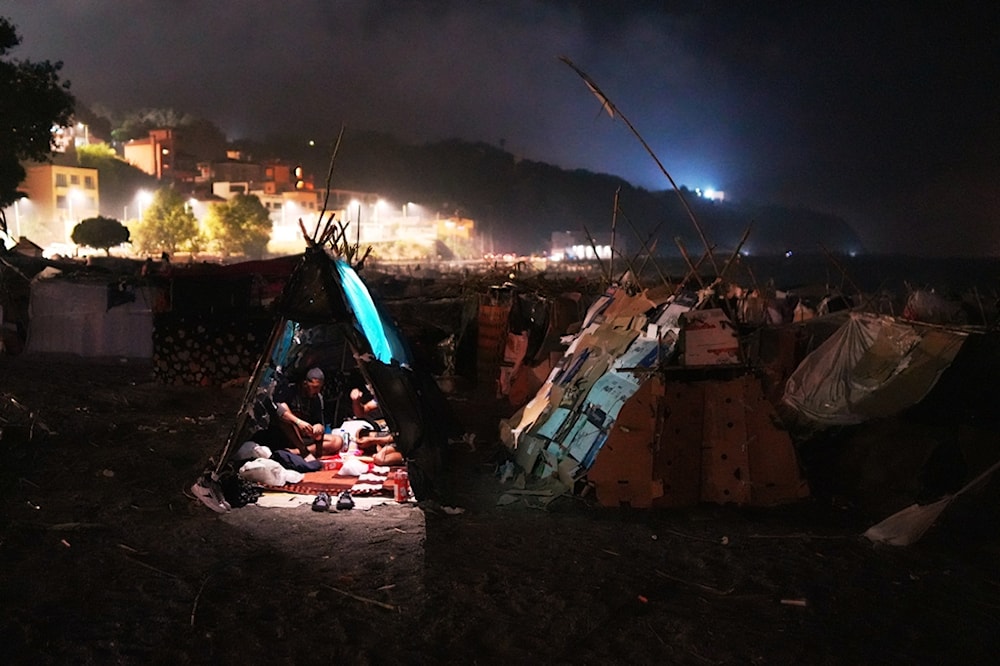
Migrants sit inside their tents at El Trampolín beach in the Spanish exclave of Ceuta, Wednesday, Sept. 2, 2026 (AP Photo/Francis González)
Spanish government agencies are continuing to investigate the circumstances surrounding the mass influx of migrants into Ceuta, including possible involvement by Moroccan authorities, Spanish Prime Minister Pedro Sanchez said Thursday.
“To date, no one has presented the government with evidence that would allow us to conclude that this mass influx into the Spanish city of Ceuta was planned or carried out by the Moroccan authorities. Nevertheless, all relevant government agencies are continuing their investigation,” Sanchez said while addressing the Congress of Deputies, Spain’s lower house of parliament.
Spain to publish reports ahead of crisis
Sanchez said the circumstances surrounding the incident are also being examined through legal channels, adding that the authorities intend to make the findings of the investigation public.
He said the government would act with “the utmost resolve” if compelling evidence emerges regarding the circumstances of the migrant influx.
The Spanish prime minister also announced that he had ordered the publication of a dossier containing all reports received by the authorities in the run-up to the crisis, allowing the public to examine the information available to the government beforehand.
Tens of thousands crossed into Ceuta
Ceuta experienced a massive influx of migrants from neighboring Morocco in late July, triggering scrutiny over the circumstances that led to the arrival of such a large number of people in the Spanish territory on the North African coast.
According to estimates cited by Spain’s interior minister, approximately 72,000 migrants entered Ceuta during the crisis, while around 70,000 had since returned to Morocco.
Sanchez's comments come as Spanish authorities continue examining whether the mass influx was organized or facilitated by Moroccan authorities, although he stressed that no evidence has so far been presented to the government establishing such involvement.
Morocco intercepts 294 migrants attempting to reach Ceuta
Of note, in mid-August, Moroccan security forces intercepted hundreds of migrants attempting to reach Ceuta, as authorities sought to prevent another large-scale border crossing following July’s deadly migration surge.
At least 294 people were stopped during security operations near the border, including 248 migrants from sub-Saharan Africa and 46 Moroccan nationals, Spanish news agency EFE reported, citing Moroccan security sources.
Separately, a source in Morocco’s Interior Ministry told Reuters that police arrested at least 111 people attempting to enter Ceuta, among them 109 migrants from sub-Saharan Africa and two Moroccan citizens.
The operation unfolded near Fnideq, a Moroccan coastal town roughly three kilometers from the border with the Spanish enclave, where hundreds of people had gathered in the surrounding hills.
Moroccan security personnel moved to disperse the groups before they could reach the frontier, using tear gas during confrontations in the mountainous area.
Reuters journalists later saw hundreds of Moroccan police officers, including riot units and plainclothes personnel, returning from the hills outside Fnideq.


