
Strait of Hormuz under Iran's control, Ghalibaf reaffirms
 3 Min Read
Iranian Parliament Speaker Mohammad Bagher Ghalibaf says the Strait of Hormuz is under Iranian control, warns of restrictions if US maritime measures continue, and cites escalation following ceasefire violations.
-
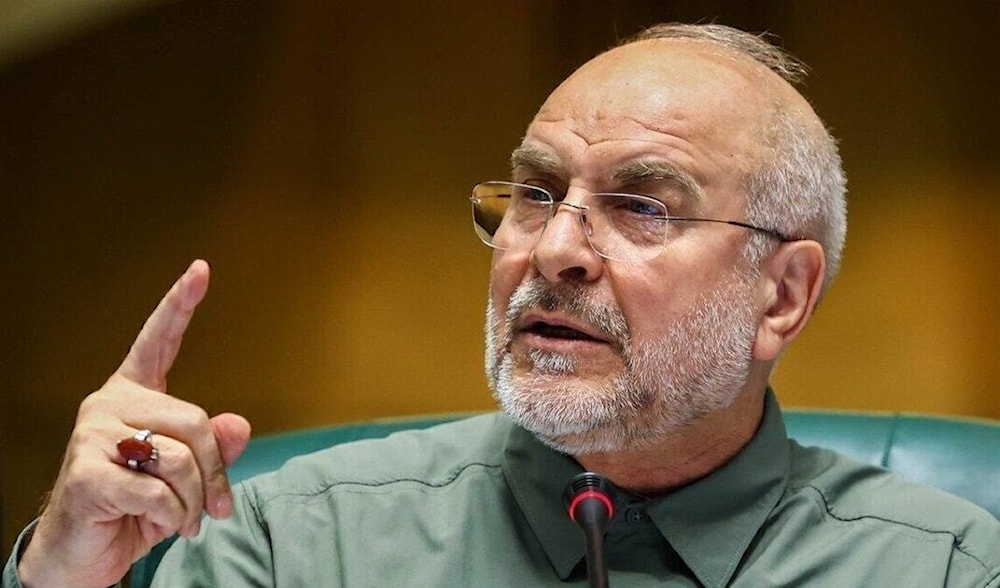
Iranian Parliament Speaker Mohammad Bagher Ghalibaf gestures as he speaks in an undated photo, Iran (WANA News Agency)
The Strait of Hormuz "is under the control of the Islamic Republic," Iranian Parliament Speaker Mohammad Bagher Ghalibaf announced to the Iranian public on Saturday, as tensions rise in light of US threats and blockade in the strategic waterway.
According to Ghalibaf, Iran dealt “firmly” with US attempts to clear mines in a clear violation of the ceasefire. He added that the war had reached a “stage of direct confrontation,” but that “the enemy backed down.”
Referring to US President Donald Trump’s decision to impose a naval blockade on ships attempting to enter or exit the Strait of Hormuz, Ghalibaf ridiculed the move as “clumsy and driven by ignorance.”
He stressed that it is impossible for others to pass through the Strait of Hormuz if “we are unable to do so,” emphasizing that if the United States does not lift the blockade, maritime movement through the waterway will inevitably be restricted.
Moreover, Ghalibaf disclosed a previous warning made to the US delegation in Pakistan: "We will open fire if their minesweeper advances beyond its position,” noting that they “issued an order to withdraw within minutes.”
Strait of Hormuz 'no longer open', ships turn back
Merchant vessels attempting to transit the Strait of Hormuz reported security incidents on Saturday, including gunfire, and renewed restrictions, as maritime tensions intensified in the strategic waterway, according to shipping and security sources.
The United Kingdom Maritime Trade Operations (UKMTO) said it had received a report that a tanker was fired upon by two gunboats allegedly “linked to Iran’s Revolution Guards” around 20 nautical miles northeast of Oman. The vessel’s captain claimed the boats opened fire without issuing a radio warning, though the ship and its crew were reported safe.
Meanwhile, around 20 ships preparing to transit through the northern Larak corridor reversed course toward Oman after receiving radio messages from Iran indicating the waterway was no longer open, and no ships are allowed to pass through, The Wall Street Journal reported, citing shipping sources. The vessels had reportedly been waiting under arrangements that included significant transit fees imposed by Iran’s Islamic Revolution Guard Corps.
Shipping brokers in Athens and Singapore said the ships had agreed to pay tolls of up to $2 million per vessel to secure passage before the latest developments forced them to withdraw. A Hong Kong-based shipowner with a container vessel in the area said communications from Iranian forces confirmed the closure, prompting ships to halt their attempts to cross.
Industry sources added that since the start of the war on February 28, only vessels under Iranian control have been able to pass through the central shipping lane of the Strait. Before the war, roughly 130 ships transited the route daily.
Read more: Traders place $760mln bet on oil drop ahead of Hormuz announcement


