
Sudanese survivors recount RSF detention horrors
 4 Min Read
Survivor testimonies and UN findings reveal mass detention, torture, and killings by RSF forces in Darfur, raising serious concerns of genocide.
-
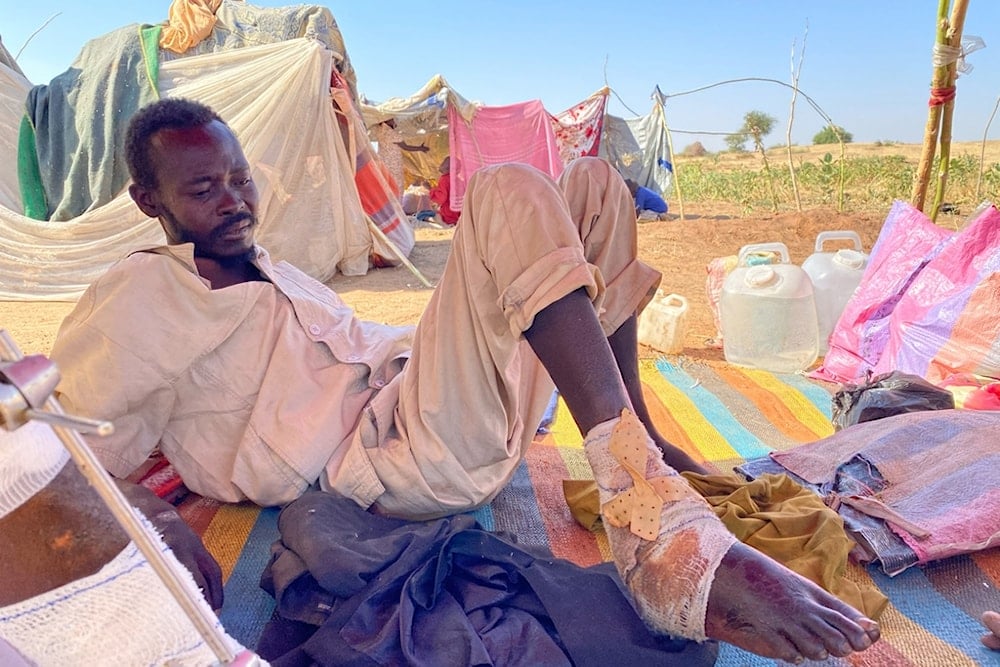
FILE - Al Shafiea Abdallah Holy, an injured Sudanese man who fled el-Fasher city after Sudan's paramilitary forces attacked the western Darfur region, receives medical care at a camp in Tawila, Sudan, Oct. 30, 2025. (AP Photo/Mohammed Abaker, File)
AFP on Sunday reported harrowing accounts of abuse and mass detention in Sudan’s North Darfur, where survivors describe a network of improvised prisons run by the Rapid Support Forces (RSF) following its assault on El-Fasher.
Testimonies gathered in the displacement hub of Tawila point to widespread confinement of civilians in shipping containers, hospitals, and other facilities repurposed as detention sites. Investigations by the United Nations and the Centre for Information Resilience (CIR) indicate that thousands have been detained since the RSF consolidated control of the city in October, in a campaign the UN says carries the “hallmarks of genocide”.
Among the survivors is 42-year-old Ibrahim Noureldin, who recounted being held with more than 100 men inside a sealed metal container. “When people died of thirst and hunger, we were beaten and forced to bury them outside,” he told AFP. “We were put to work, lifting their luggage, materials, weapons. If we moved too slowly, they beat us with whips.”
He described surviving for weeks on minimal food and “tiny sips of water” after being captured while fleeing the fighting.
-
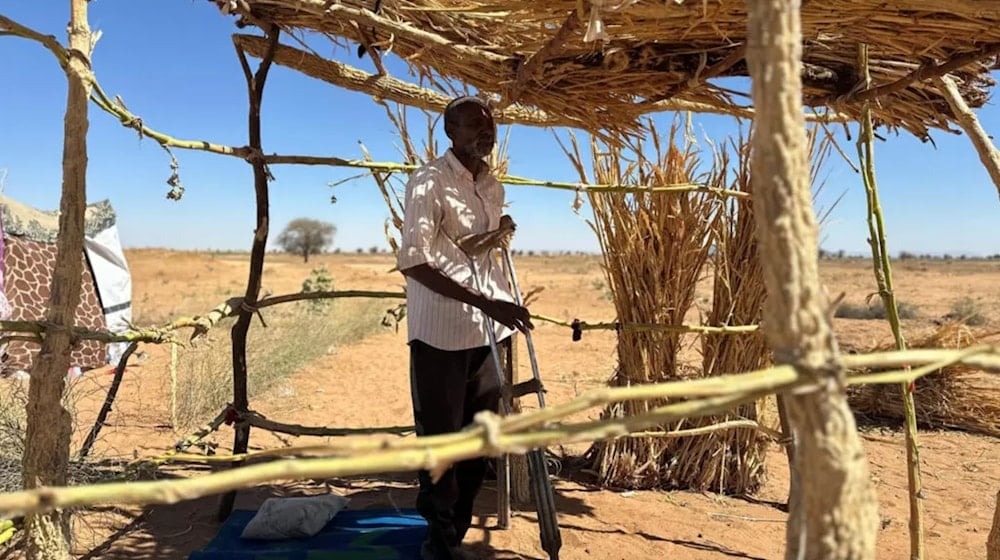
Ibrahim Noureldin leans on crutches at a makeshift shelter in the town of Tawila, Sudan. (AFP)
Civilian detention network
Evidence compiled by UN investigators and CIR, including satellite imagery and verified footage, suggests detainees were drawn from across civilian life, teachers, doctors, aid workers, and others, often accused of links to the army or targeted based on identity. Some were reportedly held for ransom.
The RSF has rejected the allegations, with a spokesperson describing the findings as “propaganda” and accusing the army of “using civilians as human shields”. Nonetheless, both sides in Sudan’s war have faced accusations of violations against civilians.
Former detainees also described conditions inside one of the largest facilities, located at a children’s hospital in El-Fasher. Abdullah Idris, 45, said more than 2,000 men were held there without basic necessities. “They brought us to the children's hospital, said we were fighters and kept me there for a month,” he said, adding that detainees survived on saline solution while deaths mounted daily.
According to the UN, disease outbreaks compounded the crisis, with dozens dying each day and hundreds killed within a single week. Survivors also reported systematic torture. Ahmed Aman, 45, said some detainees “had their fingernails ripped out with pliers”.
Women abused, ransom demanded
Women were also among those detained. Nedal Yasser, 27, said she was held across multiple locations and subjected to repeated abuse after being accused of having ties to a soldier. “I was beaten, tied up, interrogated. When they found out my husband was a soldier, the torture got even worse,” she said. “We were exploited and sexually harassed, only sometimes allowed to go to the bathroom.”
She said detainees were ordered to pay thousands of dollars for release, despite having already lost their belongings. After weeks in captivity, she was assaulted and abandoned in a remote area, eventually making her way on foot to Tawila.
Across the area, survivors continue to bear physical and psychological scars. Ahmed al-Sheikh, a mechanic detained for four months, said executions were carried out arbitrarily. “They'd kill people right in front of us,” he said. “They would select people randomly, killing us like animals.”
The UN estimates that thousands more detainees have been transferred to other RSF-controlled locations, including facilities in Nyala, where access remains restricted, and communications are cut off.
Read more: 64 killed in drone attack on Sudan hospital


