
Switzerland calls for restraint after US kidnapping of Maduro
 3 Min Read
Switzerland has urged restraint and respect for international law following the US operation in Venezuela, while stopping short of condemning Washington even as the kidnapping of President Nicolás Maduro and US assertions of control over the country fuel international controversy.
-
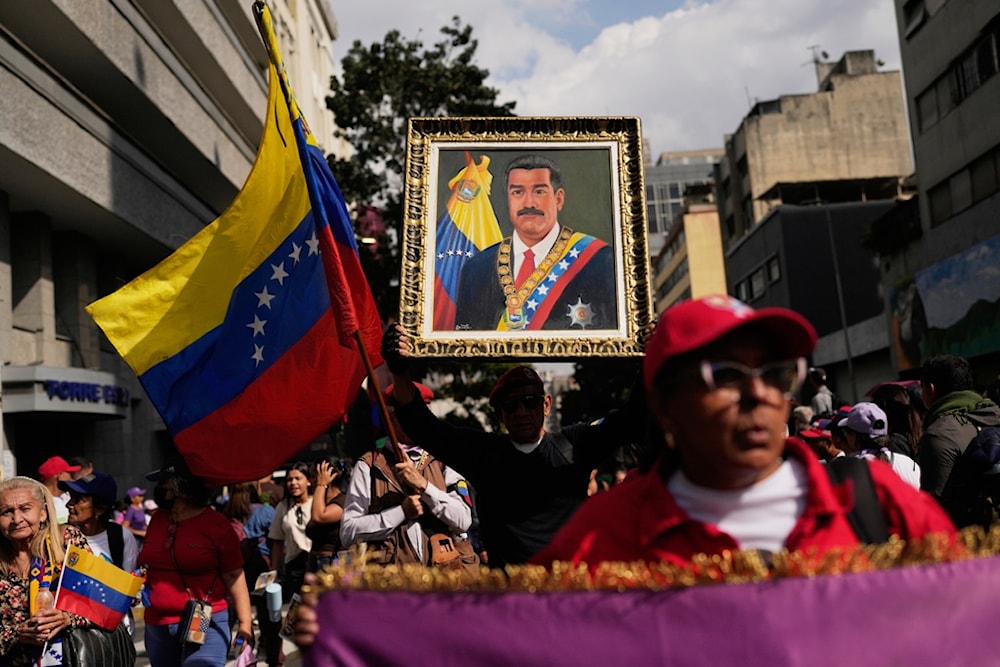
FILE - A government supporter holds an image of President Nicolas Maduro during a women's march to demand his return in Caracas, Venezuela, Jan. 6, 2026, three days after U.S. forces captured him and his wife (AP Photo/Matias Delacroix, File)
The Swiss Ministry of Foreign Affairs said it is closely monitoring developments in Venezuela following a US military operation that resulted in the kidnapping of President Nicolas Maduro to the United States, urging restraint and strict adherence to international law.
In a statement, Bern stressed the importance of respecting core principles of international law, including territorial integrity and the prohibition on the use of force, and called for de-escalation amid escalating tensions. Swiss officials stopped short of taking a position on the legality of the change of power in Caracas, reflecting a broader European reluctance to directly confront Washington over the operation.
Separately, the Swiss Federal Council announced a four-year precautionary freeze on any assets in Switzerland linked to Maduro and individuals associated with him. Authorities clarified that the measure is a legal safeguard under Swiss law, designed to prevent the possible outflow of assets and preserve avenues for future international legal cooperation, rather than a political judgment.
Switzerland stressed that the asset freeze does not constitute a ruling on the legitimacy of the US action or on Maduro’s legal status, underscoring that Bern is acting within its domestic legal framework rather than issuing a diplomatic or legal assessment of the operation itself.
Sovereignty Undermined
The US operation, carried out earlier this month, involved strikes on strategic sites in the Venezuelan capital Caracas and culminated in the transfer of the country’s president to New York, where US authorities are seeking to prosecute him on long-standing narcotics-related charges. The operation was conducted without United Nations Security Council authorization, an extradition request, or judicial cooperation with Venezuelan institutions, prompting widespread condemnation from Caracas and several allied governments.
Critics argue that the action represents a serious breach of the United Nations Charter and a violation of Venezuelan sovereignty, concerns further fueled by subsequent admissions from Washington that it is exercising decisive influence over Venezuela’s authorities and energy sector. White House officials have openly acknowledged that political and economic decisions taken in Caracas are being coordinated with, and effectively dictated by, the United States.
Muted Europe
While countries such as Russia, China, Cuba, and several Latin American states have denounced the operation as unlawful, most European governments have confined their responses to calls for restraint and respect for international norms, avoiding explicit condemnation of the United States.
Analysts say this muted reaction highlights the political constraints facing Europe as Washington increasingly signals a shift toward a power-based approach to global order.
Read more: US to ease Venezuela oil sanctions after Maduro kidnapping: CNBC


