
US now 'dictates' Venezuela decisions, White House says
 6 Min Read
The White House says the United States now exerts decisive control over Venezuela’s interim authorities following Nicolás Maduro’s kidnapping, using oil leverage and maritime enforcement to dictate political and economic decisions.
-
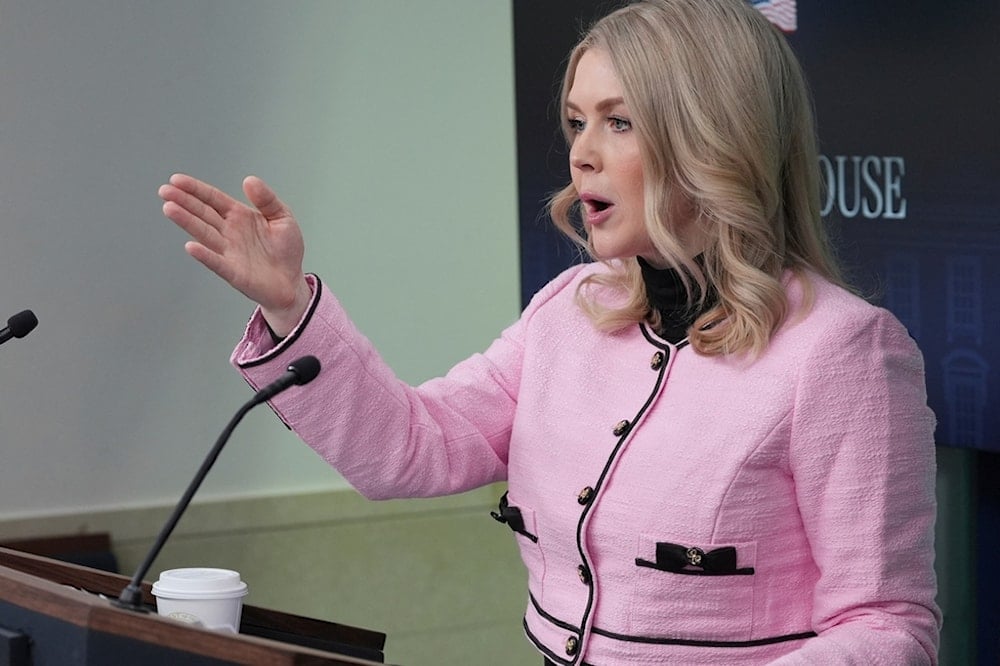
White House press secretary Karoline Leavitt speaks during a press briefing at the White House, Wednesday, Jan. 7, 2026, in Washington. (AP Photo/Jacquelyn Martin)
The White House on Wednesday openly confirmed that Washington is imposing direct control over Venezuela’s political and economic affairs following the kidnapping of Venezuelan President Nicolás Maduro.
Speaking at a press briefing, White House Press Secretary Karoline Leavitt acknowledged that decisions taken by authorities now operating in Caracas are being dictated from Washington, effectively stripping Venezuela of sovereign decision-making.
“We obviously have maximum leverage over the interim authorities in Venezuela right now,” Leavitt said. “We’re continuing to be in close coordination with the interim authorities, and their decisions are going to continue to be dictated by the United States of America.”
The comments came just days after a US-led military operation kidnapped Maduro from Venezuelan territory, an act Caracas and its allies have described as a kidnapping carried out without an extradition request, judicial process, or authorization under international law.
The aggression, conducted without United Nations Security Council approval or Venezuelan institutional consent, has been widely condemned by critics as a violation of the United Nations Charter and an act of state terrorism.
As the fallout continues, Donald Trump is set to meet US oil executives on Friday to discuss Venezuela’s energy sector, signalling that control over the country’s vast oil reserves is a central objective of Washington’s intervention. US officials have simultaneously indicated they are preparing to “recalibrate” unilateral sanctions on Venezuelan oil in a way that would allow exports to continue indefinitely under conditions dictated by Washington, a move Caracas and international observers view as economic coercion rather than relief.
Venezuela Under Siege
Trump has repeatedly asserted that the United States will “run” Venezuela in the post-Maduro period, even as US officials claim there is no American military presence on the ground. Instead, Washington has relied on a combination of maritime enforcement, economic strangulation, and the threat of further force, including restrictions on oil exports and tanker interdictions, to coerce compliance from officials operating under US pressure, including Vice President Delcy Rodríguez.
The pressure campaign has extended beyond energy policy. US officials have openly demanded that Venezuelan authorities sever political and economic ties with allies including China, Russia, Iran, and Cuba, framing continued engagement with non-Western partners as incompatible with sanctions relief. Beijing has condemned the demands as “typical bullying,” warning that Washington is seeking to reshape Venezuela’s foreign relations through force and intimidation.
Leavitt made clear that discussions with oil executives would focus on what she described as commercial opportunities created by the US intervention.
“The meeting is on Friday, and it’s just a meeting to discuss, obviously, the immense opportunity that is before these oil companies right now,” she told reporters.
US officials have repeatedly signalled that Venezuela’s oil wealth will be central to Washington’s post-operation strategy. Trump claimed on Tuesday that Venezuela had agreed to transfer between 30 and 50 million barrels of oil to the United States, a statement that has not been confirmed by Venezuelan authorities.
“We’re talking about 30 to 50 million barrels of oil being turned over,” Trump said. “We’re going to use the money for the benefit of the people of both countries.”
Caracas and allied governments reject that framing, arguing that any such transfers announced in the aftermath of military pressure, maritime seizures, and the kidnapping of the country’s head of state amount to resource extraction under duress, regardless of claims that transactions would occur at “market prices.”
Imperial Oil Control
US Energy Secretary Chris Wright said earlier that Washington would control Venezuelan oil sales “indefinitely,” a declaration critics say amounts to the de facto seizure of a sovereign nation’s primary economic asset. Venezuelan officials stress that the country holds the world’s largest proven oil reserves, which they argue belong exclusively to the Venezuelan state and its people.
Facing mounting criticism in Congress over the absence of legal justification or a clear post-intervention framework, Secretary of State Marco Rubio insisted that the administration had a detailed plan in place.
“The bottom line is, we’ve gone into great detail with them about the planning. We’ve described it to them. In fact, it’s not just winging it,” Rubio said after briefing lawmakers on Capitol Hill.
At sea, US forces have intensified what Washington describes as enforcement measures but which critics view as collective punishment and piracy. US authorities confirmed the seizure of an oil tanker in the North Atlantic on Wednesday after pursuing it from waters near Venezuela. Leavitt claimed the vessel had falsely claimed Russian registration.
“This was a Venezuelan shadow fleet vessel that has transported sanctioned oil,” she said, adding that the ship had been “deemed stateless after flying a false flag” and that its crew would be “subject to prosecution.”
Moscow condemned the seizure, calling it unlawful and warning that the action sets a dangerous precedent for maritime security and freedom of navigation in international waters. Russia, China, and several Latin American states have raised the issue at international forums, warning that the normalization of such actions risks eroding already fragile global norms governing sovereignty and non-intervention.
Taken together, the statements and actions point to a sharp escalation in US aggression against Venezuela, marked by the forcible removal of its president, coercive control over its oil resources, and open admission of political subordination, developments that critics say amount to an unprecedented assault on national sovereignty carried out under the guise of sanctions enforcement and economic management.
Read more: BBC under fire for barring the term ‘kidnapping’ in Maduro coverage


