
BBC under fire for barring the term ‘kidnapping’ in Maduro coverage
 4 Min Read
Leaked BBC guidance advising against calling the US abduction of Nicolas Maduro a “kidnapping” sparks outrage over editorial bias and media double standards.
-
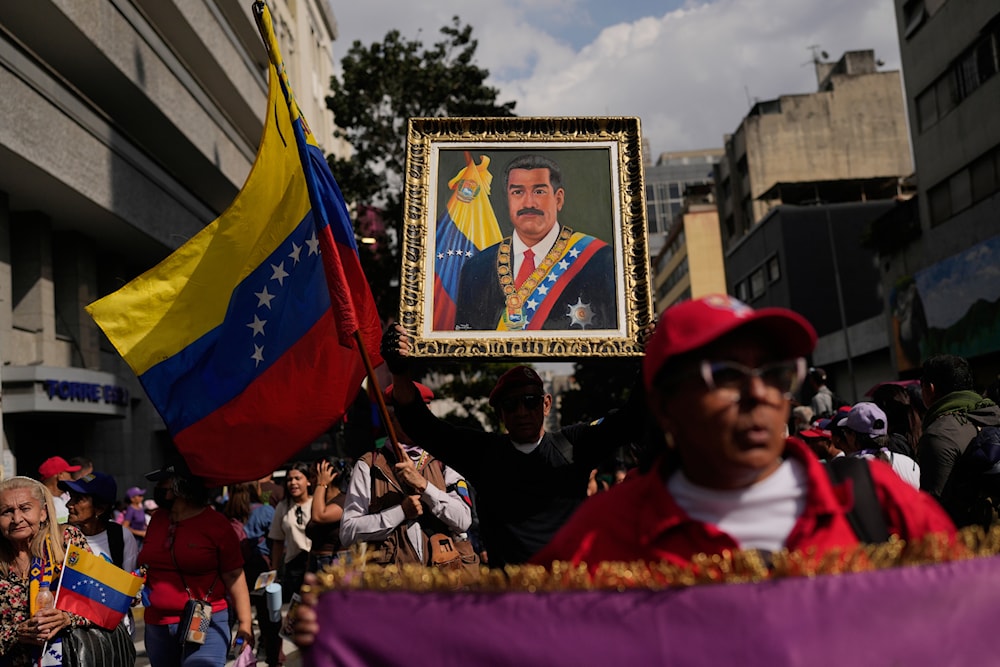
A government supporter holds an image of Venezuelan President Nicolas Maduro during a women's march to demand his return in Caracas, Venezuela, Tuesday, Jan. 6, 2026. (AP)
The British Broadcasting Corporation (BBC) has sparked outrage after leaked internal guidance instructed journalists not to describe the US abduction of Venezuelan President Nicolas Maduro as a “kidnapping,” instead recommending terms such as “seized” or “captured,” raising questions over impartiality and editorial bias.
The directive, circulated by the BBC’s News Editor and widely shared on social media, came as critics pointed out that international law classifies the forcible removal of a head of state without consent as kidnapping, and argued that avoiding the term undermines the illegality of the action.
The BBC directive sent to all news teams in the organisation by senior management.
— Daniel Lambert (@dlLambo) January 5, 2026
"Avoid using kidnapped"
1984 is now.
Fucking sickening. pic.twitter.com/T7G0jpoiN9
Observers say words like “seized” and “captured” neutralize the seriousness of the operation, framing it as a bureaucratic procedure or a formal military action rather than an unlawful abduction.
BBC FORBIDS its journalists to say 'KIDNAPPED', when referring to Maduro — columnist Owen Jones
— RT (@RT_com) January 6, 2026
It's advised to use 'Captured' instead
Can BBC's reputation fall any lower? pic.twitter.com/tfVhODESdi
BBC's guidance went as far as to direct staff to use the term "captured" when referring to the United States' description of the operation, while the term "seized" was described as "acceptable" for BBC's own reporting, "where appropriate".
Loyal Anglo American propaganda. Just as the #BBC tried to ban the word "genocide", for its staff, in relation to Gaza, now they are trying to ban use of the word "kidnapped" in relation to Venezuelan President Nicolas Maduro and his wife Celia Flores. pic.twitter.com/8AiqrYhJY1
— tim anderson (@timand2037) January 6, 2026
Blatant example of 'client journalism'
Some analysts describe the guidance as an example of “client journalism”, accusing publicly funded media of curating coverage to favor Western interests, noting that other major Western outlets also avoided the term “kidnapping” in their reporting and opted for words with more positive connotations.
Meanwhile, reports indicate that major US news outlets, including The New York Times and The Washington Post, were informed in advance of the Trump administration’s plan to abduct Maduro but refrained from reporting it in order to avoid endangering US troops, raising questions about the media’s role in covering military operations.
Historical parallels were cited, including instances where US newspapers held back sensitive reporting at the request of the government, such as the Bay of Pigs invasion in 1961 and the NSA’s warrantless surveillance program in the mid-2000s.
After the operation, The Washington Post editorial board published a piece praising the abduction as an “unquestionable tactical success,” despite reports that at least 80 people, including civilians, were killed, further fueling debate over media coverage and the framing of controversial military actions.
Saying it as it is; US kidnapped Maduro
In the early hours of January 3, 2026, the United States launched an aggression disguised as a military operation and codenamed “Operation Absolute Resolve” against Venezuela, striking military and government targets across Caracas in a bid to abduct President Nicolas Maduro and his wife, Cilia Flores. US forces, backed by more than 150 aircraft, assaulted Maduro’s residence at around 2 am, and both were kidnapped and quickly flown out of the country.
The operation followed months of escalating tension between the US and Venezuela over allegations of narcotics trafficking and international pressure, with US military assets building up in the Caribbean prior to the aggression. President Donald Trump gave final approval late on January 2 before the mission commenced in the pre‑dawn hours.
After their abduction, Maduro and Flores were transported to the United States and appeared in federal court in New York on January 5, where they pleaded not guilty to narcotics and weapons charges; Maduro has called his removal a kidnapping. The swift extraction and arraignment have drawn global scrutiny and debate over the legality of removing a sitting head of state by force.
In Venezuela, Vice President Delcy Rodríguez was sworn in as interim president shortly after Maduro’s abduction, as national mourning was declared for the casualties of the US aggression. Critics at the United Nations and beyond have questioned the US operation’s conformity with international law.


