
Comply or top target list: US threatens Venezuela’s interior minister
 3 Min Read
Trump warns Diosdado Cabello to back Delcy Rodríguez or face exile, as the US pushes for oil deals and transition after Maduro’s abduction.
-
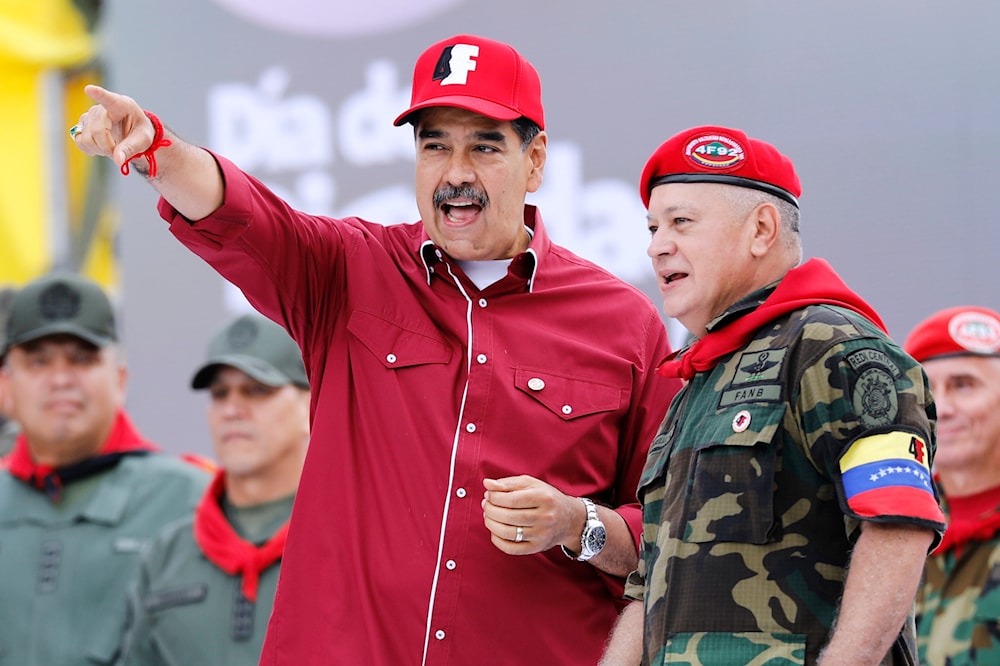
Venezuela's President Nicolas Maduro, left, talks to Interior Minister Diosdado Cabello, in Caracas, Venezuela, Tuesday, Feb. 4, 2025. (AP)
The Trump administration has put Venezuela's interior minister, Diosdado Cabello, on notice that he could be a primary target unless he aids Interim President Delcy Rodriguez in fulfilling US demands and maintaining order following the abduction of Nicolas Maduro, Reuters reported, citing sources familiar with the matter.
Cabello is one of Maduro's loyalists, whom Donald Trump is considering as temporary rulers to maintain stability during a transitional period.
US officials are particularly wary of Cabello and are reportedly seeking to force his cooperation, fearing that he will be defiant to US diktats, while planning ways to eventually remove him from power and push him into exile.
“In the meantime, they have communicated to Cabello via intermediaries that if he is defiant, he could face a similar fate to Maduro, the authoritarian leader captured in a US raid on Saturday and whisked away to New York to face prosecution on ‘narco-terrorism’ charges, or could see his life in danger,” one source told Reuters.
Defense Minister Vladimir Padrino, who, like Cabello, is under a US indictment over alleged drug trafficking and has a multimillion-dollar bounty, is also seen as a critical figure whose collaboration is vital to prevent what they consider a power vacuum, according to Reuters' sources. “This remains a law enforcement operation, and we are not done yet,” said a US Justice Department official.
Rodriguez remains favored option by US
US officials see Rodriguez as the most viable option to temporarily hold power while plans for post-Maduro governance are developed, though the strategy remains “very much still a work in progress,” one source said.
Among the US demands are a willingness to open Venezuela’s oil industry to American companies, crack down on narcotics, expel Cuban security personnel, and end cooperation with Iran. Progress is expected within weeks, with additional leverage possibly coming from Rodriguez's finances, which the US could seize from accounts in Qatar.
On January 7, US President Donald Trump said that Venezuela’s interim authorities have agreed to hand over between 30 and 50 million barrels of sanctioned oil to the United States, which will then be sold at market price, and that the proceeds from the sale would be used in a way he claims will benefit both Venezuela and the United States.
Trump stated that he has instructed US Energy Secretary Chris Wright to implement the plan without delay, that the oil is expected to be moved using storage ships, and that it will be delivered directly to US unloading facilities.
Read more: Democrats say Trump misled, lied to Congress on Venezuela plans


