
Syria appoints Kurdish commander as assistant defense minister
 3 Min Read
Syria appoints senior Kurdish commander Sipan Hamo as assistant defense minister for the eastern region following a deal to integrate the Syrian Democratic Forces into the state.
-
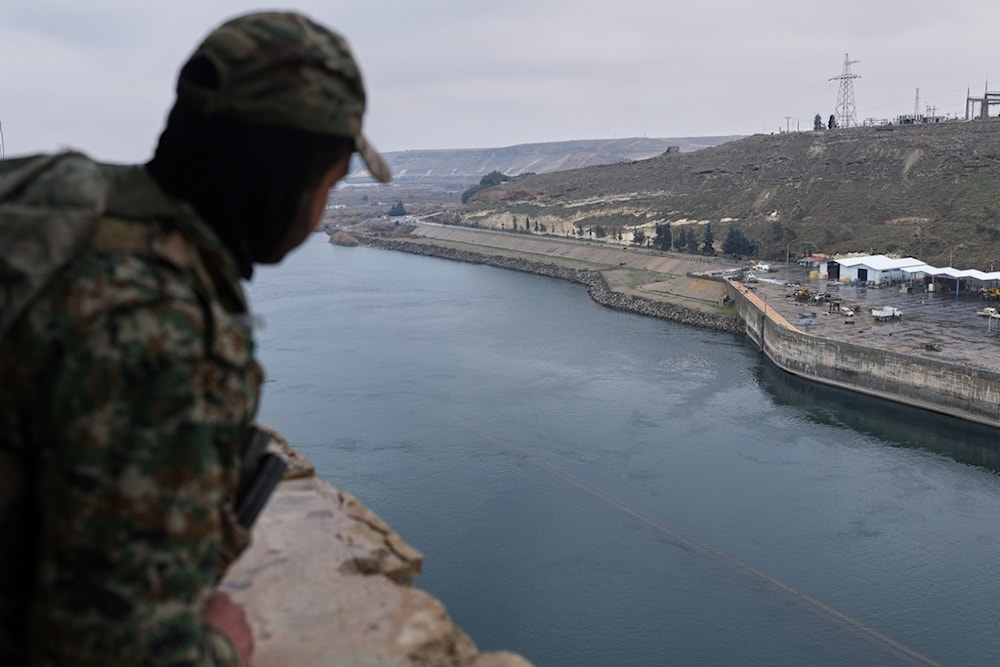
A Syrian government soldier looks out over the Euphrates Dam after government troops took control of the town from U.S.-backed Syrian Democratic Forces (SDF) during an ongoing push against Kurdish-led forces, in Tabqa, eastern Syria, Sunday, Jan. 18, 2026. (AP)
Syria on Tuesday appointed senior Kurdish military figure Sipan Hamo as assistant defense minister for the eastern region, following an agreement to integrate Kurdish forces into the Syrian state.
A Defense Ministry statement said Hamo, a leading commander in the Kurdish-led US-backed Syrian Democratic Forces (SDF), will oversee military affairs in eastern Syria.
Last month, the commander of the Kurdish-led Syrian Democratic Forces (SDF), Mazloum Abdi, said that integrating the SDF into Syrian state institutions could take time but expressed confidence that the process would ultimately succeed in line with the recently signed agreement with Damascus.
Speaking during a meeting of the Council of Notables in the northeastern city of al-Hasakah, Abdi noted that talks held with the Syrian foreign minister and the head of Syrian intelligence aim to accelerate the integration steps. He revealed that joint leadership-level committees have been formed to oversee implementation in the coming phase.
Integration deal after January clashes
On January 30, the Syrian government and the Syrian Democratic Forces (SDF) reached a comprehensive ceasefire agreement, laying out a phased framework for the integration of military and administrative institutions between the two sides. The deal marked a significant political and security shift in northeastern Syria, aimed at consolidating state authority while preserving local administrative structures under a unified national framework.
The agreement followed a swift advance by Syrian government forces east of the Euphrates River, during which they assumed control over key oil fields, major urban centers, and detention camps previously administered by the SDF, where ISIS-affiliated militants had been held.
The developments drastically reshaped the balance of power in the country, bringing strategic energy infrastructure and sensitive security facilities back under central state oversight.
The deal includes the incorporation of three SDF brigades into the Syrian army in the Kurdish-majority province of Hasakeh, while another brigade will be established in Kobane.
Autonomy ambitions weakened
The arrangement marks a setback for Kurdish aspirations to preserve the de facto autonomy they established across large parts of northern and northeastern Syria during the war.
However, the deal allows Kurdish representatives to nominate candidates for key positions within the state administration.
In February, Syrian authorities appointed Noureddine Ahmed Eissa, a Kurd from Qamishli, as Governor of Hasakah by presidential decree.


