
Damascus forces deploy in Hasakah as part of integration deal with SDF
 5 Min Read
Syrian government forces entered Hasakah as part of a US-backed ceasefire and integration deal with Kurdish authorities.
-
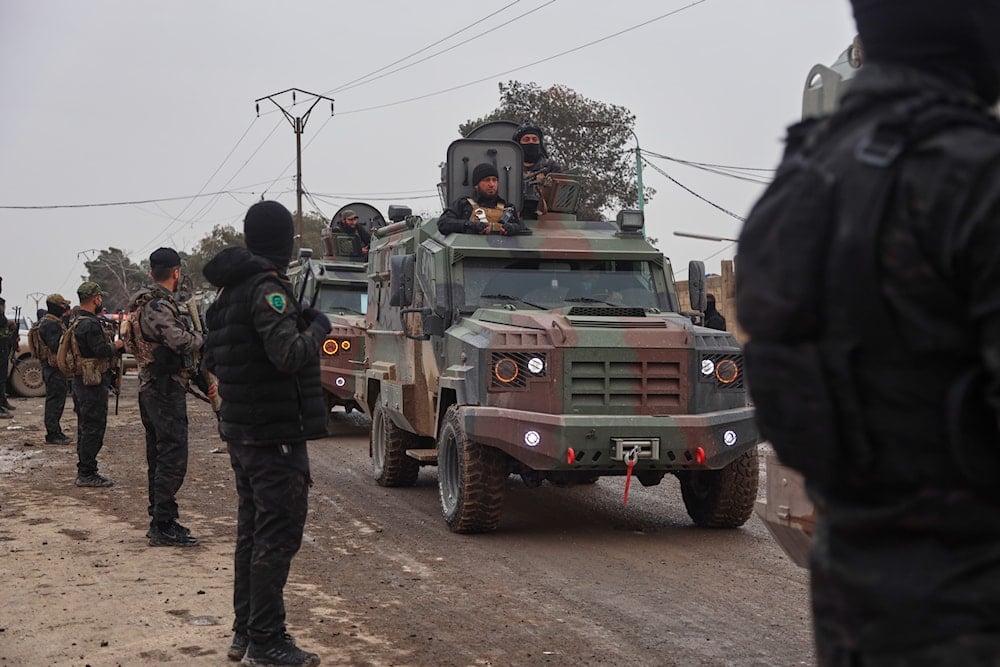
SDF soldiers stand along the road as vehicles carrying a contingent of Syria's Interior Ministry security forces arrive to implement an agreement with the SDF aimed at stabilizing a ceasefire in al-Hassakeh, eastern Syria, Monday, Feb. 2, 2026. (AP)
Syrian government security forces began deploying on Monday in the Kurdish-controlled city of al-Hasakah in northeastern Syria, marking the first concrete step toward implementing a US-backed ceasefire and integration agreement between Damascus and Kurdish authorities.
The deployment follows a deal announced on Friday aimed at preventing further confrontation between the government of interim President Ahmad al-Sharaa and the Kurdish-led Syrian Democratic Forces (SDF), which lost large areas of eastern and northern Syria to government troops in January. The agreement outlines the gradual reintegration of Kurdish-run regions under central state authority.
Reuters journalists witnessed a convoy of more than 30 Interior Ministry vehicles moving from the outskirts of al-Hasakah toward the city in the early afternoon, while local sources said the convoy entered shortly afterward, and members of the Kurdish Asayish security force observed the deployment.
Ceasefire to see Kurdish fighters integrated into government forces
According to a Syrian official and a Kurdish security source, government forces are expected to be stationed inside state buildings located in al-Hasakah’s designated “security zone". The accord foresees a phased integration of Kurdish fighters into government forces, a process the United States has described as a historic step toward unity and reconciliation after 14 years of war.
The SDF, once Washington’s primary ally in Syria, has seen its position weakened as US President Donald Trump strengthened ties with al-Sharaa.
Under the agreement, a new military division will be formed comprising three SDF brigades, along with a separate brigade based in the SDF-held town of Kobani, also known as Ain al-Arab. That brigade will be affiliated with the state-controlled Aleppo governorate.
Ekhbariya TV reported that a convoy of 20 aid trucks entered Ain al-Arab, while the Syrian state news agency SANA said Interior Ministry forces also began deploying in rural areas near the town on Monday. The deal further provides for the merger of governing bodies in SDF-controlled areas with state institutions.
Deal won't alter day-to-day governance: SDF chief
SDF commander Mazloum Abdi said the agreement allows for only a limited presence of government security forces in designated "security zones" in al-Hasakah and Qamishli, another SDF-held city near the Turkish border. In comments to Kurdish broadcaster Ronahi published on Saturday, Abdi said the forces’ role would be strictly administrative and focused on overseeing the integration of the Kurdish Asayish security force.
Abdi stressed that government forces would not enter Kurdish villages or cities, adding that local administration would remain in the hands of residents and local security forces. He sought to reassure communities that the deal would not alter day-to-day governance in Kurdish areas.
Deployment rolling
Nawar Rahawi, director of the government-affiliated al-Hasakah media centre, told Reuters that between 125 and 150 security personnel entered al-Hasakah on Monday, with an additional 15 to 20 vehicles expected to enter on Tuesday if the process proceeds smoothly. “If things go smoothly, as all Syrians hope, the process of integrating the Syrian Democratic Forces with the Syrian government forces will begin,” he said.
However, analysts cautioned that significant questions remain over how the integration will be implemented in practice. Noah Bonsey, a senior advisor at the International Crisis Group, said statements from both sides since Friday suggest gaps over the scope of integration and future governance in the northeast.
“What the practical details of integration look like will determine what continuing role SDF elements play on the ground, how much autonomy they retain, and how significant and extensive government command and control is,” he said.
From clashes to ceding land: January clashes between SDF and Damascus
Clashes between Syrian government forces and the Kurdish-led Syrian Democratic Forces (SDF) escalated sharply in January, following months of rising tension over control of northern and eastern Syria. The fighting marked the most serious direct confrontations between the two sides in several years.
In early January 2026, government troops advanced into parts of northeastern Syria, triggering skirmishes with SDF units in areas of al-Hasakah and Raqqa governorates. The clashes involved small arms, artillery fire, and the seizure of several checkpoints along key supply routes.
Fighting intensified in Aleppo’s northern districts between January 6, 2026, and January 10, 2026, particularly in the neighborhoods of Sheikh Maqsoud and Ashrafiyah, where the SDF maintains a presence. Exchanges of fire led to casualties on both sides and temporary disruptions to civilian movement.
The January confrontations resulted in the SDF losing control of stretches of territory in eastern and northern Syria, as government forces consolidated their positions and expanded their presence near major urban centers. The clashes raised fears of a broader conflict between Damascus and Kurdish authorities.
By late January 2026, the fighting subsided following indirect negotiations mediated by regional and international actors, paving the way for a ceasefire agreement. The deal later opened the door to talks on integrating SDF forces and Kurdish-run institutions into the Syrian state framework.


