
Tangsiri: We prepared graves for children killers on all Iran islands
 3 Min Read
IRGC Navy Commander says Iranian forces struck the Al-Minhad Air Base in the UAE and the Ali Al-Salem Air Base in Kuwait.
-
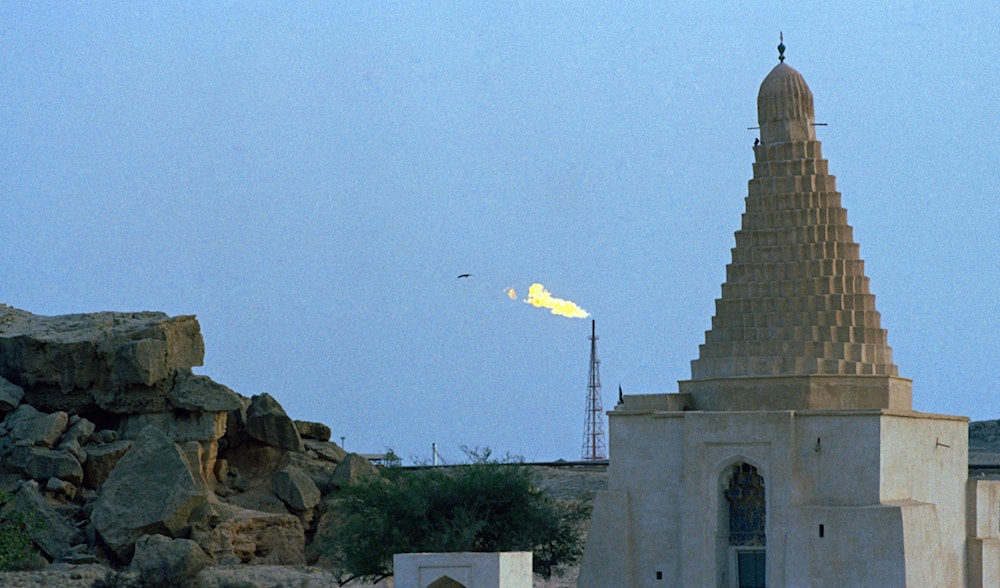
An ancient mosque is seen with the more modern flame from a petrochemical plant that burns off unwanted gas byproducts, seen in July 1971 on Kharg Island, Iran (AP)
Iranian forces struck the Al-Minhad Air Base in the UAE and the Ali Al-Salem Air Base in Kuwait, used by US-Israeli forces, with a barrage of ballistic missiles and suicide drones, targeting aircraft hangars and fuel depots, Admiral Ali Reza Tangsiri, commander of the Islamic Revolution Guard Corps (IRGC) Navy, announced on Saturday.
نیروی دریایی سپاه تاسیسات دو پایگاه هوایی المنهاد و علی السالم، آشیانهها و مخازن سوخت هواگردهای آمریکایی-صهیونی را با حجم انبوهی از موشک بالستیک و پهپاد انهدامی درهم کوبید.
— علیرضا تنگسیری (@alirezatangsiri) March 21, 2026
این پایگاهها مبدأ تهاجم به #جزایر_ایرانی بود.
در همه جزایر ایرانی #گور_متجاوزان کودککش را آماده کردهایم.
In a post on X, Tangsiri stated that the two bases had served as launch points for the aggression against Iranian islands and issued a stark warning to those behind the attacks: "We have prepared graves across all Iranian islands for the aggressors, the killers of children."
The IRGC Navy commander had earlier warned that any further attack on Kharg Island would trigger disruptions to global energy prices and supply networks "more severe" than what had already been witnessed.
Referencing the Strait of Hormuz closure, Tangsiri said Washington had already tested Iran once and that the results had set a new benchmark for oil prices worldwide.
Kharg strike risks 'unprecedented' regional escalation
US President Donald Trump had claimed that US-Israeli strikes on Kharg had "totally obliterated" military targets on the strategic oil hub while leaving energy infrastructure intact. Iranian sources, however, rejected that framing.
Agence France-Presse, citing Fars News Agency, reported that Kharg's oil infrastructure was undamaged, while Mehr News Agency confirmed the island's facilities remain fully operational and all personnel are safe.
A military source cited by Iran's Tasnim News Agency warned on Saturday that any US aggression on Kharg Island could provoke a response "unprecedented" in scale, surpassing anything witnessed in the region over the past three weeks.
Iran's Khatam al-Anbiya Central Headquarters has vowed to destroy all US-linked energy infrastructure in the region, warning it would be turned to a "pile of ashes" should Iran's own oil and economic infrastructure come under attack.
Seizing Kharg is a 'suicide mission'
US military planners, reportedly considering a seizure of Kharg Island, are facing a wall of expert criticism. Responsible Statecraft published a detailed military-political assessment describing any such operation as a "suicide mission" and a "self-imposed hostage crisis" for US forces ordered to take and hold the island.
The analysis argues that Iran's leadership, already fighting what it views as an existential war, would regard the opportunity to inflict mass US casualties or pin down entire battalions as more strategically valuable than any oil revenue Kharg generates. Cutting off those revenues, the piece contends, is weak leverage at this stage. After large-scale strikes and high-profile assassinations, Tehran is convinced that Washington and its partners are pursuing state collapse, not limited bargaining.
Tactically, all insertion options, amphibious, heliborne, and airborne, are assessed as highly vulnerable to mines, shore-based anti-ship missiles, drones, rockets, and short-range air defenses operating within Iran's coastal anti-access envelope.
Kharg itself is roughly five miles long, sits close to Iran's coastline, and is home to around 20,000 civilians, meaning any occupying force would effectively be garrisoned inside a kill zone, facing both sustained firepower and a hostile local population.


