
Iran leverages war to reshape region, energy power: INSS researcher
 4 Min Read
Iran is leveraging the US-Israeli war not only to prevent future attacks against it but also to shape a new regional order.
-
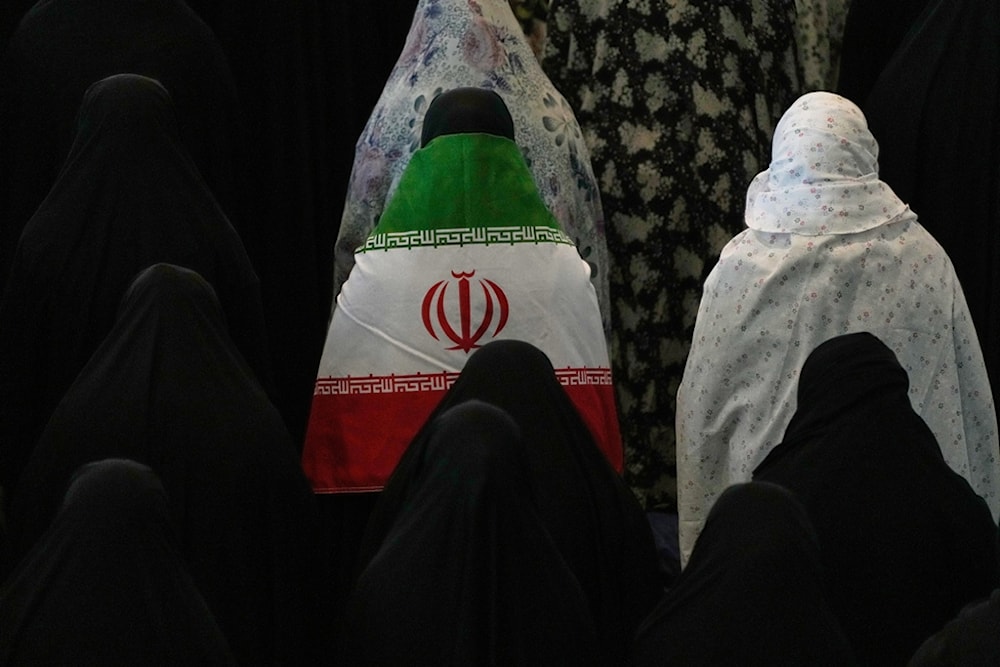
Iranian worshippers perform Eid al-Fitr prayers marking the end of the holy fasting month of Ramadan in Tehran, Iran, Saturday, March 21, 2026. (AP Photo/Vahid Salemi)
The initial implications of Iran struggling for survival have turned out to be false, as Iran is currently using the current US-Israeli war on it as a means to reshape regional power dynamics, the director of the Israeli "Institute for National Security Studies'" (INSS) "Iran and the Shiite Axis" program, Raz Zimmt, said in a social media post.
"What is clear is that whereas at the beginning of the war it seemed that the Iranian regime’s primary goal was survival, it is now evident that Iran is seeking to use the conflict as a strategic opportunity—not only to prevent future attacks against it but also to shape a new regional order," the Israeli researcher said.
The INSS researcher noted that Iran is seeking to encourage regional states to reject US military presence on their lands and establish a regional bloc now that Tehran's regional strength is being displayed.
"In this context, the energy issue has become central," Zimmt wrote. "Iran has recognized the potential of leveraging this card through control of the Strait of Hormuz, attacks on regional energy infrastructure, and its influence on oil prices. From Tehran’s perspective, this is a strategic asset that allows it to prolong the war until it secures guarantees protecting its interests, while exacting a high economic cost on the regional and global system. "
He quoted a report by Mehr, which stated that the Strait is a key deterrence anchor and leverage card for Tehran, "providing Iran with an advantage and enabling it to turn a potential U.S. military threat into an opportunity to deter its enemies and disrupt their calculations."
Zimmt also noted that the US-Israeli strike on Iran's South Pars gas field backfired as it demonstrated that Tehran refuses to kneel to such pressure, instead opting to retaliate.
What is clear is that whereas at the beginning of the war it seemed that the Iranian regime’s primary goal was survival, it is now evident that Iran is seeking to use the conflict as a strategic opportunity—not only to prevent future attacks against it but also to shape a new… https://t.co/dVMgDKKSTf
— Raz Zimmt (@RZimmt) March 21, 2026
Claims Iran seeks to impose war outcome
Zimmt’s remarks came in response to a post sharing a WSJ article suggesting that Tehran believes it holds the upper hand in the ongoing war and is attempting to impose a new regional equation.
The analysis argues that Iran is leveraging sustained missile and drone capabilities, alongside its influence over energy routes, to pressure adversaries while maintaining its own economic flows. It points to continued attacks on regional energy infrastructure and the rising costs imposed on global markets as indicators of Tehran’s growing leverage.
It also highlights Iranian demands tied to any potential ceasefire, including the removal of US forces from the region and broader recognition of its strategic role. Within this framing, control over the Strait of Hormuz is presented as central to shaping future geopolitical arrangements, with Iran seeking to translate battlefield endurance into long-term political and economic gains.
Read more: Bahrain admits US Patriot missile hit residential area, injured dozens
Energy leverage and regional deterrence dynamics
Iran’s strategy has long centered on integrating military deterrence with economic pressure tools, particularly in the energy sector.
Control over chokepoints like the Strait of Hormuz provides Tehran with disproportionate influence over global oil flows, allowing it to offset conventional military asymmetries. This approach is embedded within a broader Resistance framework that prioritizes strategic patience and calibrated escalation.
Recent confrontations have further entrenched Iran’s reliance on asymmetric capabilities, including its ability to impact regional infrastructure and impose economic costs on adversaries.
Within this context, the war is increasingly viewed not as an isolated conflict, but as part of a wider struggle over the future balance of power in West Asia, one in which energy, geography, and deterrence remain decisive factors.


