
Trump 'chickened out', fearing Iran's response: Israeli Army Radio
 3 Min Read
Israeli media reports reveal US hesitancy to strike Iran, citing fears of retaliation, regional escalation, and Tehran’s military readiness.
-
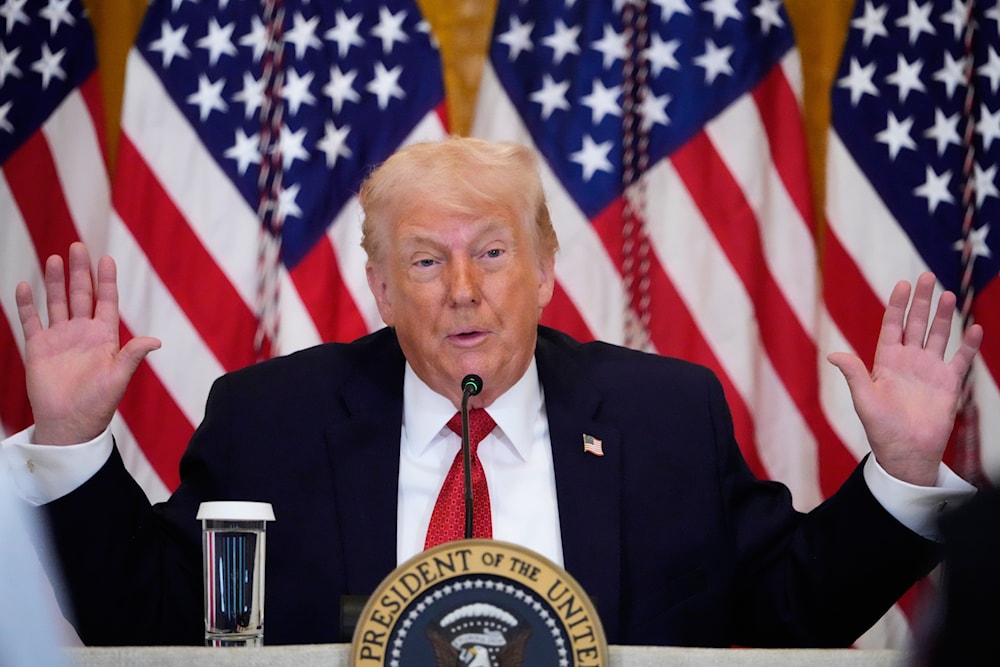
US President Donald Trump speaks during an event to promote investment in rural healthcare in the East Room of the White House, Washington, the United States, on January 16, 2026 (AP)
After leveling direct threats against Iran, Washington has been criticized by Israeli media outlets for its reluctance to carry out planned military aggression against Iran.
The Israeli Army Radio reported that Pentagon officials feared a lack of sufficient US firepower in West Asia to counter an anticipated Iranian response to US military action. Similarly, the Israeli news website Zman described the dilemma facing US President Donald Trump as “far from simple,” noting that while he initially believed a decisive strike was possible, warnings suggested it could escalate into a full-scale confrontation.
Israeli media outlets invoked the TACO term, an acronym for “Trump Always Chickens Out” first coined on Wall Street to describe Trump’s pattern of making bold tariff threats only to later back down, to critique his decision‑making on Iran, framing it as another instance of hesitation under pressure rather than decisive leadership.
Israeli media outlets characterized the decision to delay military action, despite issuing direct and forceful threats, as reflective of Trump's deeper misreading of geopolitical issues.
Trump admin. attempts to sugarcoat withdrawal
Trump’s administration attempted to frame the decision to hold back as a strategic achievement. His Middle East envoy, Steve Witkoff, claimed the move was justified by a “suspension of some executions and reduced killings in Iran.” Analysts, however, described this narrative as a superficial reading of the situation, masking the realities of military and geopolitical power balances.
Meanwhile, Iran has reinforced domestic stability, conducting broad security operations against agents and saboteurs. Dozens of armed rioters and ringleaders have been detained across provinces, as authorities seize weapons and share evidence of armed attacks on citizens and government buildings.
These measures were complemented by mass public demonstrations signaling popular support for the Islamic Republic.
Additionally, Tehran reportedly disabled critical satellite communication networks, including SpaceX’s Starlink, which are believed to have been used to facilitate secure coordination between operatives and their foreign handlers.
Iran's strength, cohesion force recalculation
To justify backing out of the planned attack, Trump told reporters he had received assurances from “very important sources on the other side” that Iran would not carry out “executions of demonstrators.”
Sources had also told AFP that Saudi Arabia, Qatar, and Oman launched a coordinated effort to dissuade the American president from launching the attacks. A Saudi official said that the diplomatic efforts by the Gulf states were aimed at preventing “an uncontrollable situation in the region” and warning Washington that an attack on Iran could trigger a series of serious regional repercussions.
It is worth noting that Iran maintains a large ballistic missile, drone, and cruise missile arsenal capable of targeting US assets and interests in the region. Additionally, the days of unrest proved cohesion across the Islamic Republic's political spectrum and armed forces, as well as popular support.
Read more: Iran’s IRGC affirms full readiness amid hybrid warfare


