
Trump admin assesses $150-$200 oil scenarios amid war on Iran
 3 Min Read
The Trump administration is evaluating the economic impact of oil prices potentially reaching $150-$200 per barrel as Iran’s retaliatory restrictions in the Strait of Hormuz continue to disrupt global energy flows.
-
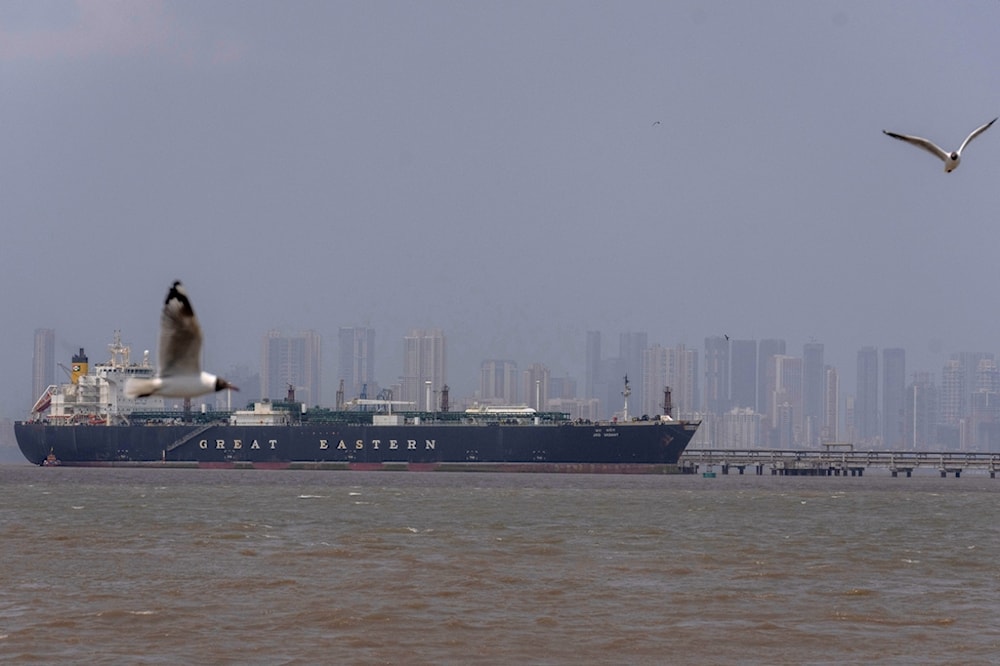
The Indian flagged LPG carrier Jag Vasant, transporting liquefied petroleum gas, is seen at the Mumbai Port in Mumbai, India, after it arrived, clearing the Strait of Hormuz, Wednesday, April 1, 2026 (AP Photo/Rafiq Maqbool)
Politico on Wednesday reported that the administration of US President Donald Trump is evaluating the consequences of a potential surge in oil prices to $150 per barrel or higher, as the fallout of the ongoing war on Iran continues to disrupt global energy flows.
Since the start of the US-Israeli assault on February 28, Iran has taken several measures to retaliate, including placing restrictions on the Strait of Hormuz.
According to the report, senior White House officials are exploring options to mitigate the economic fallout of the war, particularly as Iran’s control over transit in the waterway continues to affect supply levels and push prices upward. Industry sources cited by Politico said the administration is considering the use of additional emergency powers as part of contingency planning.
Trump has also received briefings from the US Treasury Department on the near-term outlook for energy markets, with projections suggesting that oil prices are likely to remain above $100 per barrel for a sustained period. The administration is also not ruling out more extreme scenarios, with internal deliberations acknowledging the possibility of prices climbing as high as $200.
Hormuz leverage expands
While these discussions reflect worst-case planning rather than firm expectations, they point to growing concern in Washington over the economic consequences of a war it initiated but has struggled to contain.
The war has already had a tangible impact on global markets. Iran’s response has effectively turned the Strait of Hormuz into a controlled passage, limiting access for vessels linked to hostile states while allowing coordinated transit for non-adversarial countries. This approach has significantly reduced shipping volumes without fully halting global trade, tightening supply, and driving volatility in oil markets.
As a result, energy prices have surged, and uncertainty has deepened across financial systems, reflecting the global economic fallout of continued US-Israeli escalation and Iran’s calibrated response to the aggression.
Operational control
Among the conditions that Iran has outlined for a potential ceasefire is the recognition of its authority over the Strait of Hormuz.
Earlier in the day, the Russian foreign ministry said that Iran has “operational control” over ship passage through the Strait of Hormuz and that transit is being coordinated to allow vessels from non-hostile countries while restricting those linked to the United States and its allies.
Read more: Iran: Trump wanted regime change, now just begging for Hormuz to open


