
Trump announces 3-day Russia-Ukraine ceasefire, large prisoner swap
 3 Min Read
The US president announces a three-day ceasefire (May 9–11) between Russia and Ukraine made at his request.
-
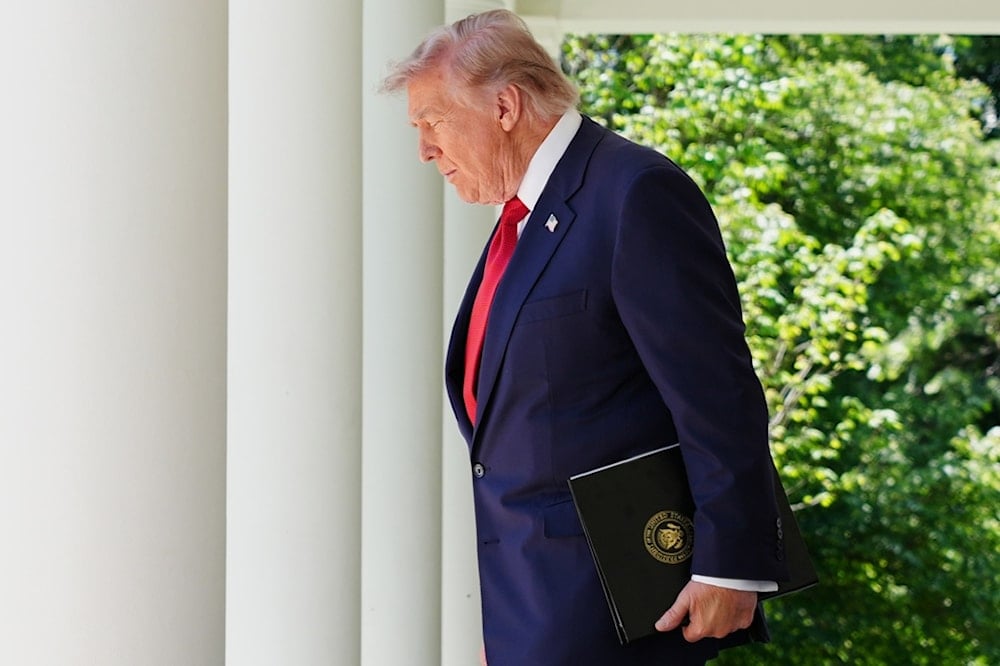
US President Donald Trump walks through the Colonnade at the White House as he heads to the Rose Garden, Friday, May 8, 2026, in Washington (AP)
US President Donald Trump said a three-day ceasefire between Russia and Ukraine will take place from May 9 to 11, describing it as a step toward ending what he called the most significant conflict since World War II.
In a post on Truth Social, Trump said the truce would involve a “suspension of all kinetic activity” and include a prisoner exchange of 1,000 detainees from each side. He added that the arrangement had been agreed upon by Russian President Vladimir Putin and Ukrainian President Volodymyr Zelensky.
According to Trump, the timing of the ceasefire coincides with Russia’s Victory Day commemorations on May 9, marking the Soviet Union’s role in defeating Nazi Germany, while also acknowledging Ukraine’s historical contribution to World War II.
“This request was made directly by me, and I very much appreciate its agreement,” Trump wrote, expressing hope that the move could serve as “the beginning of the end of a very long, deadly, and hard fought war.”
The US president added that negotiations to bring the conflict to a permanent end are ongoing, saying that progress is being made toward a broader settlement.
Convergence of parallel efforts or a US-driven initiative?
Recent developments suggest growing diplomatic activity around a temporary pause in fighting. Ukrainian officials have signaled openness to a limited truce centered on humanitarian measures, particularly large-scale prisoner exchanges, while Moscow had earlier floated a short ceasefire tied to Victory Day.
The timing has raised questions about the origins of the initiative. While Trump presented the ceasefire as a direct result of his request, the move appears to align with pre-existing signals from both sides, particularly Russia’s interest in a Victory Day truce and Ukraine’s openness to humanitarian pauses. This has led some observers to view the announcement as a convergence of parallel efforts rather than a solely US-driven initiative.
Previous attempts at temporary halts in hostilities, however, have largely collapsed, with both sides accusing each other of violations.
The announcement also comes at a time of deteriorating relations between Washington and its European allies. Tensions have intensified over US foreign policy decisions, including its handling of parallel conflicts and trade disputes, as well as renewed pressure from Trump on NATO members over defense spending and strategic alignment.
European leaders have increasingly raised the need for “strategic autonomy", reflecting concerns about long-term reliance on the United States for security. Friction has also emerged over the direction of Ukraine diplomacy, with some European officials expressing unease over US-led initiatives and considering a more independent role in engagement with Moscow.
Within NATO, these disagreements have fueled broader debates about the alliance’s cohesion and the reliability of US leadership, adding a layer of geopolitical complexity to the ceasefire announcement.
Read more: 74% of EU citizens hold negative view of US, poll finds


