
Trump backs Russia sanctions bill as Ukraine peace talks advance
 3 Min Read
US President Donald Trump supports a sweeping Russia sanctions bill aimed at crippling Moscow’s economy, as the US pushes forward in peace negotiations over Ukraine.
-
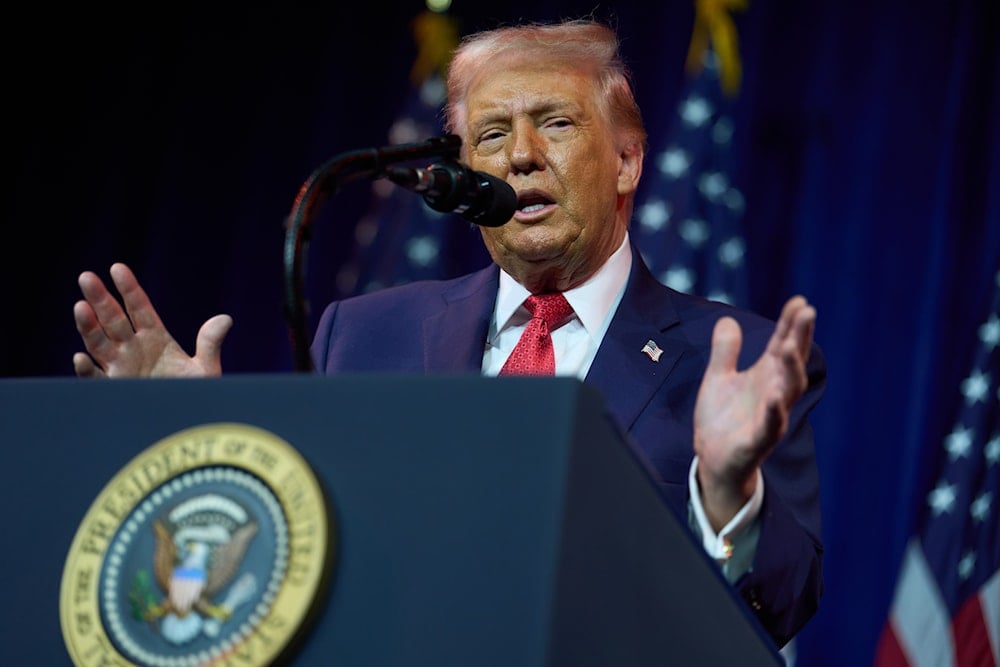
US President Donald Trump speaks to House Republican lawmakers during their annual policy retreat on January 6, 2026, in Washington. (AP Photo/Evan Vucci)
US President Donald Trump has endorsed a sweeping sanctions package aiming at economically crippling Russia, as his administration continues negotiations toward a peace deal to end the war in Ukraine.
Senator Lindsey Graham (R-S.C.) confirmed the development after a meeting with Trump at the White House on Wednesday. "The president greenlit the Russia sanctions bill that has been in the works for months," Graham said.
A White House official later confirmed to the Associated Press (AP) that Trump supports the legislation.
The sanctions bill is the result of bipartisan efforts led by Sen. Lindsey Graham and Sen. Richard Blumenthal (D-Conn.). According to Graham, the legislation is “well-timed, as Ukraine is making concessions for peace and Putin is all talk, continuing to kill the innocent.”
Previously, the White House had raised concerns about certain provisions, requesting revisions and additional flexibility for the executive branch. On Wednesday, however, no further details were provided regarding whether those changes were accepted.
Measures aim to cut off revenue from oil, gas, uranium
The proposed sanctions would allow the Trump administration to impose tariffs and secondary sanctions on countries that buy Russian oil, gas, uranium, and other exports. These measures are designed to choke off revenue that funds much of Russia’s military operations. The legislation has gained wide support, with dozens of co-sponsors in the Senate and a companion bill introduced in the House by Rep. Brian Fitzpatrick (R-Pa.).
Alongside the sanctions initiative, the Trump administration is actively pursuing a peace deal to end the conflict in Ukraine, which has now lasted nearly four years. The negotiations are being led by special envoy Steve Witkoff and Jared Kushner, Trump’s son-in-law and senior advisor. Although Graham suggested a vote could take place as early as next week, the timing remains uncertain. The Senate is expected to address a separate government funding bill if it clears the House.
Read next: Ukrainian drone attack on Kherson hotel, café kills 24 people
Late December 2025, Trump stated on December 29 that one or two of the most challenging issues in reaching a Ukraine peace agreement remain unresolved, including the contentious line of contact in Donbass.
Speaking to reporters at his Mar-a-Lago residence after a meeting with Volodymyr Zelensky, Trump said the negotiating process had seen considerable progress, particularly over the past month, but some core issues still need to be settled. "There are one or two very thorny issues, very tough issues, but I think we're doing very well. We've made a lot of progress today, but, really, we've made it over the last month. This is not a one-day process deal, this very complicated stuff," Trump said on Sunday.
When asked specifically about the line of contact in Donbass, a central element in the conflict, Trump acknowledged that full agreement had not yet been reached. "I would not say agreed, but we're getting closer to an agreement on that, and that's a big issue. Certainly, that's one of the big issues, and… it's unresolved, but it's getting a lot closer. That's a very tough issue," he added.


