
Trump threatens higher tariffs on India over Russian oil purchases
 4 Min Read
US President Donald Trump warned that Washington could raise tariffs on Indian goods if New Delhi does not further reduce purchases of Russian oil, escalating pressure as US–India trade talks remain unresolved.
-
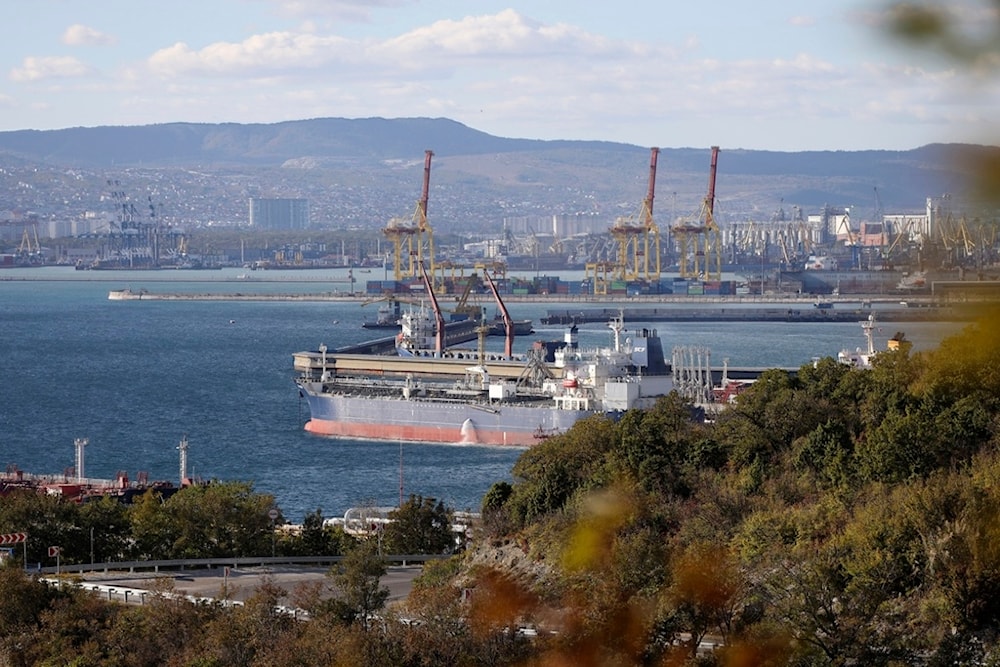
An oil tanker is moored at the Sheskharis complex, part of Chernomortransneft JSC, a subsidiary of Transneft PJSC, in Novorossiysk, Russia, on October 11, 2022, one of the largest facilities for oil and petroleum products in southern Russia. (AP)
US President Donald Trump on Monday threatened to raise tariffs on Indian goods if New Delhi does not further cut its purchases of Russian oil, sharpening pressure on the South Asian country as bilateral trade negotiations remain stalled.
Speaking to reporters aboard Air Force One, Trump adopted a personal tone toward Indian Prime Minister Narendra Modi, saying, "(Prime Minister Narendra) Modi is a good guy. He knew I was not happy, and it was important to make me happy."
Trump warned that trade retaliation could follow swiftly if Washington’s demands are not met.
"They do trade, and we can raise tariffs on them very quickly," he said, when asked about India’s continued imports of Russian crude.
Shadow pressure
The renewed warning follows months of inconclusive talks after Washington last year doubled tariffs on Indian imports to 50%, explicitly citing India’s heavy purchases of Russian oil despite Western sanctions imposed since the start of the Ukraine war. Roughly half of those duties are directly linked to India’s energy trade with Russia.
US officials argue that discounted Russian crude continues to reach markets through a sanctions-evasion network known as the "shadow fleet", a web of tankers, opaque ownership structures, ship-to-ship transfers, and alternative insurance mechanisms that obscure the origin of oil cargoes.
Washington has stepped up enforcement efforts in recent months, sanctioning dozens of vessels accused of moving Russian oil outside the G7 price-cap regime. Analysts say these practices complicate claims of compliance even when refiners formally scale back direct purchases.
Tariffs rattle markets
Markets reacted nervously to Trump’s remarks. On Monday, India’s information technology stocks slid sharply, with the sector index dropping about 2.5% to its lowest level in more than a month, as investors worried that renewed trade friction could further delay a long-sought US-India trade agreement.
Accompanying Trump on the trip, Republican Senator Lindsey Graham said US sanctions on Russian energy companies, combined with higher tariffs on India, had already reduced Indian oil imports. Graham is backing legislation that would authorize tariffs of up to 500% on countries that continue to buy Russian oil.
"If you are buying cheap Russian oil, (you) keep Putin’s war machine going," Graham said. "We are trying to give the President ability to make that a hard choice by tariffs."
Graham added that Trump’s actions had pushed India to buy "substantially less Russian oil."
Trade analysts warn, however, that India’s calibrated approach risks leaving it vulnerable to continued pressure. Ajay Srivastava, founder of the Global Trade Research Initiative, told Reuters that Indian exports already face steep US duties, including penalties linked to Russian crude. While refiners have cut back after successive sanctions rounds, purchases have not stopped entirely, leaving India in a "strategic grey zone."
"Ambiguity no longer works," Srivastava said, urging New Delhi to clearly articulate its position on Russian oil. He warned that even a complete halt may not end US demands, which could shift toward broader trade and market-access concessions, while higher tariffs risk deeper export losses.
Geopolitics complicate Talks
The frictions also unfold against a wider geopolitical backdrop. China, while not directly involved in US-India trade talks, has faced similar US scrutiny over Russian oil flows, and shifts in Chinese buying have influenced Asian crude pricing and discount levels, indirectly shaping India’s bargaining position.
Separately, India struck a cautious diplomatic note after the United States kidnapped Venezuelan President Nicolas Maduro, calling for dialogue without explicitly naming Washington.
Despite the tariff hikes, India’s exports to the United States surged in November, though total shipments fell more than 20% between May and November 2025. As New Delhi seeks to revive momentum toward a deal, the government has reportedly instructed refiners to submit weekly disclosures of Russian and US oil purchases to address Washington’s concerns.
Since the tariffs were imposed, Modi has spoken with Trump at least three times. India’s commerce secretary met US trade officials last month, but negotiations have yet to yield a breakthrough.
Read more: EU moves to blacklist 41 Russian tankers


