
EU moves to blacklist 41 Russian tankers
 3 Min Read
The EU adds 41 more tankers to its sanctions list in a bid to constrain Russia's oil exports.
-
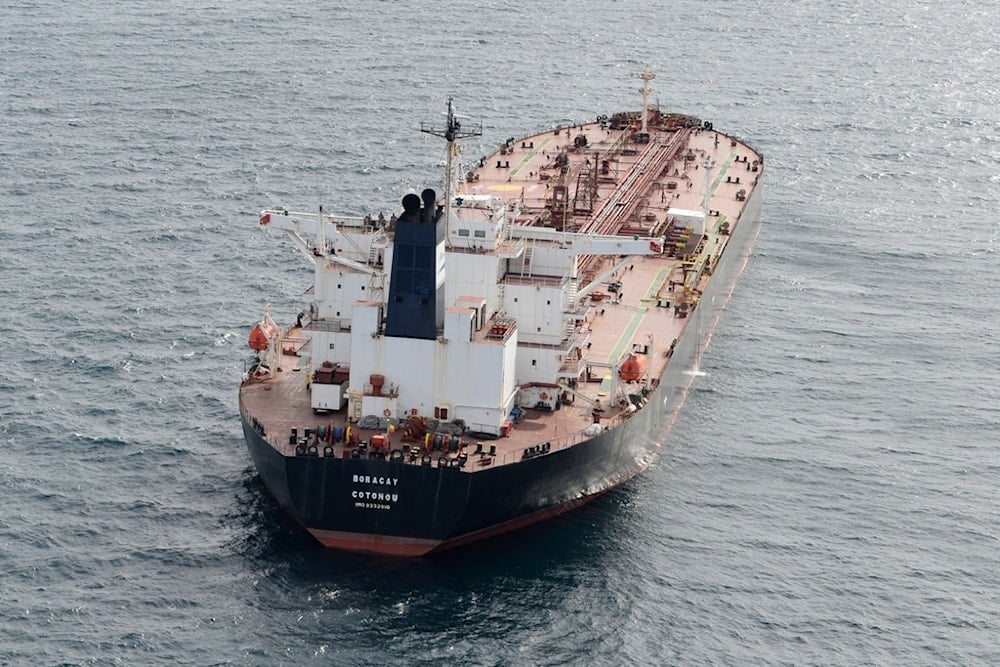
The tanker Boracay, which allegedly belongs to Russia's so-called shadow fleet, is seen on October 2, 2025, off Saint-Nazaire, France's Atlantic coast. (AP Photo/Mathieu Pattier)
The European Union has unveiled another round of restrictions aimed at Russia's oil export system, adding dozens of additional tankers to its blacklist.
EU governments approved new penalties on 41 vessels on Thursday, pushing the number of designated tankers to nearly 600. These ships are now barred from EU ports and denied a broad set of maritime services, part of Brussels' ongoing attempt to curtail Russia's energy revenues. Officials say the targeted vessels are part of a parallel shipping network that transports Russian oil to Asian markets beyond Western oversight.
Additionally, Russian officials have described the latest measures as yet another example of the EU's political overreach, insisting that repeated sanctions packages have failed to achieve their stated objectives. According to Russian media coverage citing government sources, the restrictions are "unlawful and counterproductive" and represent a strategy that "will only hurt citizens of European Union countries and prove ineffective."
The Kremlin argues that Europe's sanctions architecture, now at 19 packages, has neither disrupted Russia's ability to sell crude nor altered the country's strategic posture. Instead, Moscow notes that its exports continue to flow to major buyers such as India and China, supported by a diversified shipping ecosystem that operates outside Western-controlled insurance and financing channels.
Targeted traders
Earlier this week, EU authorities also added two oil traders to the sanctions list, Murtaza Lakhani and Etibar Eyyub, accusing them of enabling Russia to bypass Western rules on crude transport that, in the EU's words, "help to fund Russia's war in Ukraine." Both men reject the allegations. Lakhani says he does not control vessels and stepped away from management roles, while Eyyub, linked to Dubai-based 2Rivers, denies any wrongdoing in his commercial dealings.
The EU has also sanctioned several shipping and technical firms involved in managing tankers that operate outside Western compliance frameworks, citing practices such as opaque ownership, ship-to-ship transfers, and inconsistent safety procedures. European officials describe these vessels as part of a high-risk network that relies on rapid flag changes, AIS manipulation, and aging maritime infrastructure.
The Russian side insists that Brussels' fixation on the shadow fleet only underscores the EU's strategic miscalculation. Moscow maintains that alternative trade routes, non-Western insurers, and new financial channels have enabled it to keep exports stable while diminishing Europe's leverage.
At the diplomatic level, Russia is already exploring legal responses to related EU decisions. The Bank of Russia has filed a massive lawsuit against Euroclear, the Belgian clearinghouse holding frozen Russian sovereign assets, arguing that Brussels is violating international norms. The Russian government has also warned that Western companies with assets in Russia may face reciprocal measures.
Read more: EU deadlocked on plan to turn Russian assets into Ukraine aid


