
Trump confirms heated exchange with Netanyahu over Lebanon
 4 Min Read
Trump confirmed he called Netanyahu “f***ing crazy” over continued attacks on Lebanon, highlighting tensions within the US-Israeli alliance amid stalled negotiations with Iran.
-
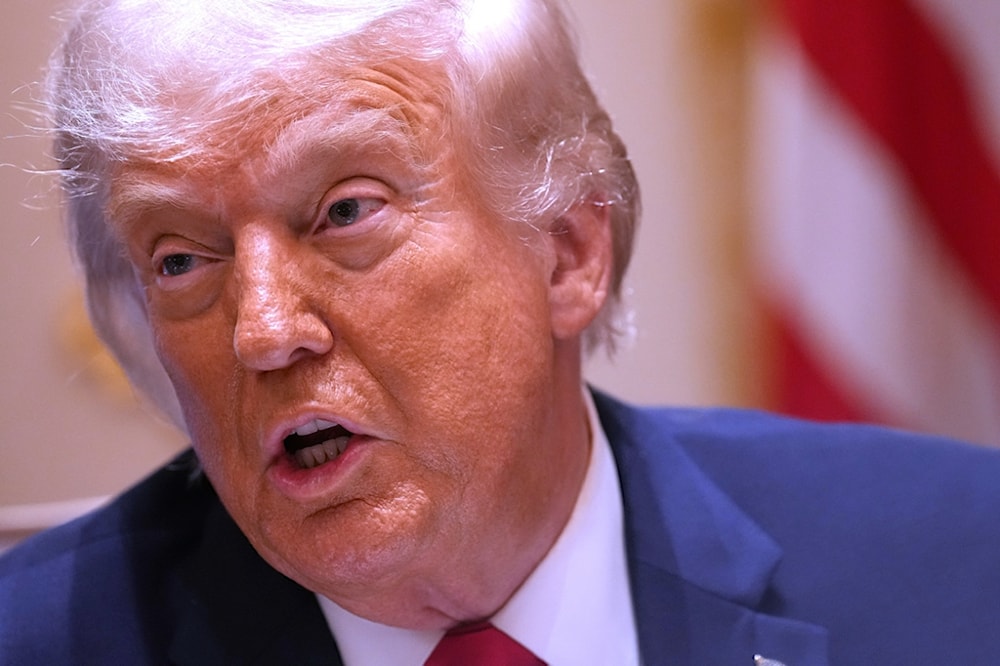
US President Donald Trump speaks during a Cabinet meeting at the White House, Wednesday, May 27, 2026, in Washington. (AP Photo/Jacquelyn Martin)
US President Donald Trump confirmed on Wednesday that he sharply rebuked Israeli Prime Minister Benjamin Netanyahu during a phone call earlier this week, criticizing the continued escalation against Lebanon while acknowledging that the two leaders continue to coordinate closely.
Speaking in an interview with Miranda Devine on the Pod Force One podcast, Trump confirmed the circulated reports that he described Netanyahu as “f***ing crazy” during a Monday conversation.
“I was a little bit perturbed at his constantly fighting with Lebanon,” Trump said, referring to ongoing Israeli attacks on Lebanon, undeterred by the ceasefire.
Despite the unusually blunt exchange, Trump noted that it did not affect the relationship between Washington and Tel Aviv. “We’ve worked very well together. I like Bibi a lot. And I work very well with him,” Trump said.
The remarks offer a public glimpse into disagreements between the US administration and "Israel", seen before during the Biden administration, wherein the former president called Netanyahu a "bad f*****g guy".
Read more: Pentagon appoints convicted Jan. 6 rioter to counterterrorism role
Tensions emerge despite continued US-'Israel' coordination
While Trump publicly criticized Netanyahu's approach, he framed the dispute as a disagreement between two leaders managing active military endeavors against West Asia's sovereignty.
“I’m a wartime president,” Trump said. “He’s a wartime prime minister.”
The comments suggest frustration within Washington over the continued Israeli aggressions against Lebanon that could further split the US, as it is currently carrying out ceasefire talks.
The escalations have become particularly sensitive as Iran has linked progress in negotiations to an end to Israeli attacks targeting Lebanon and its civilian infrastructure.
Although differences emerged over tactics and timing, Trump's comments indicate that the broader strategic partnership between the United States and "Israel" remains unchanged.
Lebanon front threatens wider US-Iran negotiations
Continued Israeli aggressions increasingly intersected with efforts to secure an understanding between Tehran and Washington regarding the Strait of Hormuz and Iran's civilian nuclear program.
Trump argued that Israeli hostilities against Lebanon risk distracting from what he views as a larger diplomatic objective.
According to Trump, a potential arrangement could eventually lead to the reopening of the Strait of Hormuz and ease pressure on global energy markets that have experienced volatility throughout the crisis.
In parallel, Iran has been firm in its stance that halting aggression on Lebanon is a non-negotiable pillar of any future ceasefire agreement.
Economic pressures shape Washington's calculations
Beyond the geopolitical dimensions of the crisis, economic considerations continue to influence Washington's approach.
Trump pointed to energy prices as evidence that markets have remained more resilient than many analysts predicted.
“Everyone said it was going to be $300, $400 a barrel; it’s 98 dollars a barrel, but that’s not a big price to pay if you look at the possibility of them having a nuclear weapon,” he said.
The president also suggested that the US naval blockade that intensified the Strait of Hormuz crisis could remain in place longer than anticipated, though he expressed hopes that the situation would be resolved before the end of summer.
Any prolonged disruption to Gulf shipping routes would likely continue exerting upward pressure on fuel prices and inflation while creating political challenges ahead of the November midterm elections.
Read more: 87% of Lebanese view 'Israel' as an enemy, study finds


