
Trump ditches Machado after CIA says opposition not fit for leadership
 5 Min Read
Trump rejects Machado in favor of Maduro’s VP Delcy Rodríguez after a CIA assessment warns of instability in Venezuela without government insiders.
-
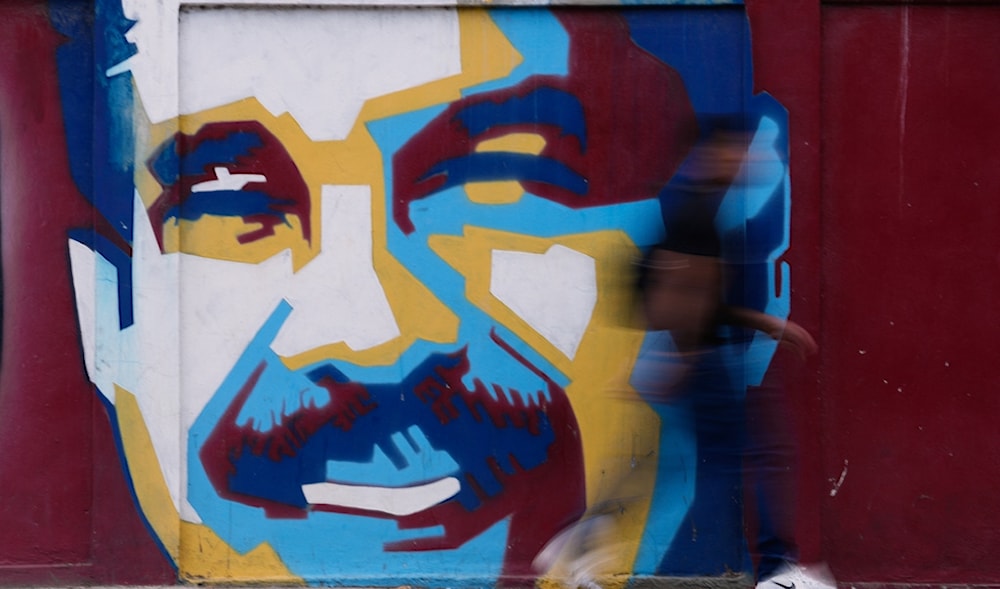
A pedestrian walks past a mural of Venezuelan President Nicolas Maduro on Sunday, Jan. 4, 2026. (AP)
A recent CIA intelligence assessment has concluded that top figures within Nicolás Maduro’s government, particularly recently sworn-in Interim President Delcy Rodríguez, are best positioned to maintain stability in Venezuela if Maduro were to lose power, The Wall Street Journal exclusively reported.
The classified analysis reportedly influenced Trump’s Venezuela policy, leading him to reject the opposition’s bid for leadership in favor of a regime insider.
According to sources familiar with the matter, the Central Intelligence Agency shared its assessment with President Trump and a limited circle of senior administration officials in recent weeks. The report did not recommend removing Maduro but focused on evaluating the domestic situation in the event of a sudden power vacuum.
The CIA analysis pointed to Delcy Rodríguez and two other high-ranking officials as viable interim leaders who could keep the country stable. Though the other names were not disclosed, Interior Minister Diosdado Cabello and Defense Minister Vladimir Padrino are widely viewed as the two most influential figures after Maduro. Both men, however, face US criminal charges and are unlikely to cooperate with Washington.
Machado out of the picture
The assessment played a significant role in Trump’s decision to sideline opposition leader María Corina Machado. Despite her close alignment with Trump during his first term and her public support for US intervention in Venezuela, Trump determined she lacks sufficient domestic support and credibility with Venezuela’s military and elite power brokers.
“Machado doesn’t have the support or the respect within the country,” Trump told reporters, dismissing the idea of her leading the regime change attempt.
Trump had previously praised Machado, who increasingly instigated violence against Venezuela and Maduro's government, even aligning herself with the far-right in the US and "Israel". She was granted the 2025 Nobel Peace Prize, a decision welcomed by Trump and his close circle, despite her clear calls for violence in Venezuela and her alignment with Benjamin Netanyahu's Likud party amid the genocide in Gaza.
Privately, however, Trump has grown skeptical of the opposition’s ability to deliver results after his first-term efforts, including sanctions and diplomatic isolation, failed to trigger regime change.
Opposition takeover 'magical realism'
The policy shift comes in the wake of the US attack on Venezuela, which resulted in the illegal abduction of President Maduro and First Lady Cilia Flores. They were transferred to New York to stand trial under charges of "narco-terrorism", which they both firmly rejected, pleading not guilty.
The operation was allegedly made possible by a CIA-cultivated source inside Maduro’s inner circle and surveillance assets, including stealth drones. Delta Force carried out the raid based on precise intelligence of Maduro’s whereabouts.
However, experts warn that removing Maduro without a viable successor backed by the military and political elite could lead to widespread instability.
David Smilde, a Venezuela expert at Tulane University, described the idea that Machado or another opposition figure could assume power as “magical realism.” He argued that a stable transition would require Delcy Rodríguez to initiate change from within, though no active US negotiations are known to be underway.
Rubio ditches Machado, threatens Rodriguez
While Marco Rubio had long championed Machado, he echoed the administration’s shift in tone in weekend interviews. He claimed that Rodríguez, now Venezuela’s acting president, had shown willingness to engage with Washington, despite her regime affiliation.
Rubio warned that the US would enforce a military “quarantine” to block sanctioned oil tankers and cut off Venezuela’s revenue if Rodríguez failed to act in line with US interests.
Trump reiterates: 'We’re in charge' of Venezuela’s future
In remarks to reporters, Trump reinforced his administration’s intention to take over Venezuela and its political trajectory.
“We’re in charge,” he said. “We need total access. We need access to the oil and to other things in their country that allow us to rebuild their country.”
White House Press Secretary Karoline Leavitt added that the administration is making “realistic decisions” to align Venezuela with US interests and improve conditions for its people, without commenting directly on the intelligence assessment.
As senior officials prepare to brief Congress on Monday, Washington’s new direction marks a dramatic shift away from previous public support for Venezuela’s opposition, and a clear indication that Trump’s Venezuela policy prioritizes oil grab over so-called democracy.
Read more: Trump cues military return to Venezuela, bypassing congress approval


