
Venezuela demands release of Maduro, urges US to respect immunity
 4 Min Read
Venezuela tells the UN the US must respect President Maduro’s immunity and release him, as Russia also calls for his immediate freedom.
-
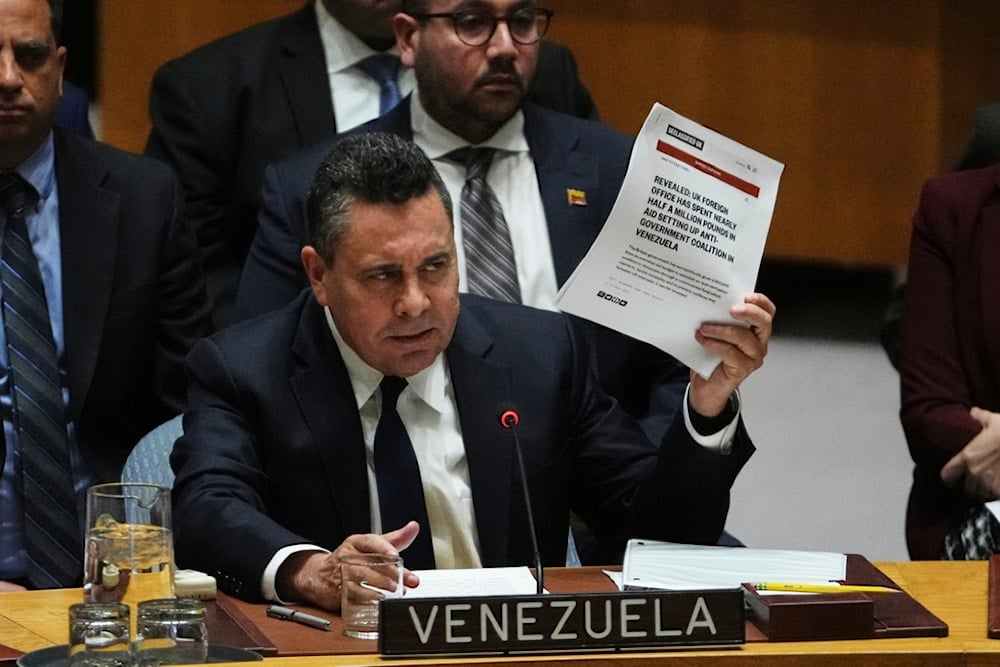
Venezuela's UN Ambassador Samuel Moncada speaks during a meeting of the Security Council, Monday, January 5, 2026, at UN headquarters (AP)
Venezuela has demanded that the United States respect the diplomatic immunity of President Nicolas Maduro and his wife, Cilia Flores, calling for their immediate release and safe return to Caracas.
Speaking at the United Nations on Monday, Venezuela’s Permanent Representative Samuel Moncada said Washington must fully respect the immunities afforded to Maduro and Flores under international law. “We request that the government of the US be demanded to fully respect the immunities of President Nicolas Maduro and First Lady Cilia Flores, as well as their immediate release and safe return to Venezuela,” Moncada told diplomats.
Addressing a separate session of the United Nations Security Council, Moncada said Venezuela’s institutions remain fully functional despite what he described as a US military intervention that led to the capture of the president. He stressed that constitutional order has been preserved and that the state continues to exercise effective control over all Venezuelan territory in accordance with the constitution.
“In spite of the seriousness of the events, Venezuela would like to inform this body and the international community that its institutions are functioning normally and that constitutional order has been preserved,” Moncada said.
Russia also weighed in during the Security Council session, with Ambassador Vassily Nebenzia urging Washington to immediately release Maduro and his wife. Nebenzia described Maduro as the “legitimately elected president of an independent state” and warned against what he called a dangerous violation of international norms.
The statements reflect growing international pressure following Maduro’s capture, as diplomatic tensions intensify at the United Nations over the legality and consequences of US actions in Venezuela.
Cuba demands response to 'barbaric' US
Cuba has called on the United Nations Security Council to urgently respond to what it described as “barbaric and criminal” US actions against Venezuela, warning that the escalation poses a serious threat to international peace and security.
Speaking during a Security Council session on Monday, Cuba’s Permanent Representative to the United Nations, Ernesto Soberon, condemned the US military operation that led to the capture of Venezuelan President Nicolas Maduro and his wife, Cilia Flores. Soberon accused Washington of acting with “extreme cruelty and treachery,” describing the operation as an unacceptable violation of international norms.
“The US Armed Forces attacked Venezuela with extreme cruelty and treachery, and in an unacceptable, barbaric act, captured its legitimate president and his wife,” Soberon said, urging the international community to respond immediately to what he called a criminal assault.
In the same emergency meeting, a Brazilian diplomat, who was granted the floor despite Brazil not being a member of the Security Council, warned that the crisis in Venezuela cannot be resolved through the imposition of external control or the establishment of a protectorate.
He described the US military action and the abduction of President Maduro as “an extremely dangerous precedent for the entire international community,” stressing that any resolution to the crisis must respect the Venezuelan people’s right to self-determination.
The interventions reflect mounting international criticism at the UN over Washington’s actions in Venezuela, as debate intensifies over their legality and broader implications for global security.
Colombia denounces US aggression
Colombia’s Permanent Representative to the United Nations, Leonor Zalabata, on Monday denounced what she described as violations of Venezuela’s sovereignty following US bombings carried out on January 3.
Addressing the United Nations Security Council, Zalabata said the explosions in Caracas constituted a direct breach of Venezuela’s territorial integrity and lacked any legal or moral justification under international law. She warned that the use of force by a permanent member of the Council for political control sets a dangerous precedent, evoking what she called “dark periods” of foreign interference in Latin America.
The Colombian diplomat stressed that Washington’s military actions violate the United Nations Charter, which prohibits armed aggression and threats against the political independence of sovereign states, and prioritizes the peaceful resolution of disputes.
Zalabata also cautioned that civilians bear the consequences of external economic and geopolitical ambitions. She expressed concern over the possibility of a large influx of migrants fleeing US attacks on Venezuela, noting that Colombia has taken preventive measures along its borders to address potential humanitarian and security challenges.
The remarks add to mounting criticism at the UN over the US military action in Venezuela, as several countries raise concerns about its implications for regional stability and international law.


