
Trump's Venezuela aggression stirs voter backlash at home: WSJ
 6 Min Read
The Wall Street Journal reports that Washington's kidnapping of Venezuela's president has sparked voter backlash in the US, as many Americans accuse the Trump administration of prioritizing foreign intervention over easing the cost-of-living crisis.
-
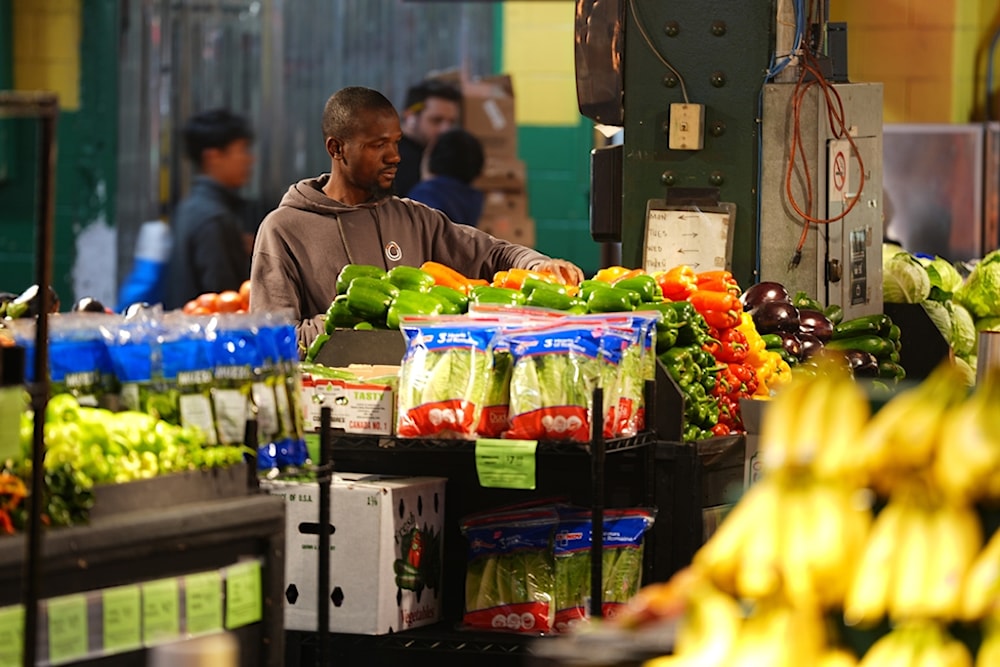
A worker arranges produce at the Reading Terminal Market in Philadelphia, Wednesday, October 29, 2025. (AP Photo/Matt Rourke)
The Wall Street Journal reported on Monday on the rising political unease inside the United States following Washington’s decision to kidnap Venezuelan President Nicolas Maduro in its aggression on Venezuela, a move that has unsettled even voters who supported President Donald Trump in the 2024 election.
The report reveals growing frustration among working- and middle-class Americans who backed Trump in hopes of lower prices, reduced foreign entanglements, and restraint in government spending, only to see the administration embark on a high-risk aggression abroad while domestic economic pressures continue to mount.
Voter disillusionment
Dillon Mockli, a food-truck owner in rural Idaho who voted for Trump, reacted sarcastically after hearing the president suggest the United States would "run Venezuela" following Maduro’s removal. "Charming. Just what I voted for," Mockli said.
Mockli said the economic fallout from pandemic-era policies and sustained inflation has left him financially strained despite earning more than ever. "I make the most money I ever made in my life, and I feel the brokest I’ve ever been," he said, noting that he increasingly watches customers’ credit cards get declined. He described Trump’s first year back in office as "a gigantic disappointment to a monumental degree," and said he may abstain from voting or back a Libertarian candidate in the midterms.
WSJ notes that the US kidnapping of the Venezuelan leader has injected a volatile foreign confrontation into a political climate overwhelmingly defined by voter anxiety over prices, housing, and job security. Republican pollster Wes Anderson said the political consequences would hinge on how this latest operation unfolds.
"If things go poorly, this will be huge. If things go well and we’re not there that long, it’s a plus," Anderson said. "But I cannot imagine that it overcomes the principal driver of this election, which is how average Americans feel about the economy."
Economic disconnect
The White House has portrayed Maduro’s removal as an example of decisive leadership abroad. However, prior polling consistently showed that a majority of Americans opposed military action against Venezuela, while inflation, affordability, and economic insecurity ranked far higher than foreign policy concerns.
Trump had campaigned on promises to bring down consumer prices, strengthen job prospects, and secure the southern border, while boosting domestic manufacturing through tariffs. Yet economic data cited by WSJ indicate that tariffs have helped sustain higher prices as businesses pass costs on to consumers, while unemployment recently climbed to a four-year high. Although overall growth has remained resilient, public confidence in the economy remains deeply negative.
The report also points to a widening divide between Americans who own homes and stocks, and those priced out of housing and credit markets. While equity markets posted strong gains, many households say their living standards continue to erode, with surveys showing broad disapproval of Trump’s handling of the economy.
Party divide
Republican leaders have largely closed ranks behind the president, citing the administration’s claim that the Venezuela operation was directed at drug-trafficking networks, despite the absence of publicly substantiated evidence linking Maduro to such activity. Secretary of State Marco Rubio insisted the US was not waging a war against the Venezuelan state. "We are at war against drug-trafficking organizations, not a war against Venezuela," Rubio said on NBC’s "Meet the Press."
Marc Short, a senior official in Trump’s first administration, said he believed the operation succeeded in removing Maduro but warned that the president was drifting away from the economic issues that secured his re-election. "He was primarily elected because of two issues: securing the border and bringing down costs," Short said. "On the first issue, he has a lot of achievements. On controlling costs, his trade agenda is working against him."
Some Republicans argue the administration is betting that regime change in Caracas will unlock access to Venezuela’s vast oil reserves, easing fuel prices in the United States. Venezuela possesses the largest proven oil reserves in the world, though years of sanctions and economic warfare have sharply reduced production. Gregg Nunziata, executive director of the Society for the Rule of Law, said there is hope the "intervention" could deliver tangible economic benefits, but acknowledged the administration has struggled to clearly justify its actions to the public.
Democrats weigh in
Democrats have condemned the kidnapping of Maduro as unconstitutional and a dangerous diversion from domestic priorities. Senator Ruben Gallego of Arizona said the president is contradicting his own pledges. "The president is losing focus and doing what he said he wasn’t going to, which is get us involved in more wars, and not doing what he said he was going to do, which is bring down the cost of living," Gallego said.
While Democrats continue to face low approval ratings of their own, the party’s focus on affordability has resonated with voters in recent elections. Democratic pollster John Anzalone said focus groups consistently return to the same questions: why groceries, housing, and health insurance keep getting more expensive while the administration prioritizes foreign aggressions.
Voters split reactions
Among Trump voters, reactions to the Venezuela aggression vary. Some argue that forcibly removing Venezuela’s leadership could advance US goals related to migration, oil supply, or drug trafficking. Others, shaped by past US aggressions, express unease.
Alan Hornbecker, a former teacher in Virginia who lost a friend serving as a Navy SEAL in Iraq, said the risks are clear, but continues to back Trump. "It’s definitely fraught with potential obstacles that could blow up in their face," he said. "But I don’t know. I’m gonna trust them on this one."
Others are openly critical. Kansas contractor Andrea Janssen dismissed the administration’s stated rationale. "He’s full of crap. He’s in it for the oil," she said, recalling Trump’s past pardon of a foreign leader convicted of drug trafficking.
Janssen said hearing the president suggest the US would "run Venezuela" left her deeply unsettled. "It honestly made my stomach sink," she said. Facing declining demand for home renovation projects, she believes the US economy is sliding toward recession. "I think he’s a lot of talk and no action," she added.
Read more: Venezuelan opposition hails Maduro kidnapping, says 'not enough'


