
Trump imposes new ICC sanctions over ‘Israel’ war crimes case
 3 Min Read
The Trump administration adds two ICC judges to a growing sanctions list over their role in the court's case against “Israel” for alleged Gaza war crimes.
-
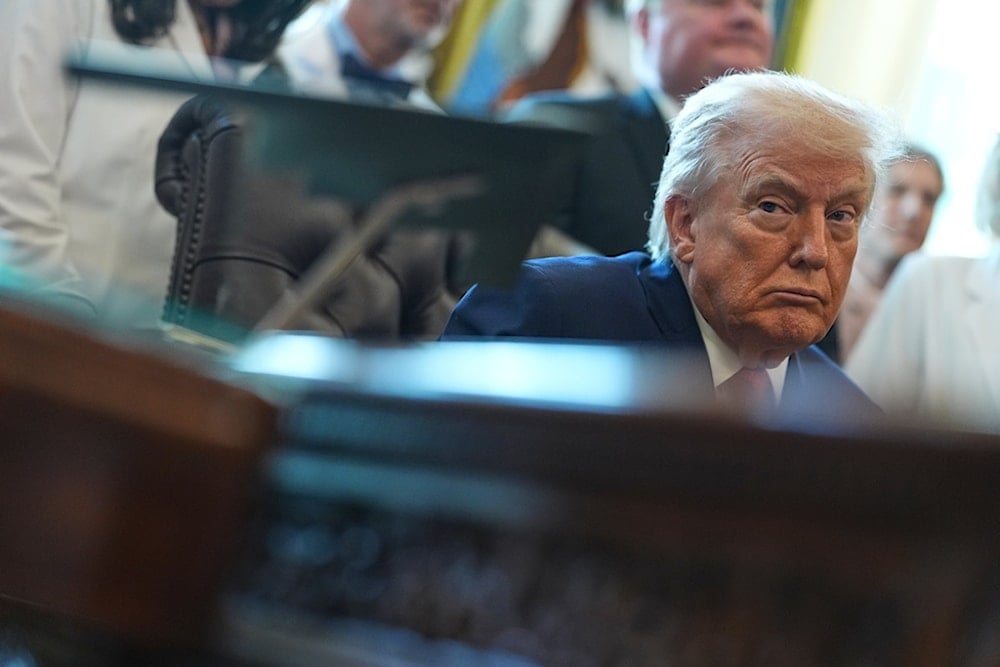
US President Donald Trump listens before signing an executive order reclassifying marijuana as a less dangerous drug in the Oval Office of the White House, Thursday, December 18, 2025, in Washington. (AP Photo/Evan Vucci)
The administration of US President Donald Trump has imposed sanctions on two additional judges from the International Criminal Court (ICC), intensifying pressure on the tribunal following its decision to issue arrest warrants for “Israeli” leaders over alleged war crimes committed in Gaza.
The two newly sanctioned judges, Gocha Lordkipanidze of Georgia and Erdenebalsuren Damdin of Mongolia, were targeted for their direct involvement in proceedings related to the court’s investigation into “Israeli” actions in the Gaza conflict, according to US Secretary of State Marco Rubio.
“These sanctions are a direct response to the ICC's continued politicization and its abuse of power targeting ‘Israel’ and threatening US sovereignty,” Rubio stated, adding that the United States would not recognize the court’s jurisdiction over its nationals or those of “Israel”.
Read more: US pressures ICC to drop Gaza, Afghanistan investigations: Reuters
Judicial backlash and global criticism
The sanctions came weeks after ICC judges rejected several legal challenges submitted by “Israel” attempting to halt the probe. The panel ruled that the court’s investigation could include events following the October 7, 2023, Palestinian Resistance operations in the occupied territories.
This latest round of measures follows earlier US actions against six other ICC judges and Prosecutor Karim Khan, who has spearheaded the investigation into possible crimes against humanity. Judges sanctioned by the US face severe restrictions, including asset freezes and travel bans, measures that also make everyday financial transactions nearly impossible.
The ICC sharply condemned the move, calling it a “flagrant attack” on judicial independence and warning that such actions undermine the international legal order. The Netherlands, which hosts the court in The Hague, also issued a strong rebuke, emphasizing the importance of unhindered judicial proceedings.
The broader political stakes
The United States and “Israel” are not members of the ICC, but the Palestinian Authority joined the court in 2015. This membership enables the court to exercise jurisdiction over crimes committed in Palestinian lands, including by foreign nationals.
The Trump administration has demanded that the ICC not only abandon its prosecution of Israeli leaders but also terminate previous probes into US troops' actions in Afghanistan. According to a senior official, Washington is also pushing for amendments to the Rome Statute that would shield US leadership from future prosecution.
Despite pressure, the ICC maintains that its mandate, backed by 125 member states, is to pursue justice impartially, regardless of political consequences. The institution remains central to international efforts to uphold accountability for war crimes, including those committed in ongoing conflicts such as in Gaza.


