
Trump Iran war poll shows low public support and doubts over strategy
 4 Min Read
A new POLITICO poll shows declining support for Trump’s Iran war strategy, with many Americans questioning goals and national interest.
-
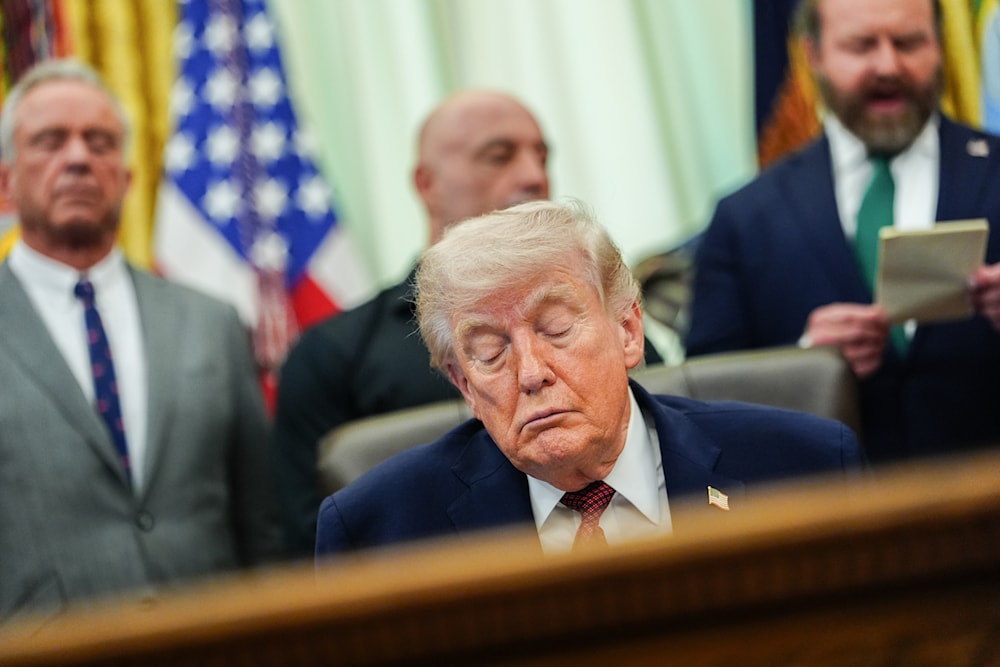
President Donald Trump closes his eyes while listening in the Oval Office of the White House, Saturday, April 18, 2026, in Washington (AP)
Seven weeks into the war with Iran, a majority of American voters say President Donald Trump lacks a clear strategy and express doubts about whether he is achieving his stated goals, according to new polling results.
The POLITICO Poll shows limited public support for the military campaign, with just 38 percent of Americans backing the strikes. The figures remain largely unchanged from the immediate aftermath of joint US–Israeli aggression, despite weeks of administration messaging aimed at justifying the intervention.
A majority of respondents said the war is not in the national interest, while a plurality expressed little confidence that the president has defined objectives. Concern extends even into Trump’s 2024 voter base, with a significant portion questioning the clarity of his goals.
Nearly half of those surveyed also believe the president has focused too heavily on international affairs at the expense of domestic issues, including 29 percent of his own 2024 supporters. The survey, conducted by Public First, suggests limited public persuasion on the administration’s handling of the war as Republicans prepare for upcoming elections.
According to the poll, 41 percent of Americans say Trump does not have a plan to resolve the war, a figure virtually unchanged from last month. Just 15 percent say he has achieved his goals, while 40 percent believe he will either never achieve them or has no defined objectives.
The White House said the administration is simultaneously working on diplomacy with Iran and domestic economic concerns. “While the US military and the president’s diplomatic team continue to make progress towards securing a deal with Iran and resolving temporary disruptions in energy markets, the rest of the administration continues to implement the president’s affordability and growth agenda on the home front,” spokesperson Kush Desai said in a statement. He added that once short-term disruptions ease, “Americans can count on more economic progress in store.”
Trump supporters still believe in him
The poll found that 27 percent of Americans believe Trump has a plan for resolving the war, while 41 percent say he does not. A smaller group, about 15 percent, said they believe he lacks a plan but trust his actions will ultimately resolve the situation.
Support among Trump voters remains relatively strong, though more than a third of his supporters say he lacks a clear plan. Still, many of them expect the outcome to be successful regardless, with 45 percent saying he has not yet achieved his goals but will eventually do so.
Only 15 percent of respondents overall say Trump has already accomplished his objectives in the war, while a quarter believe he will achieve them in time. Around 40 percent say he will never succeed or does not have defined goals.
Trump's shifty explanations increase uncertainty
Trump has offered shifting explanations for the war and recently suggested it could be nearing an end. “I think it can be over very soon. If they’re smart, it will end soon,” he said in an interview on Fox Business’ Mornings With Maria Bartiromo, referring to Iranian negotiators.
He also gave mixed signals on the economic impact, saying oil and gas prices could remain “a little bit higher” or stay roughly the same, while later suggesting they could fall significantly before the midterms.
As negotiations remain uncertain, the administration has increased pressure on Tehran, including a reported blockade of Iranian ports, raising concerns about potential further impacts on global energy prices. Meanwhile, the Strait of Hormuz was reopened for commercial traffic on Friday, an announcement confirmed by both Trump and an Iranian official, contributing to a drop in oil prices.
Republican officials have largely remained publicly supportive of the president, though concerns are growing within the party that a prolonged war and rising costs could weaken their messaging ahead of elections, where cost of living remains a top voter concern.
Political strategist Roe noted growing frustration with shifting timelines, saying voters are weary of repeated assurances that the war is nearing an end. “Every day we’re told it’s going to end tomorrow, and we’re now nearly two months into that promise,” he said.


