
Trump pressure helps sink Senate effort to limit future war on Iran
 4 Min Read
Republican senators blocked a measure restricting further US military action against Iran after intense lobbying from Donald Trump and White House officials.
-
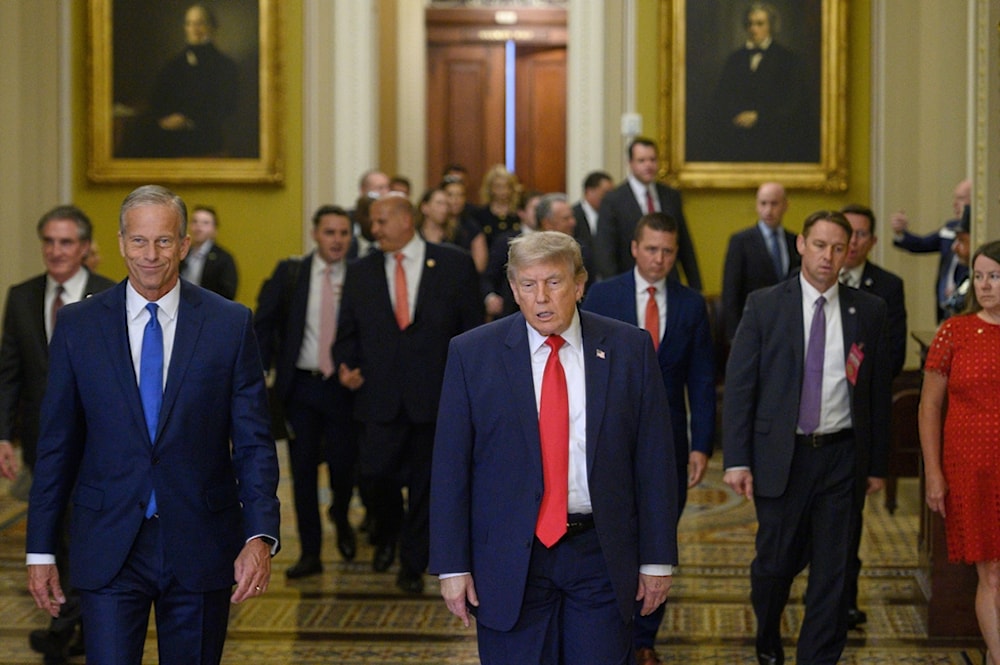
Senate Majority Leader John Thune and US President Donald Trump arrive for lunch with Republican senators in the Capitol, in Washington, Wednesday, June 24, 2026. (AP Photo/Cliff Owen)
A Senate effort to restrict future US military action against Iran collapsed on Wednesday after several Republican lawmakers reversed their earlier positions following direct pressure from US President Donald Trump and senior administration officials.
The vote highlighted the White House's continued influence over Republican lawmakers on matters of war and foreign policy, even as concerns persist in Congress over presidential authority to launch military operations without explicit legislative approval.
The procedural measure failed by a vote of 50-47, reversing momentum from a similar resolution approved a day earlier that had been viewed as a symbolic challenge to the administration's Iran policy.
Read more: Trump faces growing Senate GOP resistance over SAVE Act push
Trump lobbying helps derail Senate measure
The reversal came after Trump publicly and privately criticized Republicans who had supported earlier efforts to constrain executive authority regarding launching a war on Iran.
According to lawmakers present at a closed-door lunch with Senate Republicans, Trump questioned why members of his party would support legislation that could weaken his position while negotiations with Tehran remain ongoing.
The meeting reportedly became heated, including a confrontation with Senator Bill Cassidy, who later changed his position and voted against advancing the measure.
For his part, Senator John Kennedy described the president as "mad as a murder hornet" over the previous vote.
Following the meeting, US Vice President JD Vance and US envoy Steve Witkoff briefed Cassidy at the White House. “I appreciate the quick invitation to the White House to address many of my concerns,” Cassidy wrote afterward.
Republican defections reshape vote outcome
Cassidy's switch proved pivotal in the outcome.
Senator Rand Paul, who had previously backed efforts to limit military aggression against Iran, voted "present" rather than supporting the resolution.
“My opinion on the debate over war and executive power has not changed, and I have voted that way several times,” Paul wrote on X. “But since hostilities seem to be over and the President asked me to give consideration to his negotiating position, I will do so.”
Tonight I will vote present on the War Powers resolution.
— Rand Paul (@RandPaul) June 25, 2026
My opinion on the debate over war and executive power has not changed and I have voted that way several times.
But since hostilities seem to be over and the President asked me to give consideration to his…
Meanwhile, Republican Senators Lisa Murkowski and Susan Collins joined Democrats in supporting the measure, while Democratic Senator John Fetterman opposed it.
The vote represented a setback for lawmakers seeking to reassert congressional authority over decisions related to war on Iran.
Debate over presidential war powers returns to forefront
The dispute has renewed attention on longstanding tensions between Congress and the executive branch regarding the use of military force.
Democratic lawmakers have repeatedly sought votes aimed at preventing further aggressions on Iran since the conflict began earlier this year, arguing that additional military action requires congressional authorization.
Supporters of the measure point to the War Powers Resolution of 1973, which seeks to limit prolonged military engagements without congressional approval. Critics, including some Republicans and previous administrations, have questioned the law's constitutionality and practical enforceability.
Senator Tim Kaine, who introduced the resolution, argued that the failed vote does not negate the Senate's previous expression of opposition to unauthorized military escalation. "The vote is of no consequence and does not undo the expressed position of Congress that further war against Iran is illegal unless Congress votes for it,” Kaine said.
Read more: 'Losers': Trump blasts Senate over vote limiting action against Iran
White House presents outcome as political victory
The administration framed the vote as validation of its diplomatic and strategic approach toward Iran.
Trump quickly celebrated the result, thanking Republican allies who worked to rally support against the measure and arguing that congressional unity strengthens Washington's negotiating position.
"This vote puts Iran on notice!" Trump wrote on social media.
The episode underscores continuing divisions in Washington over military intervention, diplomacy, and the balance of power between Congress and the presidency as discussions concerning Iran remain ongoing.


