
Trump faces growing Senate GOP resistance over SAVE Act push
 4 Min Read
Divisions within the Republican Party are widening as US President Donald Trump pushes Senate Republicans to advance the SAVE Act, highlighting growing disagreements over Senate procedure, legislative priorities, and the party's midterm election strategy.
-
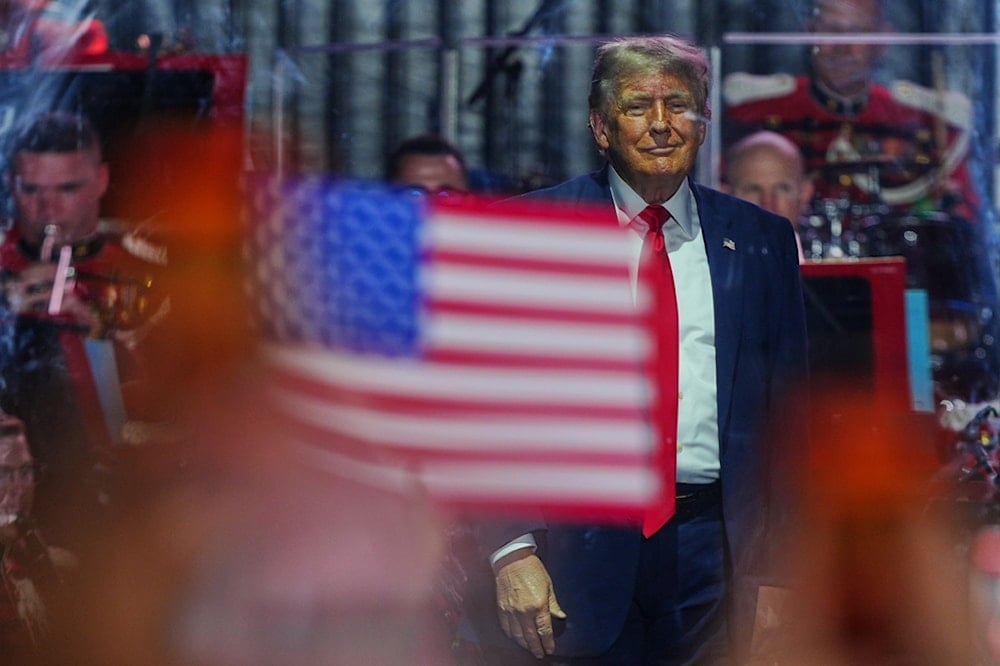
US President Donald Trump stands on stage after speaking at the opening of the Great American State Fair on the National Mall on June 24, 2026, in Washington. (AP Photo/Julia Demaree Nikhinson)
US President Donald Trump is facing mounting resistance from Republican senators as he intensifies pressure on the party to advance the SAVE Act, exposing one of the most significant internal Republican disputes of his second term, Axios reported on Thursday.
The clash centers on Trump's demand that Congress prioritize the Safeguard American Voter Eligibility (SAVE) Act, legislation that would require voter identification and proof of citizenship for participation in federal elections. Several Republican senators, however, have signaled they are unwilling to alter long-standing Senate procedures or reshape legislative priorities to accommodate the White House's demands.
The disagreement reflects broader tensions between Trump's political agenda and institutional concerns among Senate Republicans, many of whom argue that procedural realities limit the administration's ability to secure passage of the legislation.
Read more: Trump seeks $88 billion for Iran war costs, other spending
Senate traditions become flashpoint in GOP dispute
Tensions reportedly escalated during a closed-door lunch between Trump and Senate Republicans on Wednesday, where disagreements over legislative strategy and foreign policy oversight surfaced publicly.
Senator Bill Cassidy said after the meeting that he would not back down under pressure from the president. "I make no apologies for standing up to the president," Cassidy told reporters. "I made it clear that I wasn't going to be bullied."
According to reports, the exchange developed into a heated confrontation over the administration's sharing of information with lawmakers regarding Iran. Sources also told Axios that Trump raised Cassidy's recent primary defeat during the discussion.
Senate Majority Leader John Thune has reportedly informed the White House that the votes required to advance Trump's preferred approach do not currently exist in the chamber.
Meanwhile, Senator Lisa Murkowski reaffirmed her opposition to weakening Senate procedures, stating, "I'm certainly not giving my consent to that," when asked about ending the filibuster.
Growing bloc of Republicans willing to challenge Trump
The dispute has highlighted the emergence of a larger group of Republican senators willing to publicly oppose the president on procedural and legislative matters.
Cassidy and Senator John Cornyn have reportedly become more outspoken following recent primary defeats to Trump-backed challengers. They join senators, including Mitch McConnell and Thom Tillis, both of whom are preparing to leave the Senate and therefore face fewer political consequences from challenging the White House.
Longtime Republican moderates such as Susan Collins and Murkowski have also continued to break with party leadership on selected votes and procedural issues.
The growing resistance comes as Trump continues to campaign against Senate mechanisms such as the filibuster, which requires 60 votes to advance most legislation, as well as the blue-slip process that allows senators to object to judicial nominees in their states.
Read more: Carlson says war on Iran marks end of Trump's political era
Midterm concerns expose strategic divisions
The disagreement has also revealed competing priorities within the Republican Party ahead of the midterm elections.
While Trump has focused on advancing the SAVE Act and restructuring Senate procedures, some Republican lawmakers are reportedly seeking to center their messaging on economic concerns, affordability issues, and domestic policy.
The divide was further illustrated when Trump reportedly postponed support for a bipartisan housing package despite earlier praise from the White House, saying he would not sign the measure until the SAVE Act advances.
The episode underscores the challenges facing Republican leadership as it seeks to balance White House priorities with Senate realities and electoral considerations.


