
Trump reportedly considers USMCA withdrawal, citing trade concerns
 4 Min Read
US President Donald Trump is reportedly considering withdrawing from the USMCA trade agreement amid escalating tensions with Canada over tariffs, infrastructure disputes, and trade policy disagreements.
-
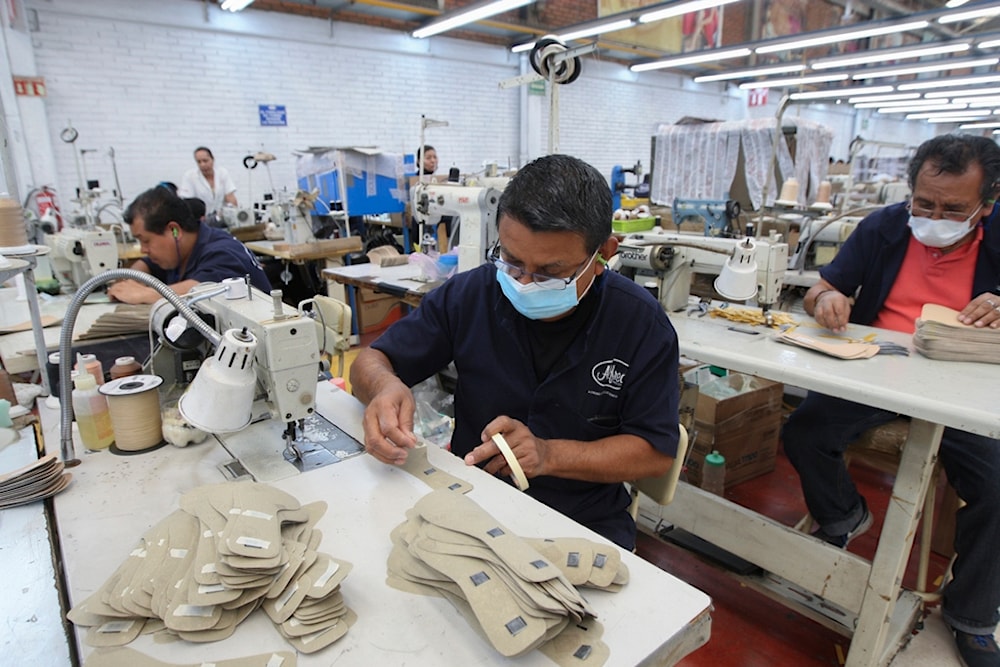
File - A man works in a shoe maquiladora or factory, in Leon, Mexico, Monday, Feb. 7, 2023. While the USMCA's broad impact has been slight, it has nevertheless been aiding workers on the ground and the main beneficiaries have been in Mexico (AP)
US President Donald Trump is reportedly considering a potential USMCA withdrawal, according to Bloomberg, citing sources familiar with the matter.
The move would mark a major escalation in Trump’s ongoing efforts to reshape Donald Trump's trade policy, especially with neighboring Canada and Mexico.
Trump reportedly weighs exit from USMCA agreement
The United States-Mexico-Canada Agreement (USMCA), which replaced NAFTA, was signed in 2019 and came into effect in 2020. It is scheduled to remain valid for 16 years, with a renewal option. According to the text, any party may exit by giving six months’ written notice to the other two.
Sources indicate Trump has privately floated the idea of withdrawing from the pact, citing national trade interests and dissatisfaction with the current terms of the deal, especially regarding Canada-US trade relations.
White House responds to withdrawal speculation
A White House official downplayed the reports, saying that unless President Trump makes a formal announcement, discussions of a USMCA withdrawal remain speculative.
Still, the mood within trade circles has shifted, with one official in the office of US Trade Representative Jamieson Greer stating that extending the 2019 terms does not align with US interests.
Rising US-Canada tensions over trade and infrastructure
The speculation comes just after Trump threatened to block the opening of the Gordie Howe International Bridge, a Canadian-financed $6.4 billion project connecting Detroit and Windsor.
In a Truth Social post, Trump demanded that the US receive compensation, or even partial ownership,for what he claimed was an unequal arrangement that exempted the project from Buy American requirements. The project has been fully funded by Canada and is expected to become a vital artery for tens of billions in annual Canada-US commerce.
This bridge standoff highlights the increasingly confrontational tone in US-Canada relations, as Trump’s administration also threatens tariffs on Canadian goods and criticizes Ottawa’s trade negotiations with China.
The administration recently proposed 100% tariffs on Canadian imports if Canada proceeds with a deal involving canola exports in exchange for electric vehicle quotas.
Tariffs, executive orders, and policy shifts
On the trade front, Trump has already taken action. In late July, he signed an executive order increasing tariffs on Canadian goods deemed non-compliant with USMCA agreement 2019 standards.
These tariffs were raised from 25% to 35%, effective August 1, after talks with Canada failed to reach an agreement by Washington’s deadline.
Additionally, the administration floated 50% tariffs on Canadian aircraft and threatened to decertify newly manufactured planes.
These measures, paired with Trump’s criticism of Canadian dairy tariffs, have raised alarms among Canadian officials, some of whom warn the “old relationship” between the countries may be over.
Political dimensions and economic fallout
Trump’s positions have drawn support from private US interests, including the Moroun family, owners of the existing Ambassador Bridge, who oppose the new public bridge.
Canadian Prime Minister Mark Carney, who has subtly criticized Trump’s policies on the world stage, has become a frequent target of Trump’s rhetoric.
These escalating disputes play out against the backdrop of looming USMCA renegotiations, a process Trump once touted as a cornerstone of his economic agenda. As tensions rise and policy shifts, the potential USMCA withdrawal could have far-reaching effects on Mexico-US trade, Canada-US trade relations, and the broader North American economic framework.


