
Trump's reckless Iran gamble risks a global energy crisis
 5 Min Read
US plans to target Iran's energy sector could disrupt global oil supplies and trigger a broader regional crisis.
-
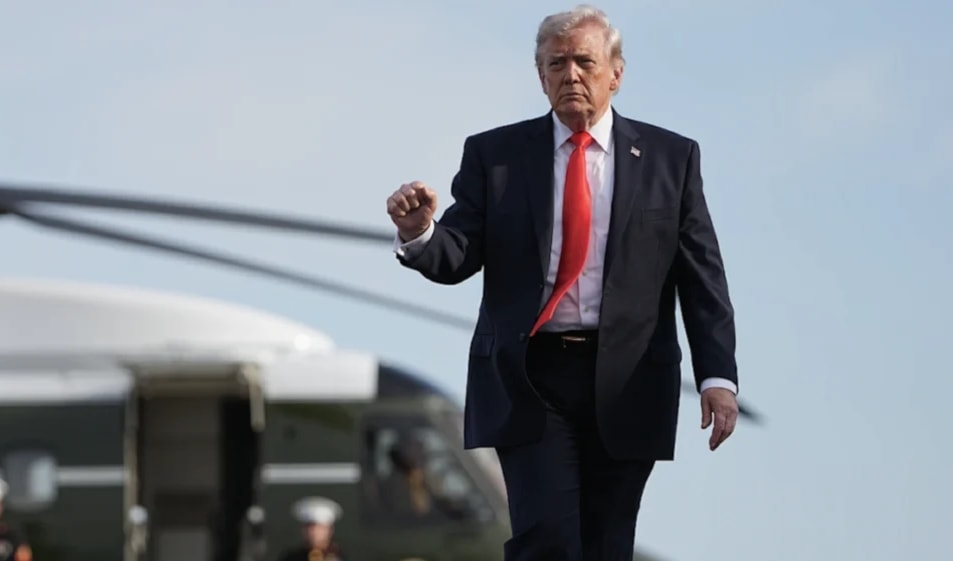
US President Donald Trump walks from Marine One to board Air Force One at Ocala International Airport, in Ocala, Florida, on May 1, 2026. (AP)
Reports from several US media outlets that Washington is assessing possible aggression on Iran's energy infrastructure have renewed debate over a key strategic question: if the United States expands the war from the military sphere into the energy sector, is it prepared to absorb the consequences of a disruption that could unsettle global oil markets and energy security for months?
According to reports from Axios, CNN, CBS, The Wall Street Journal, and the New York Post, the US administration is weighing potential aggression against targets inside Iran, including facilities linked to the country's energy sector. Although the reports do not indicate that a final decision has been made, their consistency suggests the option is receiving serious consideration in Washington.
Concerns over escalation beyond a limited military operation
The primary issue is whether an aggression on Iran's energy infrastructure could remain contained or instead set off a chain of events that would prove difficult for all sides to manage.
Energy infrastructure is regarded as a vital element of national security in any country. Targeting such assets is more than an economic action; it represents an effort to apply strategic pressure and undermine a nation's ability to withstand conflict. As a result, any response would likely be shaped not only by the extent of the military damage but also by the objective of reestablishing deterrence.
Should Tehran determine that the purpose of such a strike is to cause lasting harm to Iran's economic capabilities, it would likely attempt to increase the costs for its adversary. In that case, Washington's challenge would not end with carrying out the aggression but would also include dealing with its consequences.
Gulf's strategic role in global energy supplies
Another major factor is the Gulf's importance to the international energy market. The region contains some of the world's most significant oil and gas production, processing, and export facilities, including Saudi Arabia's Ghawar oil field and the Abqaiq and Khurais facilities, the UAE's Zakum field and Ruwais refinery, Qatar's Ras Laffan gas complex, Kuwait's Burgan field, Bahrain's Sitra refinery, and the Leviathan and Tamar gas fields.
The importance of these facilities extends well beyond the countries where they are located. Any major disruption could produce global effects lasting for months because a considerable portion of the world's energy supply depends on their continued operation.
Risks of a broader energy security crisis
For that reason, an aggression on Iran's energy infrastructure could shift a military confrontation into a wider energy security crisis. Under such circumstances, the impact would extend beyond reduced Iranian production or exports to include growing instability around other regional energy facilities and major oil and gas shipping routes.
Global energy markets remain highly responsive to geopolitical tensions. Previous incidents have demonstrated that even limited damage to oil infrastructure in the region can prompt immediate market volatility. If the war were to expand and place multiple critical energy facilities at risk, the consequences could reach far beyond a temporary increase in oil prices.
Long-term economic consequences
Extensive damage to energy infrastructure is rarely repaired in a short period. Restoring major oil and gas facilities, rebuilding production capacity, and stabilizing export supply networks can require months. Throughout that time, international markets could contend with tighter supplies, higher prices, and sustained uncertainty.
The potential consequences would also affect the United States. Rising energy prices, higher fuel costs, and increased inflationary pressure could have a direct impact on the US economy. As a result, any decision to strike Iran's energy infrastructure would carry not only military and security implications but also significant economic and political ramifications.
At the same time, the potential involvement of additional regional actors, particularly Yemen, could make the situation even more complex. As the war expands, forecasting its outcome becomes increasingly difficult, raising the possibility that a limited military action could develop into a broader regional confrontation.
Washington faces a strategic calculation
The central question for Washington is whether the potential benefits of targeting Iran's energy infrastructure would outweigh the danger of triggering a much larger crisis.
Unlike a traditional military war, an energy war is shaped not only by events on the battlefield but also by movements in oil prices, financial markets, global trade, and national economies.
For that reason, any move against Iran's energy sector would represent a high-risk strategic decision with implications for global energy security, carrying costs that could ultimately exceed the expectations of those who authorize it.


