
Trump's wealth grows while his American citizens struggle: CNN
 4 Min Read
As Americans face rising costs, Trump's wealth keeps growing, with new disclosures showing Trump profited over $1 billion from crypto deals last year.
-
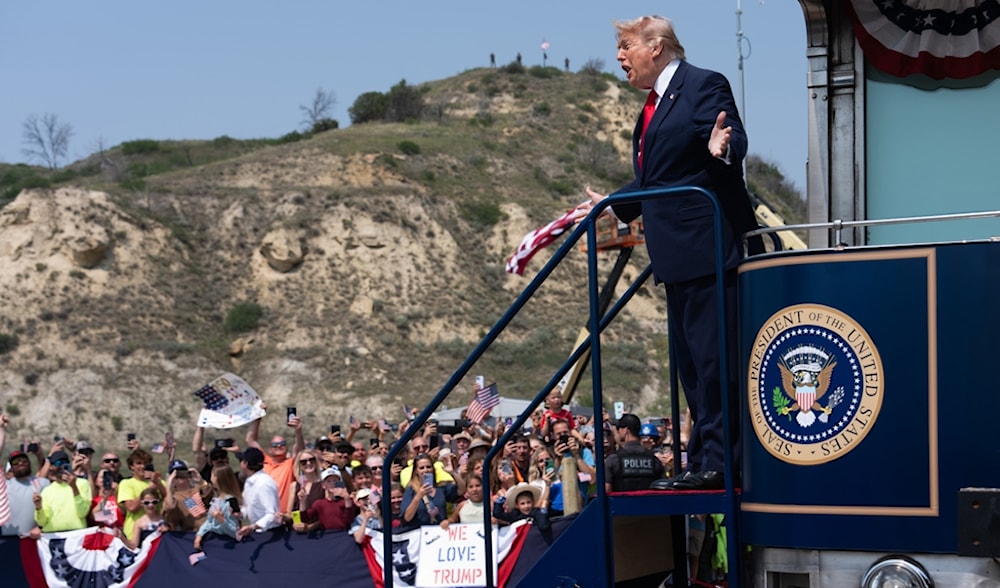
US President Donald Trump disembarks a Freedom 250 train, Wednesday, July 1, 2026, in Medora, N.D. (AP)
As economic concerns remain a defining issue in the United States, renewed scrutiny has turned to the financial gains accumulated by US President Donald Trump while serving a second term in office.
An analysis published by CNN's Stephen Collinson examines how Trump's personal wealth has surged even as many Americans continue to face economic strain.
The piece, published this week, draws on Trump's latest annual financial disclosure, released Tuesday, which shows the president earned billions of dollars last year through cryptocurrency holdings, royalty payments, property investments, and sales of Trump-branded merchandise.
According to Collinson's analysis, the disclosure shows Trump netted more than $526 million from sales of cryptocurrency tokens tied to World Liberty Financial LLC, a firm partly managed by his sons Eric Trump and Donald Trump Jr.
He also secured $635 million through a licensing agreement for his meme coin. Additional income came from branded products, including over $200,000 in royalties from Trump Bibles, $4.7 million from Trump watches, and $67,634 from fragrances and sneakers.
A break from precedent
Collinson argues that Trump's approach departs sharply from that of past presidents, who typically separated themselves from personal financial interests while in office, even though they were not legally required to do so under existing ethics laws. He cites Jimmy Carter's decision to place his family's peanut farm in a blind trust before taking office in January 1977 as an example of this custom.
The analysis notes that Trump broke from these conventions as early as his 2016 campaign, when he refused to release his tax returns, and has largely avoided political consequences since.
Conflict of interest concerns
Collinson highlights growing scrutiny over whether Trump's financial interests in cryptocurrency conflict with his administration's regulatory role over the industry, including what he describes as loosened Securities and Exchange Commission oversight.
He quotes Danielle Caputo, senior counsel for ethics at the Campaign Legal Center, questioning the administration's motives: "It becomes impossible to know: Is the president creating this regulation around cryptocurrency for his own benefit, for his holdings, or is he doing it because he thinks that's truly what's best for the American people?"
Trump responded to such concerns on Wednesday, saying, "We're all profiting. I'm profiting because I have a lot of money and a lot of cash."
The analysis also raises the $400 million luxury jet gifted to Trump by Qatar, now in use as Air Force One, as a related concern given Qatar's role in West Asia politics and the Trump family's regional business ties.
Political risk ahead of midterms
Collinson frames these financial disclosures as a potential liability for Trump heading into the November midterm elections, noting that the president is registering 37% approval in the CNN Poll of Polls. He cites Colorado Rep. Jason Crow, who wrote on X that Trump "made $1+ billion from his crypto ventures while in office" and called the jet gift "grift and corruption," warning that "accountability is coming" if Democrats retake the House.
The analysis also quotes California Rep. Jimmy Panetta, who told CNN News Central, "This is an administration that's saying, 'Look at my 747, look at my gold. Whereas, you know, you can eat cake.'"
Collinson concludes that while Trump's wealth has historically been viewed by supporters as evidence of his business credentials, the optics of his financial gains alongside persistent affordability concerns could shape how voters judge his economic record in the coming months.


